User:NewOriginalSchwann/Sandbox: Difference between revisions
No edit summary |
|||
| (236 intermediate revisions by 2 users not shown) | |||
| Line 1: | Line 1: | ||
{{Navbox Lore}} | {{Navbox Lore}} | ||
{{Navbox Human Lore}} | {{Navbox Human Lore}} | ||
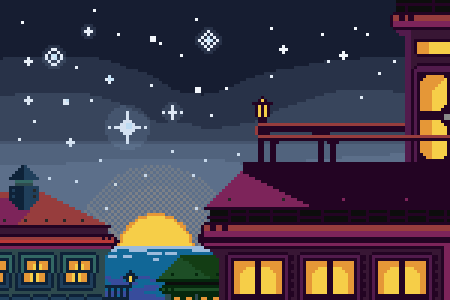
<center>[[File:Luna_pixel.png|link=]]</center> | |||
{{Infobox Planet | |||
|Name = Luna | |||
|System = Sol | |||
|Image = Earth's Moon.jpg | |||
|Sector = [[The_Orion_Spur#Jewel_Worlds|Jewel Worlds]] | |||
|Capital = Harmony City | |||
|Species = Humans, Skrell, IPCs | |||
|Languages = Sol Common, Tradeband | |||
|Demonyms = Lunan, Lunarian | |||
|Nation = [[Sol Alliance]] | |||
}} | |||
Earth’s only natural satellite, '''Luna''' was the first extraterrestrial body ever visited and colonized by humanity, with the first humans landing in 1969 and the first permanent colonists arriving as 21st century climate refugees. It is the oldest, richest, and grandest of the Alliance’s colonies, and is the location of many government and corporate headquarters. Lunarian cities are known as dome cities due to their domed structure, and are surrounded by rings of subordinate cities known as satellite cities. While the richest here have wealth beyond measure, the Lunarian working class has historically suffered as the moon’s industries have moved abroad and cheaper synthetic labor has replaced them. Above them the middle class toils away at the endless task of maintaining the Alliance’s huge bureaucracy, and worries about losing their livelihoods and being forced into the working poor. | |||
==History== | |||
While humanity has been obsessed with Earth’s moon for untold millennia before the invention of the most primitive spacecraft, historians generally regard the modern era of Luna as beginning on July 16th, 1969 - when American Apollo 11 astronauts Neil Armstrong and Buzz Aldrin were the first humans to ever land upon another celestial body. These pioneers were quickly followed in late 1970 by the Soviet N1/L3 Soyuz 7K-LOK “Pervoprohodets” mission, which landed the third group of humans on the Moon. The “Moon Race” would continue for the rest of the 20th century and result in the first permanent settlement on Luna by the early 1980s - the Soviet “Zvezda” moonbase. The Moon Race ended in an arguable draw in the early 21st century, due to increasing economic instability on Earth. | |||
Luna was mostly ignored by a humanity more obsessed with survival at home until 2070, when colonists from United Orbital Enterprise (a unified space agency between the USA, China, France, and Mexico) landed on its light side. Colonists from Cosmonaut Enterprises (a successor to the Soviet space program of the 20th century) landed on the dark side of Luna in 2072. With this the colonization of Earth’s moon had formally begun, and it would see significant use as a waystation for other points in the [[Sol|Sol System]] over the course of the upcoming decades and centuries. Due to its low gravity, the Soviets and UOE used Luna as a major shipyard and proving ground for deep-space equipment. | |||
Further colonization to Luna took place during the 21st and 22nd century as climate damage gradually worsened, with many wealthy families and companies simply moving off-world to Luna when able to do so. With Earth's economy rapidly deteriorating the rich families of the planet found themselves in need of a new home in a very short order with very few good options: [[Mars]] suffered from many of the same problems as Earth, orbital stations were often too impractical, and Luna was -- aside from some way stations built upon it in the late 21st and early 22nd century -- mostly uninhabited. Luna was chosen by most rich refugees fleeing Earth due to its close position to Earth and the perceived ease of development on Earth's only natural satellite compared to the cost of producing dozens of semi-private stations for rich families and businesses. | |||
A great deal of manpower and money was required to create this new home for the Earth's richest and brightest as Luna, unlike Mars, was built without the use of cyborg-based labour. To do this hundreds of thousands of well-trained engineers, technicians, and other personnel were employed by the climate refugees to build their new home in exchange for a place on it when the refuge was completed. As such Luna, despite its original conceptualization as a climate refuge for the richest and most notable of Earth, has had a working class from its first days. As settlement continued and more domed cities were created the "lower class" of Luna expanded to include a variety of miners brought by [[Einstein Engines]] in order to exploit Luna's natural Helium-3 and titanium deposits. Though these deposits have since dried up the descendants of these miners can be found on Luna even today, and often still work for Einstein Engines -- though now as engineers and bureaucrats rather than miners. | |||
The booming economy of Luna created an environment in which corporations could easily succeed. In 2155 Einstein Engines, using the foundation provided by Lunan Helium-3 mining, created the first practical mass-market warp engines and became the first modern megacorporation. Luna’s prosperity has continued since then, and it remains one of the wealthiest planets in the Sol Alliance to this very day, despite its small size and small population. The Luna of today is, in many ways, the ideal colony. Rich, prosperous, and unfailing in its loyalty to the Sol Alliance. | |||
==Environment== | |||
Luna is a large moon, larger than [[Pluto]] — the ninth planet in the [[Sol|Sol System]]. It has roughly one sixth of the [[Earth|Earth’s]] gravity, which necessitates the use of artificial gravity in its settlements and led to it becoming an early center of Solarian shipbuilding. Arrival gravity in Luna’s cities generally brings the area up to 85% of Earth’s gravity, leading to the typical Lunarian being taller than most Solarians but more awkward in Earth-level gravity. The lunar surface is dominated by lunar dust, which is highly abrasive and can cause damage if inhaled — necessitating the use of large, often multi-stage, airlock systems whenever a Lunarian must venture outside of a dome. The surface is also heavily bombarded by cosmic radiation due to the thin lunar atmosphere, and some cities must use specially treated materials to have their outer shells resist both dust, radiation, and the occasional meteoroid. | |||
Luna is locked in a synchronous orbit with Earth, leading to both a near side — which always faces Earth — and a far side — which always faces outwards. Lunarian settlements have historically been centered on the near side due to ease of resupply and a desire by early Lunarians to view their home planet. Of the five great dome cities only Gagaringrad is on the far side of the moon, which has earned it the nickname of the “Shaded City” by Lunarians. When viewed from Earth, Luna’s dome cities and their satellite cities create a vision not unlike viewing humanity’s homeworld from orbit. Despite early attempts to sync the Lunarian calendar to lunar months, colonizing governments — then the Alliance — insisted on using the standard Terran calendar for convenience, and this example has been followed across the Spur. | |||
==Culture== | |||
[[File:Luna - Final.png|The government flag of Luna. The crescent represents Luna itself, and is meant to remind viewers of Selene's headpiece.|thumb]] | |||
Lunarians are a tightly-knit and somewhat insular people wracked by stark class divisions between the rich, middle, and working class. The rich here are more wealthy than perhaps anywhere else in the modern Spur, but the working poor are just as poor as anywhere else. The richest Lunarians are part of families which have lived on Earth’s only moon since the 21st century and originally arrived as climate refugees, and upper-class families are known to spend extravagant sums of money to have their entire family trees charted out and known. Members of the middle and working class lack the obsession with pedigree, having neither the desire nor the resources to carry out these projects. | |||
Regardless of class, Lunarians tend to have certain physical characteristics due to their shared origin on the moon. Due to the lower gravity of the moon, Lunarians tend to be taller than most humans — such as the residents of Earth or [[Republic of Biesel|Tau Ceti]] — and can struggle with adjusting to Earth-level gravity, much like [[Callisto|Callisteans]] or other moon-originating humans. Lunarians also tend to be paler than their Earthborn counterparts due to many living in partially-recessed dome cities where natural light can be rarer, and the Lunar day-night cycle, where most locations have 14 days of light followed by 14 days of darkness — though earthshine (light reflected from the Earth) ensures these nights are brighter than Terran ones. Many develop sunburns more quickly than other humans, and “Lunarian-proofed” sunscreen is a common sight in starports across the current and former [[Sol Alliance|Alliance]]. | |||
Most Lunarians have membership in class-specific clubs and fraternal organizations, which can range from drinking clubs for dockworkers to clubs for politicians where all participants must wear stylized masks. Almost every one of these organizations are invitation only . As all things on Earth’s moon, some are far more prestigious than others, and the most prestigious of these – such as the Oakheart Club of Harmony City, a fraternal order for Solarian Navy flag officers – can and do influence the political culture of the entire moon (and perhaps the broader Alliance). Many prominent Lunarian social clubs have been accused of involvement in the secret societies alleged to run Luna from behind the scenes through proxies, patsies, and fronts. Most clubs will have some form of special, often opaque, gesture or ritual associated with their activities, ranging from handshakes to seemingly occult rituals involving the burning of sacrificial effigies. Many a B-list Venusian crime film has involved a plucky detective investigating a Lunarian fraternal organization, only to find it is not-so-secretly a cover for something supernatural or evil. | |||
===Social Classes=== | |||
[[File:Navy graduation.png|Throughout history, members of the Lunarian upper class have made up a large portion of the Solarian Navy's officer corps.|thumb]] | |||
Sitting at the top of Lunarian, and perhaps the entire Alliance’s, society are its most wealthy citizens. Sometimes known as Sol’s aristocracy, or — more derisively, and often by non-Solarians — as the Solarian nobility, the Lunarian upper class is per capita the richest group of humans in the modern Spur. These Lunarians can trace their origins to the original climate refugees, often already rich themselves, and to the early executives of successful corporations such as Einstein Engines. They are obsessed with their pedigrees and their family histories, and few marry outside of Luna or the upper class; though an up-and-coming upper middle class family may find itself aligned to one of these venerable families by marriage, it is an uncommon thing. Genetically-engineered children, even cloned children, are not uncommon, and Zeng-Hu Pharmaceuticals is always willing to provide its services, though Galatean firms have long plied their trade on Earth’s moon. The extent of genetic editing the Lunarian upper-class experience before and after birth ensures they live longer, healthier lives than most other humans in the Spur. It is often joked Luna contains not just the greatest concentration of wealth in its upper classes, but the greatest collection of centenarians anywhere in the modern Spur. | |||
Wealthy Lunarians are massively influential in its political and economic environment, and many conspiracies — both on Luna and throughout the Alliance — swirl around their wealth and dominance. Some hold membership in secret or semi-secret societies they are rumored to use in efforts to further their influence and dominance, and some claim these societies far predate the founding of the Alliance or the colonization of Luna. The richest Lunarians are an exclusive class and zealously guard their homes in the central domes from intrusion by those deemed beneath their notice or unworthy of the privilege, with secret covenants between rich and influential Lunarians to make their neighborhoods more exclusive not being unheard of. Further increasing their exclusivity is their unusual accent: rich families will teach their children, and sometimes upper-level assistants in their employ, how to speak in a refined, learned dialect known as Formal Lunarian. Formal Lunarian, or FL, must be taught from birth as the way one learns Solarian Common for it to be passable to those who have also learned the dialect to birth. This makes it both hard to passably fake and marks someone as an outsider in a community when they speak, ensuring they may never fit in. | |||
The Lunarian middle class makes up the majority of the moon’s population following the decline of its working class populace, and forms the backbone of the modern Solarian central bureaucracy. Most live in satellite cities and work in government buildings of the central dome, performing the endless duties of an interstellar bureaucracy under the watchful eye of the upper class. Often seen as a colorless and boring people due to their line of work, a common Solarian joke claims the stereotypical middle-class Lunarian is a Solarian government bureaucrat who wears a suit to work, commutes by train, and only feels joy when completing paperwork. Though typically wealthy in their own right, many of the middle class suffer from impostor syndrome and drive themselves into debt attempting to follow the trends of those richer than themselves. They are frequent travelers abroad, with middle-class Lunarians having a higher purchasing power off of Luna than on it due to their high wages being needed to match the moon’s cost of living. These Lunarians also form the middle management of Luna-centric corporations such as [[Einstein Engines]], [[Zeng-Hu Pharmaceuticals]], and [[Zavodskoi Interstellar]]. | |||
The | The Lunarian working class, in contrast to the upper and middle classes, is not flush with wealth. Once almost the equal of the middle class, the working class has seen its size shrink and influence fade away as Lunarian industries have moved abroad from the moon and a new invention has been brought in to replace those they have retained: positronic-based robots known as [[IPC|IPCs]]. Many working-class Lunarians have moved abroad, often to [[Callisto]] or to another colonized world in the [[Sol|Sol System]], and those who have chosen to remain must often make do in poorly-maintained and run-down satellite cities filled with rotting industrial infrastructure that serves as a reminder of the better life their parents and grandparents once lived, with the fading names of these once-great industrial companies now serving as epitaphs to the working-class life that was. These Lunarians are some of the most anti-IPC citizens of the Alliance, viewing them as having taken their well-paying factory jobs before and now threatening what service industry jobs they desperately hang onto, hoping to not be forced into insolvency. Working-class Lunarians who work in mechatronic-focused industries such as ship production take pride in a culture of technical ingenuity and non-positronic automaton maintenance which ensures they can keep positronics out of the workplace, even if their equipment is often slower and less efficient than a positronic-only factory. | ||
===Holidays=== | |||
The '''Zhongqiu Jie Festival''' is an extremely popular holiday on Luna said to date back to the 2070s. The holiday is originally rooted in the Lunar New Year, itself imported by East Asian immigrants to Luna, but has since grown to be a common holiday designed to celebrate the success of humanity’s first interstellar pioneers. The Zhongqiu Jie Festival takes place on the same date as its Earthbound variant; the fifteenth day of the eight month of the traditional lunar calendar. | |||
'''Apollo Day''' is another common holiday, taking place on the sixteenth of July. Similarly to Danza de la Luna, this holiday celebrates the success of humanity’s interstellar pioneers. However, this one celebrates the success of Apollo 11 specifically rather than explorers more generally. | |||
A variation on Apollo Day named '''Pervoprohodets Day''' is instead celebrated in Soviet-colonized areas, with this holiday instead taking place on the fifteenth of December - the date the USSR’s LK lander touched down on the Lunar surface. | |||
==Life in Dome Cities== | |||
[[File:New_Odesa.png|A map of New Odesa and some of its satellite cities' rail infrastructure (click to enlarge).|thumb]] | |||
Lunarian settlements are known as dome cities due to their original shape: as one would expect, they are large, domed structures designed in the early 2100s to replace the primitive early structures from humanity’s first settlements on Earth’s moon. The term “dome city” refers to the original dome, which most Lunarians see as the heart of their settlement and the most prestigious location to live, though only the ultra-wealthy can afford it. Central dome cities are ringed by satellite cities that serve as its neighborhoods and suburbs, and are connected by underground rail and highway lines often built into the moon’s long-dormant lava tubes. The quality of a satellite city can vary wildly depending on its original purpose and which individuals now inhabit it, with the best satellite cities resembling the central dome – though less prestigious – and the worst being decaying industrial areas which would not look out of place in a rough area of [[New Hai Phong]] or pre-Violet Dawn [[Mars]]. As all things on Luna, the quality of where one lives is generally determined by the economic strata they are born into. | |||
The central domes of dome cities are extremely exclusive locations, with only the wealthiest of already-wealthy Lunarians being found here, living alongside corporate headquarters buildings, fine dining and shopping, government buildings, and public buildings. Their residents are corporate executives, high-level government bureaucrats, and members of Luna’s most prestigious families and dynasties. These individuals will typically work to make the central dome even more exclusive through the creation of formal and informal compacts designed to ensure only those they deem sufficiently worthy. Further worsening one’s chance of ascension into the inner dome are restrictions placed on new constructions – or modifications – by organizations known as Municipal Development Compacts, or MDCs. A unique feature of central domes, MDCs are part social club and part homeowner’s association, and often involve local government officials. Unless one is a member – or has enough money to pass the exorbitant fees they charge – they have no chance of getting into the central dome. MDCs are, of course, always invite-only, further working to exclude new members. | |||
Satellite cities have no such associations, though some richer ones have close equivalents, and are home to the vast majority of Luna’s population. Often connected to the central dome – where many satellite city dwellers work – by underground rail lines or highways, satellite cities can vary greatly in their quality and in what they contain, and their fates were often determined by how they were originally zoned by the early Lunarian government. Industrial-zoned satellite cities, due to the decay of Luna’s industrial sector, have fared the worst, but residential or commercial ones have fared much better. The typical middle-class satellite city is full of mixed commercial and residential zoning, and often has a high population density reminiscent of Callisto or New Hai Phong due to the height restrictions placed on expansion due to the presence of the dome. They can sometimes extend much further underground, both vertically and horizontally, with the most premium space being in the center of the satellite city where natural light reaches the streets at most times of the Lunar day. Typically they are laid out in a grid pattern, with government and high-rise buildings at the center – the tallest point of the dome – and structures becoming smaller as one approaches the edge of the dome. | |||
The | ==Economics== | ||
The Lunarian economy has undergone significant changes since colonization. Luna’s economy was initially based around heavy industries deemed non-viable on Earth: shipbuilding and He-3 mining and refining. With the earliest of humanity’s vessels having been made in Earth’s orbit, where collisions with abandoned space objects were a constant risk, shipbuilding forms were quick to rebase to Luna, with many concentrating on the near side of the moon and establishing facilities on the outskirts of climate refugee settlements: arguably, these were the first satellite cities. On the far side of the moon the Soviets were quick to establish a settlement of their own — Gagaringrad — and the Union’s insatiable urge for Helium-3 to power warp technology caused mining operations to follow. First the Soviets, then the rest of Earth, staked out mining operations for themselves. For its first few decades, Luna was a very working-class colony: home to those building the new future of humanity. Dinged and scuffed Soviet monuments to the conquest of the Stars on Luna built in this era can be found across its surface, though many are in disrepair and few can read their dated script. | |||
But the early Lunar economy was not to last. As humanity expanded beyond the Sol System and congealed into the Alliance, the need for new ships and more fuel rapidly outpaced what Earth’s moon could produce. Shipbuilding moved further away to larger, purpose-built facilities further out in the Sol System — now a few hours’ travel away instead of weeks — and He-3 operations moved to Pluto, where the Soviets applied everything they had learned on Luna to create the still-largest producer of Helium-3 in the modern Spur, and one with the nearly-unlimited resources of the Oort Cloud rather than Luna’s already-depleted reserves. Shipyards, factories, and refineries began to shutter across the moon’s satellite cities. Skilled labor fled abroad and those who stayed behind suffered from unemployment, with many turning to crime or accepting lower-paying jobs in the now-growing service industry. Some instead chose to work for a growing employer on the moon: the Solarian government, whose bureaucracies were migrating to Luna’s domed cities from a decaying Earth. | |||
The modern Lunarian economy is heavily based around the government and its service sector, though many previously human-worked service jobs are being supplanted by positronic units owned by corporations or the government. Middle-class Lunarians typically work for the Solarian government or in office roles for corporations with facilities on Luna — with most corporations having a regional headquarters here, [[Hephaestus Industries|Hephaestus]], [[Orion Express]], and [[NanoTrasen Corporation|NanoTrasen]] excepted. Rich Lunarians work in the same sectors as their middle-class colleagues, but tend to be in senior-level positions rather than the middling ones occupied by the middle class. Working-class Lunarians are left with what remains: most work in the service industry, with a minority being employed in government-run blue collar jobs such as Navy shipyards and urban maintenance. They have significantly less purchasing power than other Lunarians and often live paycheck to paycheck, with the creeping growth of synthetics in their traditional jobs having caused many to migrate abroad, often to Callisto, in hopes of a better life. | |||
===Corporations=== | |||
Luna is home to headquarters — or regional headquarters — for many corporations based inside and outside of the Alliance. Of the megacorporations Einstein Engines, Zavodskoi Interstellar, and Zeng-Hu Pharmaceuticals are most prominent on the moon. However, dozens of other corporations — from [[Empire of Dominia|Dominian]] engineering firms to [[Coalition of Colonies|Coalition]] shipping companies to Solarian industrial companies — have regional headquarters here, and establishments frequented by corporate employees for their breaks can be a whirlwind of dialects and languages, with [[Federal Technocracy of Galatea|Galatean]] firm representatives working out deals with Solarian businesses over food well outside the purchasing power of many Lunarians. Most of these companies have their headquarters on the near side of the moon in Harmony City, with only Zavodskoi Interstellar stubbornly remaining on the far side in Gagaringrad, in a building known locally as the Obelisk. | |||
[[Einstein Engines]] is the de facto kingmaker of the Lunarian corporate world, and any company with a desire to be successful on Earth’s moon will find themselves interacting with the oldest megacorporation sooner or later. Based on Harmony City, Einstein is unofficially regarded as the Lunarian corporation, and many in its upper management come from the moon. Most still-functioning heavy industries on Luna are connected to EE or one of its affiliates, and most facilities previously operated by NanoTrasen have been bought out by Einstein at below market prices using their connections to the Lunarian government. Most synthetics on Luna are produced by Einstein in one of its facilities, which has led to growing resentment from the Lunarian working class in recent decades. The famed Suzuki-Zhang Hammer Drive was invented in the Robert H. Goddard Administrative, Commercial, and Research Facility, an Einstein Engines proving ground located in a satellite city of Harmony City. | |||
[[Zavodskoi Interstellar]] is, alongside Einstein, one of the prominent corporations on Luna. Based mostly on the far side of the moon in Gagaringrad, unwritten rules between ZI and EE have seen Zavodskoi’s domain in Gagaringrad mostly untouched by Einstein in exchange for unknown concessions. Zavodskoi, to the chagrin of [[NanoTrasen_Corporation|NanoTrasen]], often works alongside Einstein — sometimes in the same facilities — and is a major supplier of the Lunarian Public Safety Bureau, providing the moon’s police with everything from bulletproof vests to their service weapons to tear gas. Like Einstein, much of Zavodskoi’s upper echelon is dominated by Lunarians. However, recent decades have seen a steady encroachment by Dominian staff, with more and more ZI board meetings on Luna having at least one Morozian present. | |||
[[Zeng-Hu Pharmaceuticals]] controls much of the medical industry on the moon, though through the corporation’s unique keiretsu structure instead of direct oversight. Medical facilities across Luna are controlled by ZH’s tendrils, and the keiretsu is likewise dominated by Lunarian staff. Many graduates from Luna’s universities go straight into Zeng-Hu’s staff, where they have historically succeeded in its competitive environment. ZH’s generic medicine divisions readily provide their services to the Lunarian upper and middle class, and it is not uncommon for Lunarians to live significantly longer than average Solarians as a result — a lucky genetically engineered Lunarian may live well over a century. | |||
=== | ==Politics and Government== | ||
The Lunarian government is dominated by the richest of its population, with political dynasties having always influenced the moon’s politics. The amount of wealth one needs to enter into the moon’s political scene is prohibitively expensive, and acts as a barrier against non-dynastic political actors entering into politics. Without a significant wealth reserve or a powerful backer, a prospective candidate will simply not have enough cash on hand to get their name out to be heard, and thus voted in. Some seemingly independent actors do enter into its politics, but a savvy Lunarian will easily uncover these seeming independents often have connections to the political dynasties and are only pretending to be free of their influence — a trick often used to subvert a dynasty’s rivals through subterfuge. | |||
Conspiracies have long swirled around the moon’s political dynasties, with some claiming their influence over the moon includes control over the various Solarian government agencies headquartered here, and that the Alliance’s direction is largely chosen ahead of time by a cabal of Luna’s ultra-wealthy. Other, more outlandish, conspiracies claim the dynasties are in league with demonic forces, are an outgrowth of Earther conspiracies such as Majestic 12, are shapeshifting aliens (distinct from [[Skrell|real aliens]] met by the Alliance), or are supernatural creatures such as vampires. The Lunarian government has long not entertained these claims, deeming them too ridiculous to even be worth denying. | |||
The current governor of '''Luna is Dietmar de Esterházy von Galántha'''. Governor de Esterházy von Galántha, known as E-V-G by many Lunarians, is the patriarch of a venerable Lunarian political dynasty with historical ties to the Solarian government, particularly its diplomatic service, and Harmony City’s branch of Luna’s local police agency, the Lunarian Public Safety Bureau. The governor has connections to most political dynasties on the moon and is rumored to be one of the most powerful men in the Alliance, though such theories often bear an edge of conspiracy. Dietmar is old, past eighty, and it is expected he will retire when the current term expires in 2480, having served as the moon’s governor for thirty years, surviving ATLAS, Frost, the coup, the civil war, and its aftermath. What dynastic family will replace him, or if one of his relatives will be elected, remains to be seen. | |||
In addition to local politics Luna is home to most of the Solarian government’s agency and department headquarters, and millions of civil servants are either Lunarians or work on Luna, toiling away at computers or filing cabinets as part of the endless struggle to ensure the Alliance’s labyrinthine and massive bureaucratic apparatus does not collapse under its own weight. Most government bureaucrats on Luna are drawn from its middle class, though the long reach of the upper classes cannot be entirely escaped as they often head local offices or the departments of offices. Government work is an honest life for many Lunarians, and local residents take pride in their moon’s status as the beating heart of the Alliance’s government and its bureaucracy. Many say that Unity Station has ideas, but it is Luna which makes them into reality. | |||
Lunarian law enforcement is handled by the '''Lunarian Public Safety Bureau''', or '''LPSB'''. One of the most well-funded public security services in the Solarian Alliance, it is regarded as one of the better policing agencies in the Sol System by middle and working-class Lunarians. However, the LPSB operates on a pay-to-play system of corruption with rich Lunarians where crimes, assuming they are not completely egregious, can be deemed a non-issue if one pays enough. The moon’s wealthy political dynasties exert an immense amount of control over the LPSB and de facto run the Bureau, with its upper ranks dominated by those affiliated with the ultra-rich. The police officers of the Bureau are known as public security agents, or PSAs, and the officer in charge of an entire satellite city is known as a chief director. The officers of the LPSB are typically recruited from the Lunarian working or middle class. They are well-trained and well-equipped, often having instructors affiliated with [[Zavodskoi Interstellar]] or the [[Solarian Armed Forces]] and utilizing the most cutting-edge equipment, ranging from laser-based weaponry to [[San Colette|Colettish]]-produced police drones. Zavodskoi is known to recruit many ex-LPSB officers into its ranks, though this source of qualified manpower has started to dry up as Solarian attitudes have shifted to be anti-corporate in a post-2462 Spur. | |||
Compared to other Solarian police forces, the LPSB uses a larger number of [[IPC|synthetics]]. Industrial units serve as backup for IPC-qualified officers and as riot suppressors, Bishops serve in technical or intelligence roles, and shells do much of the LPSB’s clerical work, but none serve in patrol roles. These IPCs are often secondhand units from the Solarian military or corporate security, though some have been purchased directly by the Bureau itself, and often with the assistance of wealthy backers. | |||
====The | ==Major Dome Cities== | ||
'''Harmony City''' is the capital of Luna and the beating heart of both its political life. Here, the political deals that will run Luna for decades are made in the private rooms of high-end establishments. Situated in the Mare Insularum, it has a unique feature not found in any other dome city: a coastline situated in Mare Luistania, an artificial lake built out of an asteroid crater inside the dome city. The center of this lake is an artificial island known as the Isle of Harmony where the government buildings of Luna’s central administration are found. The Isle of Harmony can only be accessed by appointment if one is not a government employee or elected official, ensuring the government remains out of practical reach for many Lunarians. Harmony City is home to the headquarters of Einstein Engines and many of the megacorporation’s employees live here, giving the city a reputation as the de facto capital of the megacorporation as well as Luna. Notable sights in Harmony include the Museum of Aeronautics and Astronautics, where the original landers of the Soviet Union and United States of America were moved after the city’s establishment. Most of Harmony City’s satellite cities are home to corporate employees or employees of the Lunarian government itself, and few were designed for industrial use. Residents of Harmony City are often negatively stereotyped by other Lunarians as social climbers and backstabbers who are all too willing to betray even their family for minor political or social gain. | |||
''' | '''Nouvelle Caen''', originally settled by French climate refugees, is the heart of Luna’s culture and home to many of its corporate offices. Known for its art galleries and high society functions, the residents of ''Le Nouvelle'' – as they often refer to their dome city – pride themselves on being the highest echelons of modern Solarian culture, and on enjoying the finer things in life. The city’s government has taken the unusual step of turning all of its former industrial satellite cities into upper- and middle-class housing, making Nouvelle Caen the only dome city without any industrial satellites. It is home to most of Luna’s small Dominian expatriate noble population, and is the only dome city to have an Imperial consulate aside from New Odesa. Sights in Le Nouvelle include its entertainment district, where one can find theaters, opera houses, and playhouses in an architectural style known as Nouveaux Beaux-Arts which deliberately calls back to French history, and its numerous art galleries, some of which are the only galleries in the Sol System to feature prominent non-human artists. It is the richest dome in terms of raw wealth, and many Venusian stars have homes away from home in its satellite cities. Residents of Le Nouvelle are stereotyped as foppish and somewhat aloof by other Lunarians, and it is commonly joked that most speak French – a dead language – at home, and Solarian Common only when inconvenienced by those not of Le Nouvelle. | ||
'''Hangzhou''' is Luna’s academic center, and traces its origins to a joint project between NASA and the Federal Republic of China’s Space Agency. Viewed by many as the Alliance’s brain, the central dome city of Hangzhou trades conventional Lunarian styles of zoning for a number of universities, student houses, and laboratories. More middle-class Lunarians live in Hangzhou’s central dome city than in the rest of Luna’s central domes combined, and some rich Lunarians from elsewhere on the moon look down at Hangzhou residents as unworthy of the prestige of living in a central dome. The dome city has a large Solarian military presence due to numerous proving grounds and testing facilities, some originally built by the Solarian Armed Forces and some seized from corporate actors in 2463. Hangzhou is a key medical research hub in the Orion Spur due to housing the Lunar University of Medical Science, the city’s largest employer, and many Zeng-Hu Pharmaceuticals facilities. Zeng-Hu. Residents of it often brag they may not be the richest dome, but they are undoubtedly the longest-lived. Hangzhouers are stereotyped by other Lunarians as shy intellectuals who are issued a pair of glasses and a degree at birth by the city’s government. | |||
''' | '''Gagaringrad''' is the largest dome city founded by the Soviet Union and the largest dome city on the dark side of the moon. It was the heart of the moon’s mining and refining industries before the USSR moved most of these operations to [[Pluto]] as the city’s Helium-3 deposits began to dry up, causing Gagaringrad to fall on hard times as thousands emigrated to Pluto, returned to Earth, or became unemployed on Luna. Many Lunarians see Gagaringrad as a dome city on its last legs, only one economic shock away from total collapse, with many of its once-proud industrial satellite cities now being abandoned relics of a better time. The high unemployment rate of the city has led to a rise in crime, and Gagaringrad is unofficially known by many Lunarians as the moon’s crime capital. The one remaining bright spot for the moon’s Soviet city is the presence of a still-active shipbuilding industry affiliated with the Solarian Navy, and the domes associated with this industry are home to the last remnants of the Lunarian Soviet man. Residents of Gagaringrad are stereotyped as gloomy, due to living in darkness for most of the year, and easily irritable people who may or may not have organized crime links. | ||
'''New Odesa''' is the administrative hub of the [[Sol Alliance#Government|Solarian government]] on Luna, and is home to literally millions of government bureaucrats and most of the moon’s foreign embassies. Abroad, it is rumored by some to be the heart of the Lunarian conspiracy to control the Spur, a claim Odesans find absurd. The youngest satellite city, it is the moon’s transit hub and has a twice-hourly shuttle to Unity Station utilized by many Solarian government employees and elected officials. It is also home to Yuri Kondratyuk Shuttleport, the moon’s primary interstellar shuttleport. It is also home to the headquarters of Pan Solarian Interstellar. New Odesa’s central dome has the lowest population of any dome city as most of its space is taken up by government offices, though its population rises during the week as many bureaucrats are known to sleep overnight in government-owned dormitories. Most workers commute from its satellite cities and suited bureaucrats asleep on high-speed trains are common sights. Sights in New Odesa include the Zvezda Museum, which chronicles early colonization of the moon, and New Lviv Satellite City, which has been carefully zoned to ensure all buildings are in the antique Hustul Secession style of architecture. Odesans are stereotyped by other Lunarians as underslept and overworked bureaucrats twitching from caffeine (or stimulant) abuse in their desperate struggle to conquer the Alliance’s endless tide of paperwork. | |||
''' | |||
{{Navbox Human Lore}} | {{Navbox Human Lore}} | ||
{{Navbox Lore}} | {{Navbox Lore}} | ||
[[Category:Planets_and_Systems]] | |||
[[Category:Humanity]] | |||
[[Category:Pages]] | [[Category:Pages]] | ||
Latest revision as of 03:53, 19 January 2026









| Luna |
| Sol System |
 |
| Sector: Jewel Worlds |
| Capital: Harmony City |
| Species: Humans, Skrell, IPCs |
| Common Languages: Sol Common, Tradeband |
| Demonyms: Lunan, Lunarian |
| Part of: Sol Alliance |
Earth’s only natural satellite, Luna was the first extraterrestrial body ever visited and colonized by humanity, with the first humans landing in 1969 and the first permanent colonists arriving as 21st century climate refugees. It is the oldest, richest, and grandest of the Alliance’s colonies, and is the location of many government and corporate headquarters. Lunarian cities are known as dome cities due to their domed structure, and are surrounded by rings of subordinate cities known as satellite cities. While the richest here have wealth beyond measure, the Lunarian working class has historically suffered as the moon’s industries have moved abroad and cheaper synthetic labor has replaced them. Above them the middle class toils away at the endless task of maintaining the Alliance’s huge bureaucracy, and worries about losing their livelihoods and being forced into the working poor.
History
While humanity has been obsessed with Earth’s moon for untold millennia before the invention of the most primitive spacecraft, historians generally regard the modern era of Luna as beginning on July 16th, 1969 - when American Apollo 11 astronauts Neil Armstrong and Buzz Aldrin were the first humans to ever land upon another celestial body. These pioneers were quickly followed in late 1970 by the Soviet N1/L3 Soyuz 7K-LOK “Pervoprohodets” mission, which landed the third group of humans on the Moon. The “Moon Race” would continue for the rest of the 20th century and result in the first permanent settlement on Luna by the early 1980s - the Soviet “Zvezda” moonbase. The Moon Race ended in an arguable draw in the early 21st century, due to increasing economic instability on Earth.
Luna was mostly ignored by a humanity more obsessed with survival at home until 2070, when colonists from United Orbital Enterprise (a unified space agency between the USA, China, France, and Mexico) landed on its light side. Colonists from Cosmonaut Enterprises (a successor to the Soviet space program of the 20th century) landed on the dark side of Luna in 2072. With this the colonization of Earth’s moon had formally begun, and it would see significant use as a waystation for other points in the Sol System over the course of the upcoming decades and centuries. Due to its low gravity, the Soviets and UOE used Luna as a major shipyard and proving ground for deep-space equipment.
Further colonization to Luna took place during the 21st and 22nd century as climate damage gradually worsened, with many wealthy families and companies simply moving off-world to Luna when able to do so. With Earth's economy rapidly deteriorating the rich families of the planet found themselves in need of a new home in a very short order with very few good options: Mars suffered from many of the same problems as Earth, orbital stations were often too impractical, and Luna was -- aside from some way stations built upon it in the late 21st and early 22nd century -- mostly uninhabited. Luna was chosen by most rich refugees fleeing Earth due to its close position to Earth and the perceived ease of development on Earth's only natural satellite compared to the cost of producing dozens of semi-private stations for rich families and businesses.
A great deal of manpower and money was required to create this new home for the Earth's richest and brightest as Luna, unlike Mars, was built without the use of cyborg-based labour. To do this hundreds of thousands of well-trained engineers, technicians, and other personnel were employed by the climate refugees to build their new home in exchange for a place on it when the refuge was completed. As such Luna, despite its original conceptualization as a climate refuge for the richest and most notable of Earth, has had a working class from its first days. As settlement continued and more domed cities were created the "lower class" of Luna expanded to include a variety of miners brought by Einstein Engines in order to exploit Luna's natural Helium-3 and titanium deposits. Though these deposits have since dried up the descendants of these miners can be found on Luna even today, and often still work for Einstein Engines -- though now as engineers and bureaucrats rather than miners.
The booming economy of Luna created an environment in which corporations could easily succeed. In 2155 Einstein Engines, using the foundation provided by Lunan Helium-3 mining, created the first practical mass-market warp engines and became the first modern megacorporation. Luna’s prosperity has continued since then, and it remains one of the wealthiest planets in the Sol Alliance to this very day, despite its small size and small population. The Luna of today is, in many ways, the ideal colony. Rich, prosperous, and unfailing in its loyalty to the Sol Alliance.
Environment
Luna is a large moon, larger than Pluto — the ninth planet in the Sol System. It has roughly one sixth of the Earth’s gravity, which necessitates the use of artificial gravity in its settlements and led to it becoming an early center of Solarian shipbuilding. Arrival gravity in Luna’s cities generally brings the area up to 85% of Earth’s gravity, leading to the typical Lunarian being taller than most Solarians but more awkward in Earth-level gravity. The lunar surface is dominated by lunar dust, which is highly abrasive and can cause damage if inhaled — necessitating the use of large, often multi-stage, airlock systems whenever a Lunarian must venture outside of a dome. The surface is also heavily bombarded by cosmic radiation due to the thin lunar atmosphere, and some cities must use specially treated materials to have their outer shells resist both dust, radiation, and the occasional meteoroid.
Luna is locked in a synchronous orbit with Earth, leading to both a near side — which always faces Earth — and a far side — which always faces outwards. Lunarian settlements have historically been centered on the near side due to ease of resupply and a desire by early Lunarians to view their home planet. Of the five great dome cities only Gagaringrad is on the far side of the moon, which has earned it the nickname of the “Shaded City” by Lunarians. When viewed from Earth, Luna’s dome cities and their satellite cities create a vision not unlike viewing humanity’s homeworld from orbit. Despite early attempts to sync the Lunarian calendar to lunar months, colonizing governments — then the Alliance — insisted on using the standard Terran calendar for convenience, and this example has been followed across the Spur.
Culture

Lunarians are a tightly-knit and somewhat insular people wracked by stark class divisions between the rich, middle, and working class. The rich here are more wealthy than perhaps anywhere else in the modern Spur, but the working poor are just as poor as anywhere else. The richest Lunarians are part of families which have lived on Earth’s only moon since the 21st century and originally arrived as climate refugees, and upper-class families are known to spend extravagant sums of money to have their entire family trees charted out and known. Members of the middle and working class lack the obsession with pedigree, having neither the desire nor the resources to carry out these projects.
Regardless of class, Lunarians tend to have certain physical characteristics due to their shared origin on the moon. Due to the lower gravity of the moon, Lunarians tend to be taller than most humans — such as the residents of Earth or Tau Ceti — and can struggle with adjusting to Earth-level gravity, much like Callisteans or other moon-originating humans. Lunarians also tend to be paler than their Earthborn counterparts due to many living in partially-recessed dome cities where natural light can be rarer, and the Lunar day-night cycle, where most locations have 14 days of light followed by 14 days of darkness — though earthshine (light reflected from the Earth) ensures these nights are brighter than Terran ones. Many develop sunburns more quickly than other humans, and “Lunarian-proofed” sunscreen is a common sight in starports across the current and former Alliance.
Most Lunarians have membership in class-specific clubs and fraternal organizations, which can range from drinking clubs for dockworkers to clubs for politicians where all participants must wear stylized masks. Almost every one of these organizations are invitation only . As all things on Earth’s moon, some are far more prestigious than others, and the most prestigious of these – such as the Oakheart Club of Harmony City, a fraternal order for Solarian Navy flag officers – can and do influence the political culture of the entire moon (and perhaps the broader Alliance). Many prominent Lunarian social clubs have been accused of involvement in the secret societies alleged to run Luna from behind the scenes through proxies, patsies, and fronts. Most clubs will have some form of special, often opaque, gesture or ritual associated with their activities, ranging from handshakes to seemingly occult rituals involving the burning of sacrificial effigies. Many a B-list Venusian crime film has involved a plucky detective investigating a Lunarian fraternal organization, only to find it is not-so-secretly a cover for something supernatural or evil.
Social Classes

Sitting at the top of Lunarian, and perhaps the entire Alliance’s, society are its most wealthy citizens. Sometimes known as Sol’s aristocracy, or — more derisively, and often by non-Solarians — as the Solarian nobility, the Lunarian upper class is per capita the richest group of humans in the modern Spur. These Lunarians can trace their origins to the original climate refugees, often already rich themselves, and to the early executives of successful corporations such as Einstein Engines. They are obsessed with their pedigrees and their family histories, and few marry outside of Luna or the upper class; though an up-and-coming upper middle class family may find itself aligned to one of these venerable families by marriage, it is an uncommon thing. Genetically-engineered children, even cloned children, are not uncommon, and Zeng-Hu Pharmaceuticals is always willing to provide its services, though Galatean firms have long plied their trade on Earth’s moon. The extent of genetic editing the Lunarian upper-class experience before and after birth ensures they live longer, healthier lives than most other humans in the Spur. It is often joked Luna contains not just the greatest concentration of wealth in its upper classes, but the greatest collection of centenarians anywhere in the modern Spur.
Wealthy Lunarians are massively influential in its political and economic environment, and many conspiracies — both on Luna and throughout the Alliance — swirl around their wealth and dominance. Some hold membership in secret or semi-secret societies they are rumored to use in efforts to further their influence and dominance, and some claim these societies far predate the founding of the Alliance or the colonization of Luna. The richest Lunarians are an exclusive class and zealously guard their homes in the central domes from intrusion by those deemed beneath their notice or unworthy of the privilege, with secret covenants between rich and influential Lunarians to make their neighborhoods more exclusive not being unheard of. Further increasing their exclusivity is their unusual accent: rich families will teach their children, and sometimes upper-level assistants in their employ, how to speak in a refined, learned dialect known as Formal Lunarian. Formal Lunarian, or FL, must be taught from birth as the way one learns Solarian Common for it to be passable to those who have also learned the dialect to birth. This makes it both hard to passably fake and marks someone as an outsider in a community when they speak, ensuring they may never fit in.
The Lunarian middle class makes up the majority of the moon’s population following the decline of its working class populace, and forms the backbone of the modern Solarian central bureaucracy. Most live in satellite cities and work in government buildings of the central dome, performing the endless duties of an interstellar bureaucracy under the watchful eye of the upper class. Often seen as a colorless and boring people due to their line of work, a common Solarian joke claims the stereotypical middle-class Lunarian is a Solarian government bureaucrat who wears a suit to work, commutes by train, and only feels joy when completing paperwork. Though typically wealthy in their own right, many of the middle class suffer from impostor syndrome and drive themselves into debt attempting to follow the trends of those richer than themselves. They are frequent travelers abroad, with middle-class Lunarians having a higher purchasing power off of Luna than on it due to their high wages being needed to match the moon’s cost of living. These Lunarians also form the middle management of Luna-centric corporations such as Einstein Engines, Zeng-Hu Pharmaceuticals, and Zavodskoi Interstellar.
The Lunarian working class, in contrast to the upper and middle classes, is not flush with wealth. Once almost the equal of the middle class, the working class has seen its size shrink and influence fade away as Lunarian industries have moved abroad from the moon and a new invention has been brought in to replace those they have retained: positronic-based robots known as IPCs. Many working-class Lunarians have moved abroad, often to Callisto or to another colonized world in the Sol System, and those who have chosen to remain must often make do in poorly-maintained and run-down satellite cities filled with rotting industrial infrastructure that serves as a reminder of the better life their parents and grandparents once lived, with the fading names of these once-great industrial companies now serving as epitaphs to the working-class life that was. These Lunarians are some of the most anti-IPC citizens of the Alliance, viewing them as having taken their well-paying factory jobs before and now threatening what service industry jobs they desperately hang onto, hoping to not be forced into insolvency. Working-class Lunarians who work in mechatronic-focused industries such as ship production take pride in a culture of technical ingenuity and non-positronic automaton maintenance which ensures they can keep positronics out of the workplace, even if their equipment is often slower and less efficient than a positronic-only factory.
Holidays
The Zhongqiu Jie Festival is an extremely popular holiday on Luna said to date back to the 2070s. The holiday is originally rooted in the Lunar New Year, itself imported by East Asian immigrants to Luna, but has since grown to be a common holiday designed to celebrate the success of humanity’s first interstellar pioneers. The Zhongqiu Jie Festival takes place on the same date as its Earthbound variant; the fifteenth day of the eight month of the traditional lunar calendar.
Apollo Day is another common holiday, taking place on the sixteenth of July. Similarly to Danza de la Luna, this holiday celebrates the success of humanity’s interstellar pioneers. However, this one celebrates the success of Apollo 11 specifically rather than explorers more generally.
A variation on Apollo Day named Pervoprohodets Day is instead celebrated in Soviet-colonized areas, with this holiday instead taking place on the fifteenth of December - the date the USSR’s LK lander touched down on the Lunar surface.
Life in Dome Cities

Lunarian settlements are known as dome cities due to their original shape: as one would expect, they are large, domed structures designed in the early 2100s to replace the primitive early structures from humanity’s first settlements on Earth’s moon. The term “dome city” refers to the original dome, which most Lunarians see as the heart of their settlement and the most prestigious location to live, though only the ultra-wealthy can afford it. Central dome cities are ringed by satellite cities that serve as its neighborhoods and suburbs, and are connected by underground rail and highway lines often built into the moon’s long-dormant lava tubes. The quality of a satellite city can vary wildly depending on its original purpose and which individuals now inhabit it, with the best satellite cities resembling the central dome – though less prestigious – and the worst being decaying industrial areas which would not look out of place in a rough area of New Hai Phong or pre-Violet Dawn Mars. As all things on Luna, the quality of where one lives is generally determined by the economic strata they are born into.
The central domes of dome cities are extremely exclusive locations, with only the wealthiest of already-wealthy Lunarians being found here, living alongside corporate headquarters buildings, fine dining and shopping, government buildings, and public buildings. Their residents are corporate executives, high-level government bureaucrats, and members of Luna’s most prestigious families and dynasties. These individuals will typically work to make the central dome even more exclusive through the creation of formal and informal compacts designed to ensure only those they deem sufficiently worthy. Further worsening one’s chance of ascension into the inner dome are restrictions placed on new constructions – or modifications – by organizations known as Municipal Development Compacts, or MDCs. A unique feature of central domes, MDCs are part social club and part homeowner’s association, and often involve local government officials. Unless one is a member – or has enough money to pass the exorbitant fees they charge – they have no chance of getting into the central dome. MDCs are, of course, always invite-only, further working to exclude new members.
Satellite cities have no such associations, though some richer ones have close equivalents, and are home to the vast majority of Luna’s population. Often connected to the central dome – where many satellite city dwellers work – by underground rail lines or highways, satellite cities can vary greatly in their quality and in what they contain, and their fates were often determined by how they were originally zoned by the early Lunarian government. Industrial-zoned satellite cities, due to the decay of Luna’s industrial sector, have fared the worst, but residential or commercial ones have fared much better. The typical middle-class satellite city is full of mixed commercial and residential zoning, and often has a high population density reminiscent of Callisto or New Hai Phong due to the height restrictions placed on expansion due to the presence of the dome. They can sometimes extend much further underground, both vertically and horizontally, with the most premium space being in the center of the satellite city where natural light reaches the streets at most times of the Lunar day. Typically they are laid out in a grid pattern, with government and high-rise buildings at the center – the tallest point of the dome – and structures becoming smaller as one approaches the edge of the dome.
Economics
The Lunarian economy has undergone significant changes since colonization. Luna’s economy was initially based around heavy industries deemed non-viable on Earth: shipbuilding and He-3 mining and refining. With the earliest of humanity’s vessels having been made in Earth’s orbit, where collisions with abandoned space objects were a constant risk, shipbuilding forms were quick to rebase to Luna, with many concentrating on the near side of the moon and establishing facilities on the outskirts of climate refugee settlements: arguably, these were the first satellite cities. On the far side of the moon the Soviets were quick to establish a settlement of their own — Gagaringrad — and the Union’s insatiable urge for Helium-3 to power warp technology caused mining operations to follow. First the Soviets, then the rest of Earth, staked out mining operations for themselves. For its first few decades, Luna was a very working-class colony: home to those building the new future of humanity. Dinged and scuffed Soviet monuments to the conquest of the Stars on Luna built in this era can be found across its surface, though many are in disrepair and few can read their dated script.
But the early Lunar economy was not to last. As humanity expanded beyond the Sol System and congealed into the Alliance, the need for new ships and more fuel rapidly outpaced what Earth’s moon could produce. Shipbuilding moved further away to larger, purpose-built facilities further out in the Sol System — now a few hours’ travel away instead of weeks — and He-3 operations moved to Pluto, where the Soviets applied everything they had learned on Luna to create the still-largest producer of Helium-3 in the modern Spur, and one with the nearly-unlimited resources of the Oort Cloud rather than Luna’s already-depleted reserves. Shipyards, factories, and refineries began to shutter across the moon’s satellite cities. Skilled labor fled abroad and those who stayed behind suffered from unemployment, with many turning to crime or accepting lower-paying jobs in the now-growing service industry. Some instead chose to work for a growing employer on the moon: the Solarian government, whose bureaucracies were migrating to Luna’s domed cities from a decaying Earth.
The modern Lunarian economy is heavily based around the government and its service sector, though many previously human-worked service jobs are being supplanted by positronic units owned by corporations or the government. Middle-class Lunarians typically work for the Solarian government or in office roles for corporations with facilities on Luna — with most corporations having a regional headquarters here, Hephaestus, Orion Express, and NanoTrasen excepted. Rich Lunarians work in the same sectors as their middle-class colleagues, but tend to be in senior-level positions rather than the middling ones occupied by the middle class. Working-class Lunarians are left with what remains: most work in the service industry, with a minority being employed in government-run blue collar jobs such as Navy shipyards and urban maintenance. They have significantly less purchasing power than other Lunarians and often live paycheck to paycheck, with the creeping growth of synthetics in their traditional jobs having caused many to migrate abroad, often to Callisto, in hopes of a better life.
Corporations
Luna is home to headquarters — or regional headquarters — for many corporations based inside and outside of the Alliance. Of the megacorporations Einstein Engines, Zavodskoi Interstellar, and Zeng-Hu Pharmaceuticals are most prominent on the moon. However, dozens of other corporations — from Dominian engineering firms to Coalition shipping companies to Solarian industrial companies — have regional headquarters here, and establishments frequented by corporate employees for their breaks can be a whirlwind of dialects and languages, with Galatean firm representatives working out deals with Solarian businesses over food well outside the purchasing power of many Lunarians. Most of these companies have their headquarters on the near side of the moon in Harmony City, with only Zavodskoi Interstellar stubbornly remaining on the far side in Gagaringrad, in a building known locally as the Obelisk.
Einstein Engines is the de facto kingmaker of the Lunarian corporate world, and any company with a desire to be successful on Earth’s moon will find themselves interacting with the oldest megacorporation sooner or later. Based on Harmony City, Einstein is unofficially regarded as the Lunarian corporation, and many in its upper management come from the moon. Most still-functioning heavy industries on Luna are connected to EE or one of its affiliates, and most facilities previously operated by NanoTrasen have been bought out by Einstein at below market prices using their connections to the Lunarian government. Most synthetics on Luna are produced by Einstein in one of its facilities, which has led to growing resentment from the Lunarian working class in recent decades. The famed Suzuki-Zhang Hammer Drive was invented in the Robert H. Goddard Administrative, Commercial, and Research Facility, an Einstein Engines proving ground located in a satellite city of Harmony City.
Zavodskoi Interstellar is, alongside Einstein, one of the prominent corporations on Luna. Based mostly on the far side of the moon in Gagaringrad, unwritten rules between ZI and EE have seen Zavodskoi’s domain in Gagaringrad mostly untouched by Einstein in exchange for unknown concessions. Zavodskoi, to the chagrin of NanoTrasen, often works alongside Einstein — sometimes in the same facilities — and is a major supplier of the Lunarian Public Safety Bureau, providing the moon’s police with everything from bulletproof vests to their service weapons to tear gas. Like Einstein, much of Zavodskoi’s upper echelon is dominated by Lunarians. However, recent decades have seen a steady encroachment by Dominian staff, with more and more ZI board meetings on Luna having at least one Morozian present.
Zeng-Hu Pharmaceuticals controls much of the medical industry on the moon, though through the corporation’s unique keiretsu structure instead of direct oversight. Medical facilities across Luna are controlled by ZH’s tendrils, and the keiretsu is likewise dominated by Lunarian staff. Many graduates from Luna’s universities go straight into Zeng-Hu’s staff, where they have historically succeeded in its competitive environment. ZH’s generic medicine divisions readily provide their services to the Lunarian upper and middle class, and it is not uncommon for Lunarians to live significantly longer than average Solarians as a result — a lucky genetically engineered Lunarian may live well over a century.
Politics and Government
The Lunarian government is dominated by the richest of its population, with political dynasties having always influenced the moon’s politics. The amount of wealth one needs to enter into the moon’s political scene is prohibitively expensive, and acts as a barrier against non-dynastic political actors entering into politics. Without a significant wealth reserve or a powerful backer, a prospective candidate will simply not have enough cash on hand to get their name out to be heard, and thus voted in. Some seemingly independent actors do enter into its politics, but a savvy Lunarian will easily uncover these seeming independents often have connections to the political dynasties and are only pretending to be free of their influence — a trick often used to subvert a dynasty’s rivals through subterfuge.
Conspiracies have long swirled around the moon’s political dynasties, with some claiming their influence over the moon includes control over the various Solarian government agencies headquartered here, and that the Alliance’s direction is largely chosen ahead of time by a cabal of Luna’s ultra-wealthy. Other, more outlandish, conspiracies claim the dynasties are in league with demonic forces, are an outgrowth of Earther conspiracies such as Majestic 12, are shapeshifting aliens (distinct from real aliens met by the Alliance), or are supernatural creatures such as vampires. The Lunarian government has long not entertained these claims, deeming them too ridiculous to even be worth denying.
The current governor of Luna is Dietmar de Esterházy von Galántha. Governor de Esterházy von Galántha, known as E-V-G by many Lunarians, is the patriarch of a venerable Lunarian political dynasty with historical ties to the Solarian government, particularly its diplomatic service, and Harmony City’s branch of Luna’s local police agency, the Lunarian Public Safety Bureau. The governor has connections to most political dynasties on the moon and is rumored to be one of the most powerful men in the Alliance, though such theories often bear an edge of conspiracy. Dietmar is old, past eighty, and it is expected he will retire when the current term expires in 2480, having served as the moon’s governor for thirty years, surviving ATLAS, Frost, the coup, the civil war, and its aftermath. What dynastic family will replace him, or if one of his relatives will be elected, remains to be seen.
In addition to local politics Luna is home to most of the Solarian government’s agency and department headquarters, and millions of civil servants are either Lunarians or work on Luna, toiling away at computers or filing cabinets as part of the endless struggle to ensure the Alliance’s labyrinthine and massive bureaucratic apparatus does not collapse under its own weight. Most government bureaucrats on Luna are drawn from its middle class, though the long reach of the upper classes cannot be entirely escaped as they often head local offices or the departments of offices. Government work is an honest life for many Lunarians, and local residents take pride in their moon’s status as the beating heart of the Alliance’s government and its bureaucracy. Many say that Unity Station has ideas, but it is Luna which makes them into reality.
Lunarian law enforcement is handled by the Lunarian Public Safety Bureau, or LPSB. One of the most well-funded public security services in the Solarian Alliance, it is regarded as one of the better policing agencies in the Sol System by middle and working-class Lunarians. However, the LPSB operates on a pay-to-play system of corruption with rich Lunarians where crimes, assuming they are not completely egregious, can be deemed a non-issue if one pays enough. The moon’s wealthy political dynasties exert an immense amount of control over the LPSB and de facto run the Bureau, with its upper ranks dominated by those affiliated with the ultra-rich. The police officers of the Bureau are known as public security agents, or PSAs, and the officer in charge of an entire satellite city is known as a chief director. The officers of the LPSB are typically recruited from the Lunarian working or middle class. They are well-trained and well-equipped, often having instructors affiliated with Zavodskoi Interstellar or the Solarian Armed Forces and utilizing the most cutting-edge equipment, ranging from laser-based weaponry to Colettish-produced police drones. Zavodskoi is known to recruit many ex-LPSB officers into its ranks, though this source of qualified manpower has started to dry up as Solarian attitudes have shifted to be anti-corporate in a post-2462 Spur.
Compared to other Solarian police forces, the LPSB uses a larger number of synthetics. Industrial units serve as backup for IPC-qualified officers and as riot suppressors, Bishops serve in technical or intelligence roles, and shells do much of the LPSB’s clerical work, but none serve in patrol roles. These IPCs are often secondhand units from the Solarian military or corporate security, though some have been purchased directly by the Bureau itself, and often with the assistance of wealthy backers.
Major Dome Cities
Harmony City is the capital of Luna and the beating heart of both its political life. Here, the political deals that will run Luna for decades are made in the private rooms of high-end establishments. Situated in the Mare Insularum, it has a unique feature not found in any other dome city: a coastline situated in Mare Luistania, an artificial lake built out of an asteroid crater inside the dome city. The center of this lake is an artificial island known as the Isle of Harmony where the government buildings of Luna’s central administration are found. The Isle of Harmony can only be accessed by appointment if one is not a government employee or elected official, ensuring the government remains out of practical reach for many Lunarians. Harmony City is home to the headquarters of Einstein Engines and many of the megacorporation’s employees live here, giving the city a reputation as the de facto capital of the megacorporation as well as Luna. Notable sights in Harmony include the Museum of Aeronautics and Astronautics, where the original landers of the Soviet Union and United States of America were moved after the city’s establishment. Most of Harmony City’s satellite cities are home to corporate employees or employees of the Lunarian government itself, and few were designed for industrial use. Residents of Harmony City are often negatively stereotyped by other Lunarians as social climbers and backstabbers who are all too willing to betray even their family for minor political or social gain.
Nouvelle Caen, originally settled by French climate refugees, is the heart of Luna’s culture and home to many of its corporate offices. Known for its art galleries and high society functions, the residents of Le Nouvelle – as they often refer to their dome city – pride themselves on being the highest echelons of modern Solarian culture, and on enjoying the finer things in life. The city’s government has taken the unusual step of turning all of its former industrial satellite cities into upper- and middle-class housing, making Nouvelle Caen the only dome city without any industrial satellites. It is home to most of Luna’s small Dominian expatriate noble population, and is the only dome city to have an Imperial consulate aside from New Odesa. Sights in Le Nouvelle include its entertainment district, where one can find theaters, opera houses, and playhouses in an architectural style known as Nouveaux Beaux-Arts which deliberately calls back to French history, and its numerous art galleries, some of which are the only galleries in the Sol System to feature prominent non-human artists. It is the richest dome in terms of raw wealth, and many Venusian stars have homes away from home in its satellite cities. Residents of Le Nouvelle are stereotyped as foppish and somewhat aloof by other Lunarians, and it is commonly joked that most speak French – a dead language – at home, and Solarian Common only when inconvenienced by those not of Le Nouvelle.
Hangzhou is Luna’s academic center, and traces its origins to a joint project between NASA and the Federal Republic of China’s Space Agency. Viewed by many as the Alliance’s brain, the central dome city of Hangzhou trades conventional Lunarian styles of zoning for a number of universities, student houses, and laboratories. More middle-class Lunarians live in Hangzhou’s central dome city than in the rest of Luna’s central domes combined, and some rich Lunarians from elsewhere on the moon look down at Hangzhou residents as unworthy of the prestige of living in a central dome. The dome city has a large Solarian military presence due to numerous proving grounds and testing facilities, some originally built by the Solarian Armed Forces and some seized from corporate actors in 2463. Hangzhou is a key medical research hub in the Orion Spur due to housing the Lunar University of Medical Science, the city’s largest employer, and many Zeng-Hu Pharmaceuticals facilities. Zeng-Hu. Residents of it often brag they may not be the richest dome, but they are undoubtedly the longest-lived. Hangzhouers are stereotyped by other Lunarians as shy intellectuals who are issued a pair of glasses and a degree at birth by the city’s government.
Gagaringrad is the largest dome city founded by the Soviet Union and the largest dome city on the dark side of the moon. It was the heart of the moon’s mining and refining industries before the USSR moved most of these operations to Pluto as the city’s Helium-3 deposits began to dry up, causing Gagaringrad to fall on hard times as thousands emigrated to Pluto, returned to Earth, or became unemployed on Luna. Many Lunarians see Gagaringrad as a dome city on its last legs, only one economic shock away from total collapse, with many of its once-proud industrial satellite cities now being abandoned relics of a better time. The high unemployment rate of the city has led to a rise in crime, and Gagaringrad is unofficially known by many Lunarians as the moon’s crime capital. The one remaining bright spot for the moon’s Soviet city is the presence of a still-active shipbuilding industry affiliated with the Solarian Navy, and the domes associated with this industry are home to the last remnants of the Lunarian Soviet man. Residents of Gagaringrad are stereotyped as gloomy, due to living in darkness for most of the year, and easily irritable people who may or may not have organized crime links.
New Odesa is the administrative hub of the Solarian government on Luna, and is home to literally millions of government bureaucrats and most of the moon’s foreign embassies. Abroad, it is rumored by some to be the heart of the Lunarian conspiracy to control the Spur, a claim Odesans find absurd. The youngest satellite city, it is the moon’s transit hub and has a twice-hourly shuttle to Unity Station utilized by many Solarian government employees and elected officials. It is also home to Yuri Kondratyuk Shuttleport, the moon’s primary interstellar shuttleport. It is also home to the headquarters of Pan Solarian Interstellar. New Odesa’s central dome has the lowest population of any dome city as most of its space is taken up by government offices, though its population rises during the week as many bureaucrats are known to sleep overnight in government-owned dormitories. Most workers commute from its satellite cities and suited bureaucrats asleep on high-speed trains are common sights. Sights in New Odesa include the Zvezda Museum, which chronicles early colonization of the moon, and New Lviv Satellite City, which has been carefully zoned to ensure all buildings are in the antique Hustul Secession style of architecture. Odesans are stereotyped by other Lunarians as underslept and overworked bureaucrats twitching from caffeine (or stimulant) abuse in their desperate struggle to conquer the Alliance’s endless tide of paperwork.