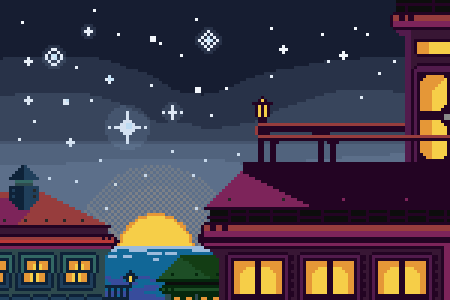
In what is now the Northern Wildlands and was once the northern half of the Middle and Outer Rings of the Solarian Alliance lies a system located auspiciously on the border between the Outer and Middle Rings, directly at the conflux of the warp gates that allow easy transition between the two. This system, Patria Nueva, contains one inhabitable world, and this world is known as San Colette. The '''Sovereign Solarian Republic of San Colette''' is a (now formerly) Solarian nation where many things meet: the Middle and Outer Ring, the Coalition and Alliance, and — now — the forces vying for control of the Northern Wildlands. But the Republic — which was long intended by the Alliance to be a fallback point and redoubt in a theoretical Second Interstellar War — is not without its defenses or, thanks to its still-intact phoron facilities and stockpile, protectors. But with the system now caught between the Solarian Restoration Front and the League, many in the Republic ask themselves a simple question: can San Colette weather the storm which approaches her shores, or will she be swept away like so many others?
Earth’s only natural satellite, '''Luna''' was the first extraterrestrial body ever visited and colonized by humanity, with the first humans landing in 1969 and the first permanent colonists arriving as 21st century climate refugees. It is the oldest, richest, and grandest of the Alliance’s colonies, and is the location of many government and corporate headquarters. Lunarian cities are known as dome cities due to their domed structure, and are surrounded by rings of subordinate cities known as satellite cities. While the richest here have wealth beyond measure, the Lunarian working class has historically suffered as the moon’s industries have moved abroad and cheaper synthetic labor has replaced them. Above them the middle class toils away at the endless task of maintaining the Alliance’s huge bureaucracy, and worries about losing their livelihoods and being forced into the working poor.
==History==
==History==
While humanity has been obsessed with Earth’s moon for untold millennia before the invention of the most primitive spacecraft, historians generally regard the modern era of Luna as beginning on July 16th, 1969 - when American Apollo 11 astronauts Neil Armstrong and Buzz Aldrin were the first humans to ever land upon another celestial body. These pioneers were quickly followed in late 1970 by the Soviet N1/L3 Soyuz 7K-LOK “Pervoprohodets” mission, which landed the third group of humans on the Moon. The “Moon Race” would continue for the rest of the 20th century and result in the first permanent settlement on Luna by the early 1980s - the Soviet “Zvezda” moonbase. The Moon Race ended in an arguable draw in the early 21st century, due to increasing economic instability on Earth.
<center><i>“To understand the history of the Alliance, one must first understand the history of our Republic,” - President (2405-2413) Valentia Carabello, 2352 - 2454.</i></center>
Luna was mostly ignored by a humanity more obsessed with survival at home until 2070, when colonists from United Orbital Enterprise (a unified space agency between the USA, China, France, and Mexico) landed on its light side. Colonists from Cosmonaut Enterprises (a successor to the Soviet space program of the 20th century) landed on the dark side of Luna in 2072. With this the colonization of Earth’s moon had formally begun, and it would see significant use as a waystation for other points in the [[Sol|Sol System]] over the course of the upcoming decades and centuries. Due to its low gravity, the Soviets and UOE used Luna as a major shipyard and proving ground for deep-space equipment.
</div></div>
Further colonization to Luna took place during the 21st and 22nd century as climate damage gradually worsened, with many wealthy families and companies simply moving off-world to Luna when able to do so. With Earth's economy rapidly deteriorating the rich families of the planet found themselves in need of a new home in a very short order with very few good options: [[Mars]] suffered from many of the same problems as Earth, orbital stations were often too impractical, and Luna was -- aside from some way stations built upon it in the late 21st and early 22nd century -- mostly uninhabited. Luna was chosen by most rich refugees fleeing Earth due to its close position to Earth and the perceived ease of development on Earth's only natural satellite compared to the cost of producing dozens of semi-private stations for rich families and businesses.
The system of San Colette was first discovered by astronomers from France in 2272, in the years immediately preceding the devastating Interstellar War. Its original discoverers named it after Saint Colette of Corbie, in the hopes that the system would bring about a peaceful future for the then-struggling Alliance. The system was quite desirable for the Alliance as it contained one readily habitable world, San Colette, and a small planet, D’Anzin, with Helium-3 deposits sufficient enough to justify the expensive task of colonization. The Alliance, desperate for money in the midst of the Second Great Depression, sold off the system’s colonization rights in 2274. The rights were purchased by an unexpected source: rather than a nation-state or corporation purchasing the system’s colonization rights an alliance of Spanish and Portuguese business magnates secured the winning bid with seconds on the clock. The magnates – perhaps out of patriotism or perhaps out of a desire to win the economic goodwill of the government while avoiding the true cost of colonization – gifted the rights of colonization to the governments of Spain and Portugal. Before a colonization plan could be created the Interstellar War (2278 - 2287) broke out, effectively dashing the hopes of many of the prospective settlers.
While the initial hope of an Iberian colony faded in the chaos of the Interstellar War and its economic impact, the desire of many in the region was not extinguished. By the 2330s the worst of the economic crisis had faded into the background and Iberia once again prepared to journey to the stars and in 2338 they launched the first colony ships to San Colette, and towards a new future.
A great deal of manpower and money was required to create this new home for the Earth's richest and brightest as Luna, unlike Mars, was built without the use of cyborg-based labour. To do this hundreds of thousands of well-trained engineers, technicians, and other personnel were employed by the climate refugees to build their new home in exchange for a place on it when the refuge was completed. As such Luna, despite its original conceptualization as a climate refuge for the richest and most notable of Earth, has had a working class from its first days. As settlement continued and more domed cities were created the "lower class" of Luna expanded to include a variety of miners brought by [[Einstein Engines]] in order to exploit Luna's natural Helium-3 and titanium deposits. Though these deposits have since dried up the descendants of these miners can be found on Luna even today, and often still work for Einstein Engines -- though now as engineers and bureaucrats rather than miners.
</div></div>
</div></div>
The booming economy of Luna created an environment in which corporations could easily succeed. In 2155 Einstein Engines, using the foundation provided by Lunan Helium-3 mining, created the first practical mass-market warp engines and became the first modern megacorporation. Luna’s prosperity has continued since then, and it remains one of the wealthiest planets in the Sol Alliance to this very day, despite its small size and small population. The Luna of today is, in many ways, the ideal colony. Rich, prosperous, and unfailing in its loyalty to the Sol Alliance.
The journey to San Colette took almost two years due to the distance traversed from Earth and the ad-hoc nature of many of the Alliance’s transportation networks, which had been ravaged by both the Interstellar War and the Second Great Depression. As the five colony ships sent to San Colette traveled across the breadth of the Alliance one of the scientists aboard the lead ship, Doctor Ernesto Castrejon, observed the sorry state of the Alliance’s warp network. Doctor Castejon was, at the time, a scientist of little importance simply sent to assist in the construction of a theoretical warp gate for San Colette which would connect it to the broader Alliance. But as the journey dragged on and Ernesto became increasingly irate, he began to form a greater idea which would transform the broader Alliance. At long last, in 2340, the first colonists arrived in the system of San Colette, ready to begin the immense undertaking of colonizing a new world for the Alliance.
These colonists who landed on San Colette found, as the reports had suggested, an Earthlike world with a pleasant, if somewhat dry, climate. The first colonists to land found themselves on the coast of the largest of San Colette’s three major continents, overlooking a vast blue sea on one side and kilometer after kilometer of grassy, fertile flatlands on the other. The colonists, ecstatic at the good fortune, decided upon a historical name for what would become their capital city: Nueva Isabela. Over time Nueva Isabela would grow and become the primary agricultural and political hub of the fledgling colony as the other four colony ships formed similar settlements. In the far north of its largest continent the settlement of Montblanc was formed, which would become its technological hub. Across the sea from Nueva Isabela the settlement of Porto de Ouro was established, later becoming a major hub for off-world travel. The settlements of Vila Nova de Norte – the most northern major settlement on the planet and one of the few able to function year-round despite the poles’ snowstorms – and Nuevo Villaviciosa – an industrial center located at the mouth of a major river – were both founded on the same continent, the smallest of the three. The five original cities of San Colette would go on to become its hubs, and still dominate its economy today.
Within a decade San Colette had established itself as a young, though quite productive, colony. Helium-3 mining on D’Anzin kept its budget in check and a warp gate, first completed in 2344, ensured shipments of materials were never long in reaching the new colony. But for one man, who had now been promoted to the lead scientist in charge of the Coletter warp gate, it was not enough. What Doctor Castejon had in mind was far greater than one planet, one warp gate, and Helium-3 mining. The doctor had turned his mind towards the future and realized something: with San Colette’s position, which straddled the line between the Middle and Outer Rings, it had a unique opportunity to establish itself as the main point of transit between both rings. Doctor Castejon intended to turn San Colette into a transportation hub, and to transform its economy in the process.
Doctor Castejon took his idea for a warp gate network in the northern section of the Alliance to the then-governor of San Colette, Beatriz Rada, in 2349. What happened behind the closed doors of the governor’s residence may never be truly known, but both Governor Rada and Doctor Castejon left the meeting with a drive to see the project realized. Following six years of debate, backroom dealings, and extensive political maneuverings the Warp Gate Project – the largest project undertaken by the Alliance – was approved by the Solarian government, and the majority of the construction contracts were awarded to Einstein Engines. Governor Rada and Doctor Castejon had achieved their dream: to make San Colette the largest point of transit between the Middle and Outer Rings, and to bring immense wealth to it in the process.
But there was a catch to this deal. Despite the efforts of Rada and Castejon they were unable to proceed without the support of one of the Alliance’s most significant forces: the Navy, which had become even more powerful in the aftermath of the Interstellar War. The Navy demanded oversight of the project in San Colette’s system itself and the ability to take “reasonable precautions,” in designing a defense for San Colette. The Coletter delegation attempted to protest but rapidly found themselves shut down by the Naval delegation and, surprisingly, the Alliance’s central government. With its economy and prestige battered and bruised by the Interstellar War the civilian government of the Alliance was, at best, unwilling to argue with the Navy and often deferred to it – a trend which would continue into the 25th century, with devastating consequences.
The Navy’s demands for its support were deceptively simple on paper, and only contained one requirement: that San Colette be designated a “fallback point,” for any future conflict with the Coalition. This simple requirement would go on to define San Colette due to the factors required to meet the Navy’s standards for its fallback point. First: A large stockpile – fuel, weaponry, and assorted equipment – would have to be assembled, designated, and placed in the system. Second: Fortifications would have to be constructed to hold off the Coalition for an extended period and the Navy, rather than San Colette, would be the final judge of what constituted enough fortifications to hold off the Coalition from San Colette. Third: A local military, which San Colette had nothing resembling, would have to be formed to man the defenses and secure the system. The gravity of what would have to be done to fulfill this demand, and the impact it would have on the system’s budget, almost immediately caused a crisis in the government which only ended when the Alliance, along with the Navy, promised to subsidize much of the work. But despite the Alliance and Navy’s funding the project remained daunting and would date years, if not decades. Further negotiations ensured San Colette would not have to finish the defenses before the warp gates were built, but they were required to start as soon as possible.
In 2356, following a short period of internal debate regarding the practicality of the Navy’s demands, the warp gate project began in San Colette in earnest. By 2357 the first gate – which connected San Colette to [[Callisto]], another Alliance member state chosen for the Warp Gate Project – opened, and equipment for the creation of additional gates began to flow from the Sol System to San Colette. Gate after gate opened over the following years, bringing more materials and more wealth to San Colette. The gate network brought new industries to San Colette beyond its previous exports, which had mostly consisted of foodstuffs from San Colette itself and Helium-3 mined on D’Anzin. This economic diversification was also driven in part by desperation, as the Navy now required much of the system’s He3 production to be stored for a theoretical emergency. A local shipbuilding industry which specialized in ships designed to work in San Colette itself, rather than traveling abroad, formed as a result of the influx of trade goods. Most importantly for San Colette’s future a local artificial intelligence industry began to grow in the late 2360s. While Colettish AI would never reach the level of sophistication of IPCs on [[Konyang]] due to being based upon indigenous AI designs instead of Glorsh-derived designs, it would become very effective at carrying out the tasks needed to run dozens of warp gates in a singular system. One of the tasks commonly assigned to Colettish AI was the identifying of ships in the system and determining their destinations, which would later prove itself to be of stunning importance.
But the demands of the Navy never left the mind of the inhabitants of the system and, in 2362, work began on the first of what would eventually become four lines of defense of San Colette. The “Rock of San Colette,” as it would become known, was designed to fulfill the Navy’s demands while not destroying San Colette’s budget. At the time of its completion in 2398 the Rock consisted of a series of armed space installations. But this was not enough for the Navy and the government of San Colette was sent back to the drawing board. To the Rock was added the Tools and Field of San Collette, which would become the second and first layers of San Colette’s defensive lines. The Field itself was self-explanatory: a large section of space on the edge of the system was designated as a stellar minefield and filled with a variety of anti-vessel mines. Built from 2375 to 2405, the Tools consist of a ring of automated defenses built using Colettish AI.
While the Navy was relatively content with San Colette’s defenses there remained the matter of training and equipping a local military arm to defend San Colette in the event of a dire emergency. In 2356 the Civil Guard of the Sovereign Solarian Republic of San Colette, or simply the Civil Guard, was founded in response to the Navy’s demands. The Civil Guard, over the next few decades, proved to be a competent and relatively well-equipped force. Its size remained relatively small due to the Guard’s focus on defensive readiness and automated weapons, but constant funding ensured it was never free of willing volunteers. A sense of patriotic duty related to the Civil Guard also began to slowly develop and many Coletters began to view service in it as a way to seize some of their military autonomy back from the Solarian Navy, which had become increasingly unpopular due to its demands.
By the early 2400s San Colette had become a beacon of economic stability in the outer Alliance, and served as a hub for trade flowing from much of the northern Spur into the Alliance. In 2402 it was officially declared to be the Sovereign Solarian Republic of San Colette, finally shedding its colonial roots and ascending as a full Solarian member state. As the first decade of the 25th century came to a close the Republic had one of the highest standards of living in the Middle and Outer Rings thanks to its status as a trade hub. But the relationship between the Navy and Republic remained poor and efforts by the Civil Guard to further expand their capabilities were often frustrated by the Navy. In 2415 the Navy-Guard relationship reached a new low when the Guard’s ships were banned from possessing warp engines capable of traveling without a gate, despite the protests of the Republic.
But these protests were soon drowned out in 2417 by the discovery of phoron in the system of Biesel. Coletters, ever poised to increase the prominence of their Republic, rapidly managed to carve out a niche in the growing phoronics industry by establishing processing facilities for the fuel on the surface of D’Anzin. Unused and neglected Einstein facilities were rapidly bought up by the government and converted into facilities which turned inert phoron crystals into a usable form, which was then sold to actors across the Orion Spur. Colettish facilities, while they would not reach the output of Tau Ceti, became an important link in the phoron economy between Tau Ceti and much of the outer Alliance and inner Coalition. Trade to the Coalition was initially severely protested by the Navy, and required the addition of phoron to the Colettish strategic reserve in order to appease them.
The addition of a phoronics industry to the system brought the wealth of the Republic to new levels as the 25th century progressed. The Civil Guard was equipped with domestic ship designs for the first time, another layer — the Spears of the Saint, a series of fifteen massive orbital railguns — was added to the Republic’s defenses at the Navy’s insistence, and a local arms industry began to develop in response to growing fears concerning the Solarian government’s seeming unwillingness to assist more distance colonies such as the Republic. Perhaps most importantly the AI industry of San Colette continued to develop, with more and more deadly semi-autonomous drones being created for the defense of San Colette. While skrellian dignitaries were sometimes quick to point out the dangers of such weapons, Republic officials dissuaded them by noting their semi-autonomous nature required a human hand to guide them and make final decisions, and explaining the designs — unlike typical IPCs — were based on human algorithms and technology.
During the golden years of the phoronics boom, which followed the secession of Biesel, San Colette produced much of the processed phoron consumed by the Alliance. Solarian patriotism and distaste for the Republic of Biesel fueled much of the initial boom, but tight controls by the Navy — which frowned upon selling Colettish phoron to non-Solarian customers — began to slow the boom by the late 2450s. Despite slowing in the 2450s the phoronics boom lasted until the early 2460s. By 2461 the flow of phoron gradually began to slow and many facilities opted to limit their production or entirely cease their operations. Some blamed it on NanoTrasen, which had long had a poor relationship with the Republic, while others claimed the decreasing flow was due to Elyran isolationism. Throughout 2461 and into 2462 the Republic stockpiled more and more phoron, hoping it would be able to slowly release fuel from its strategic reserve in order to preserve their economy during what many viewed as an incoming fuel crisis.
Unfortunately, few could anticipate how grim the crisis would become as 2462 neared its end and many families in the Republic prepared for Christmas.
Coletters often argue over when the Solarian Collapse truly became unavoidable. Some argue that the Clandestine Incident of 24 October, 2462 — which many in the Republic believe was carried out deliberately by Biesel — marked the start of the end. Others believe the end truly began on 07 November, 2462, when Mars ceased responding to interstellar communications. Or perhaps it was on 11 November, 2462, when the Prime Minister was found dead in his suite. But most argue the Collapse was truly, irreversibly set to happen on 17 November, 2462, when forces from the 58th Fleet opened fire on fellow Solarians. This, to most in the Republic, marked the decisive turning point.
Mere days after this, on 20 November, 2462, the Collapse came to the Republic. The garrison fleet stationed in San Colette, the 67th Fleet, attempted to seize the system for itself. The 67th Fleet, much like its Konyanger counterpart — the 58th — was a smaller fleet loyal more to its admiral, Frederich Müller, than the Solarian government. Admiral Müller demanded the civilian government surrender and hand over the phoron stockpile to him. They refused, and the Battle of San Colette began between the Civil Guard and the 67th Fleet. The Civil Guard and San Colette’s defenses, aided by deserters from the 67th and a home field advantage, eventually routed the 67th and chased them from the system at little cost to themselves. But, due to their inability to pursue them, the 67th was eventually able to find its way to New Atlantica, where its remnants formed the basis of the Anti-Corporate League.
With the defeat of the 67th Fleet the immediate danger had passed for the Republic. However, the chaos of the Solarian Collapse was far from over and during the final two months of 2462 chaos reigned throughout the region San Colette called home. To its galactic west Konyang seceded and the Anti-Corporate League filled the vacuum left by the collapse of Solarian authority in the region. To its east Lycoris, which had at one point helped build the Colettish warp gate network, fell to the Solarian Restoration Front, which began to brutally purge all non-humans from its territory. Solarian fleets collapsed entirely, defected, resorted to piracy, and sometimes became roaming mercenary bands. Refugees began to flow into the Republic from both sides, and the systems around San Colette — many of them too small or otherwise unable to maintain their own fleets — looked to it for aid and some form of protection in this desperate time.
In January 2463 the Republic answered the call of its neighbors by forming a defensive Alliance known as the Middle Ring Shield Pact. The Pact, unfortunately, quickly ran into problems. Many of its systems, while wealthy, were reliant on the Solarian Navy for protection prior to the Collapse and had no appreciable navies of their own. Most, aside from San Colette, additionally suffered from high degrees of megacorporate domination in their local economies. None had the defenses of San Colette and the Civil Guard was unable to patrol every system vying for membership due to its small size and lack of independent warp engines. Even worse was the economic situation: many gates into Sol itself had been damaged or otherwise closed during the months of the Collapse and the businesses of the Republic now had a desperate need to find new markets before an economic meltdown began.
Salvation would arrive later in January in an unusual form: the former 5th Middle Ring Battlegroup, now better known as the Free Solarian Fleets, under the command of Fleet Admiral van der Rensburg. The mercenaries of the Fleets were tempted by the Republic with a rare prize: phoron from its stockpile and a port to call home. The current President of the Republic, Maribel Sarmiento, and van der Rensburg have a very amiable relationship but many in the Republic — particularly in its Civil Guard — know the loyalty of the Fleets, despite the privileges granted to them, only goes as deep as the Republic’s pockets. Whether they will stand and fight against the enemies of the Pact remains a matter of great concern, particularly for those beyond the reach of San Colette’s defenses.
Resolving the economic crisis caused by the Collapse was simpler than many in the Pact and Republic originally expected. With the collapse of Solarian authority in what became the Corporate Reconstruction Zone, much of the food supply line was interrupted and a new need for weaponry emerged. San Colette, stripped of many of its more high-end export routes, has fallen back onto exporting two mainstays of humanity to the CRZ via Tau Ceti in the meantime: foodstuffs and weaponry. By summer 2463 the economic crisis was resolved. However the necessity to maintain good trade relations with Biesel has led to the SRF and League becoming more vitriolic in their rhetoric towards the Pact, but what can one do? To trade with the Alliance means trade must go through the SRF, and to trade with the Coalition one must go through the League. Coletters have thus been forced into an awkward, perhaps temporary, economic relationship with Biesel.
As the Republic looks forwards towards what many in its view as an inevitable, existential war against its regional rivals in the Northern Wildlands, many in it dread what the future may hold. While it maintains a better standard of living than most of the Wildlands — and a significant amount of the frontier — it remains teetering on a knife’s edge, pressed between two warlord states which despise it and forced to trade with a corporate state which desires to dominate it. The Republic and its people must chart a steady course through the waves of the Collapse, or be swamped and drown in it.
</div></div>
==Environment==
==Environment==
Luna is a large moon, larger than [[Pluto]] — the ninth planet in the [[Sol|Sol System]]. It has roughly one sixth of the [[Earth|Earth’s]] gravity, which necessitates the use of artificial gravity in its settlements and led to it becoming an early center of Solarian shipbuilding. Arrival gravity in Luna’s cities generally brings the area up to 85% of Earth’s gravity, leading to the typical Lunarian being taller than most Solarians but more awkward in Earth-level gravity. The lunar surface is dominated by lunar dust, which is highly abrasive and can cause damage if inhaled — necessitating the use of large, often multi-stage, airlock systems whenever a Lunarian must venture outside of a dome. The surface is also heavily bombarded by cosmic radiation due to the thin lunar atmosphere, and some cities must use specially treated materials to have their outer shells resist both dust, radiation, and the occasional meteoroid.
<center><i>“Oh, San Colette! My homeland so fair! The land of our own, and no others compare!”</i> - Excerpt from the Anthem of the Sovereign Solarian Republic of San Colette (2408)</center>
Luna is locked in a synchronous orbit with Earth, leading to both a near side — which always faces Earth — and a far side — which always faces outwards. Lunarian settlements have historically been centered on the near side due to ease of resupply and a desire by early Lunarians to view their home planet. Of the five great dome cities only Gagaringrad is on the far side of the moon, which has earned it the nickname of the “Shaded City” by Lunarians. When viewed from Earth, Luna’s dome cities and their satellite cities create a vision not unlike viewing humanity’s homeworld from orbit. Despite early attempts to sync the Lunarian calendar to lunar months, colonizing governments — then the Alliance — insisted on using the standard Terran calendar for convenience, and this example has been followed across the Spur.
===The System of San Colette===
The system of San Colette consists of four major stellar bodies including its star, Nueva Hispaniola. The nearest stellar body to Nuevo Hispaniola is a small and barren planet known as San Felipe. Due to its closeness to the star San Felipe is entirely uninhabitable and its only man-made features are a neglected series of solar power facilities built by Einstein Engines during the Warp Gate Project which exist both in the orbit of San Felipe and on its surface. The rusting hulks of these facilities are occasionally used for target practice by the Civil Guard but otherwise rarely receive visitors due to their proximity to Nuevo Hispaniola and the presence of unexploded firing range munitions aboard them.
Further out from Nuevo Hispaniola lies the temperate world of San Colette, where the vast majority of the system’s population can be found. San Colette’s surface is defined by its three large continents and large ice cape at its poles. The planet is remarkably hospitable and relatively Earthlike, with no major meteorological phenomena occurring on its surface. It has one natural satellite, San Colette Minor. The moon of San Colette is a barren rock without any major settlements. Scattered Civil Guard facilities and private mining platforms can be seen across its surface. But no reasonable Coletter would describe San Colette Minor as their home.
Thousands of miles beyond San Colette, towards the edge of its system, lies the frozen planet of D’Anzin. The thick layers of ice and rock which cover the surface of D’Anzin are rich in deposits of Helium-3, the fuel which powers the warp gates of the Republic. For nearly as long as humans have called the system home there have been mining operations on the surface of D’Anzin and the planet is covered in a variety of mines, in various states of repair and functionality, as a result. Recently D’Anzin had become home to a new form of energy production: phoronics. The planet’s remote location and lack of large settlements has made it the ideal location to process raw phoron into usable fuel, and all of the Republic’s processing facilities can be found on D’Anzin itself or in its orbit.
Beyond the orbit of D’Anzin and the massive warp gates near it lies the Colettish Belt, a sizable ring of asteroids which surrounds the system. Asteroids and comets found in the Belt contain little of value and much of the Belt itself is designated as a restricted military zone due to the presence of the Republic’s second layer of defense: the Tools of the Saint. Automated defenses are scattered throughout the Belt and wandering into it, or deliberately tampering with the defenses, often results in injury, death, or time in a prison on San Colette. The extent to which the Belt is fortified remains a secret of the Republic few are aware of.
===The Planet of San Colette===
The climate of San Colette is temperate and relatively Earthlike, which helped ease its colonization. Its surface is defined by three continents — Maria, Nueva Norte, and Morro — separated by large seas and covered in a variety of climates. The planet’s poles are covered in ice caps which have shrunk following colonization by an insignificant amount, and San Colette Minor provides enough of a gravitational pull to create a system of tides. San Colette is relatively free of freak meteorological phenomena and has four seasons which roughly correspond to their earthbound counterparts.
====Regions====
The continent of Maria is the largest of the three and is home to the capital of Nueva Isabela and the industrial center of Montblanc, which is in its more northern regions. Maria is easily divided into two major regions: a large, grassy flatland called the Colettish Plains known for its rich soil which has long been the agricultural heartland of San Colette and the more northern forests of Cristobal. The Colettish Plains are home to Nueva Isabela and are dotted by many smaller towns, ranging from cities of thousands to villages of mere hundreds. It is separated from Cristobal by the uncreatively named Northern Range, a old and quite short mountain range which bisects the continent and is home to many mining operations. Cristobal is colder and criss-crossed by various rivers, eventually transitioning into taiga and then polar ice in its north. Montblanc, a Colettish industrial center, sits at the mouth of one of these rivers, which allows it to easily receive minerals from the Range and lumber from further inside Cristobal.
==Culture==
[[File:Luna - Final.png|The government flag of Luna. The crescent represents Luna itself, and is meant to remind viewers of Selene's headpiece.|thumb]]
Across the sea from Maria, to its west, lies the mostly unpopulated continent of Morro. The continent is dominated by a large, arid scrubland known as the Hinterlands which often suffers from droughts and fires. It is home to the settlement of Porto de Ouro, which is unique among San Colette’s major settlements as it mostly lies off of the shore of Morro on a series of island chains — some natural and some artificial. The flat planes near it have been mostly cleared of plant life by Coletters and now serve as a major offworld hub. Much of Morro is poorly explored aside from satellite photography and rumors of mineral wealth have long motivated expeditions into it — though few return with much of value.
Lunarians are a tightly-knit and somewhat insular people wracked by stark class divisions between the rich, middle, and working class. The rich here are more wealthy than perhaps anywhere else in the modern Spur, but the working poor are just as poor as anywhere else. The richest Lunarians are part of families which have lived on Earth’s only moon since the 21st century and originally arrived as climate refugees, and upper-class families are known to spend extravagant sums of money to have their entire family trees charted out and known. Members of the middle and working class lack the obsession with pedigree, having neither the desire nor the resources to carry out these projects.
The third, and smallest, of the continents is Nuevo Norte, a highly-populous region home to two major settlements. Nuevo Norte is the furthest north of the three continents and is mostly defined by taiga and tundra, though some regions in its south are more hospitable. In its far north lies Vila Nova de Norte, a scientific hub which is known for its freezing temperatures and frequent snowstorms. Vila Nova stands on the edge of a large, flat tundra known as the Guard’s Tundra due to its use as a proving ground for Civil Guard weaponry. To the south of the continent in one of its few temperate regions is Nuevo Villaviciosa, the planet’s major shipbuilding center. Nuevo Villaviciosa is one of the few locations in the Middle Ring to feature a functional space elevator, which lies slightly offshore and is visible from almost anywhere on Nuevo Norte.
Regardless of class, Lunarians tend to have certain physical characteristics due to their shared origin on the moon. Due to the lower gravity of the moon, Lunarians tend to be taller than most humans — such as the residents of Earth or [[Republic of Biesel|Tau Ceti]] — and can struggle with adjusting to Earth-level gravity, much like [[Callisto|Callisteans]] or other moon-originating humans. Lunarians also tend to be paler than their Earthborn counterparts due to many living in partially-recessed dome cities where natural light can be rarer, and the Lunar day-night cycle, where most locations have 14 days of light followed by 14 days of darkness — though earthshine (light reflected from the Earth) ensures these nights are brighter than Terran ones. Many develop sunburns more quickly than other humans, and “Lunarian-proofed” sunscreen is a common sight in starports across the current and former [[Sol Alliance|Alliance]].
==Life on San Colette==
Most Lunarians have membership in class-specific clubs and fraternal organizations, which can range from drinking clubs for dockworkers to clubs for politicians where all participants must wear stylized masks. Almost every one of these organizations are invitation only . As all things on Earth’s moon, some are far more prestigious than others, and the most prestigious of these – such as the Oakheart Club of Harmony City, a fraternal order for Solarian Navy flag officers – can and do influence the political culture of the entire moon (and perhaps the broader Alliance). Many prominent Lunarian social clubs have been accused of involvement in the secret societies alleged to run Luna from behind the scenes through proxies, patsies, and fronts. Most clubs will have some form of special, often opaque, gesture or ritual associated with their activities, ranging from handshakes to seemingly occult rituals involving the burning of sacrificial effigies. Many a B-list Venusian crime film has involved a plucky detective investigating a Lunarian fraternal organization, only to find it is not-so-secretly a cover for something supernatural or evil.
<center><i>“I swear to defend the Republic, its people, and its values at any cost. I will uphold the values of freedom enshrined in our constitution, even if it costs me my life.”</i> - Except from the Colettish Oath taken by Civil Guard personnel prior to beginning training.</center>
===Social Classes===
[[File:Navy graduation.png|Throughout history, members of the Lunarian upper class have made up a large portion of the Solarian Navy's officer corps.|thumb]]
Sitting at the top of Lunarian, and perhaps the entire Alliance’s, society are its most wealthy citizens. Sometimes known as Sol’s aristocracy, or — more derisively, and often by non-Solarians — as the Solarian nobility, the Lunarian upper class is per capita the richest group of humans in the modern Spur. These Lunarians can trace their origins to the original climate refugees, often already rich themselves, and to the early executives of successful corporations such as Einstein Engines. They are obsessed with their pedigrees and their family histories, and few marry outside of Luna or the upper class; though an up-and-coming upper middle class family may find itself aligned to one of these venerable families by marriage, it is an uncommon thing. Genetically-engineered children, even cloned children, are not uncommon, and Zeng-Hu Pharmaceuticals is always willing to provide its services, though Galatean firms have long plied their trade on Earth’s moon. The extent of genetic editing the Lunarian upper-class experience before and after birth ensures they live longer, healthier lives than most other humans in the Spur. It is often joked Luna contains not just the greatest concentration of wealth in its upper classes, but the greatest collection of centenarians anywhere in the modern Spur.
The culture and daily life of a typical Coletter is informed by both the planet’s past as a planet settled by the nations of Iberia and its more recent history as a trade hub for the broader Alliance. Coletters value familial bonds, duty to the Republic, and are often seen as friendly and outgoing people by the broader Alliance. Coletters are known to be very talkative abroad and often stand very close to their conversation partners, which can result in some awkward encounters for those unused to Colettish conversation customs.
Wealthy Lunarians are massively influential in its political and economic environment, and many conspiracies — both on Luna and throughout the Alliance — swirl around their wealth and dominance. Some hold membership in secret or semi-secret societies they are rumored to use in efforts to further their influence and dominance, and some claim these societies far predate the founding of the Alliance or the colonization of Luna. The richest Lunarians are an exclusive class and zealously guard their homes in the central domes from intrusion by those deemed beneath their notice or unworthy of the privilege, with secret covenants between rich and influential Lunarians to make their neighborhoods more exclusive not being unheard of. Further increasing their exclusivity is their unusual accent: rich families will teach their children, and sometimes upper-level assistants in their employ, how to speak in a refined, learned dialect known as Formal Lunarian. Formal Lunarian, or FL, must be taught from birth as the way one learns Solarian Common for it to be passable to those who have also learned the dialect to birth. This makes it both hard to passably fake and marks someone as an outsider in a community when they speak, ensuring they may never fit in.
To a typical Coletter familial bonds are very important, and several generations of the same family will often live very close to one another — occasionally even in the same house! Holidays are viewed as a chance to catch up with one’s family and, prior to the Collapse, Coletters abroad would often return home for major holidays even as the cost of travel increased due to the phoron crisis. These holiday celebrations are often accompanied by the traditional dance of San Colette: the flamenco.
The Lunarian middle class makes up the majority of the moon’s population following the decline of its working class populace, and forms the backbone of the modern Solarian central bureaucracy. Most live in satellite cities and work in government buildings of the central dome, performing the endless duties of an interstellar bureaucracy under the watchful eye of the upper class. Often seen as a colorless and boring people due to their line of work, a common Solarian joke claims the stereotypical middle-class Lunarian is a Solarian government bureaucrat who wears a suit to work, commutes by train, and only feels joy when completing paperwork. Though typically wealthy in their own right, many of the middle class suffer from impostor syndrome and drive themselves into debt attempting to follow the trends of those richer than themselves. They are frequent travelers abroad, with middle-class Lunarians having a higher purchasing power off of Luna than on it due to their high wages being needed to match the moon’s cost of living. These Lunarians also form the middle management of Luna-centric corporations such as [[Einstein Engines]], [[Zeng-Hu Pharmaceuticals]], and [[Zavodskoi Interstellar]].
One of the key cultural tenets of Colettish life is a sense of duty to the Republic which has been ingrained in Colettish culture for several generations. Initially starting as a reaction to the anger many felt at the Solarian Navy, this feeling has helped cement the Civil Guard as a key cultural pillar of the Republic. Enlistment, particularly enrolling as an officer, is seen as a prestigious duty and many middle class Coletter families will try to enroll at least one child into the Civil Guard. In many Colettish households it is a common sight to see a photo of a relative in the uniform of the Civil Guard placed prominently on a wall or above a fireplace.
The Lunarian working class, in contrast to the upper and middle classes, is not flush with wealth. Once almost the equal of the middle class, the working class has seen its size shrink and influence fade away as Lunarian industries have moved abroad from the moon and a new invention has been brought in to replace those they have retained: positronic-based robots known as [[IPC|IPCs]]. Many working-class Lunarians have moved abroad, often to [[Callisto]] or to another colonized world in the [[Sol|Sol System]], and those who have chosen to remain must often make do in poorly-maintained and run-down satellite cities filled with rotting industrial infrastructure that serves as a reminder of the better life their parents and grandparents once lived, with the fading names of these once-great industrial companies now serving as epitaphs to the working-class life that was. These Lunarians are some of the most anti-IPC citizens of the Alliance, viewing them as having taken their well-paying factory jobs before and now threatening what service industry jobs they desperately hang onto, hoping to not be forced into insolvency. Working-class Lunarians who work in mechatronic-focused industries such as ship production take pride in a culture of technical ingenuity and non-positronic automaton maintenance which ensures they can keep positronics out of the workplace, even if their equipment is often slower and less efficient than a positronic-only factory.
===Holidays===
===Holidays===
The '''Zhongqiu Jie Festival''' is an extremely popular holiday on Luna said to date back to the 2070s. The holiday is originally rooted in the Lunar New Year, itself imported by East Asian immigrants to Luna, but has since grown to be a common holiday designed to celebrate the success of humanity’s first interstellar pioneers. The Zhongqiu Jie Festival takes place on the same date as its Earthbound variant; the fifteenth day of the eight month of the traditional lunar calendar.
The Republic celebrates a multitude of holidays throughout the year. Some are derived from historical events while others are rooted in the historical culture and religion of the original Iberian settlers of San Colette. Listed below are some of the more notable holidays in the Republic:
'''Apollo Day''' is another common holiday, taking place on the sixteenth of July. Similarly to Danza de la Luna, this holiday celebrates the success of humanity’s interstellar pioneers. However, this one celebrates the success of Apollo 11 specifically rather than explorers more generally.
* The Beatification (23 January): A celebration of the beatification of Colette of Corbie, whom the Republic derives its name from. Perhaps the most important holiday in the Republic, the Beatification is often marked by celebrations of the previous year and public carnivals.
A variation on Apollo Day named '''Pervoprohodets Day''' is instead celebrated in Soviet-colonized areas, with this holiday instead taking place on the fifteenth of December - the date the USSR’s LK lander touched down on the Lunar surface.
* Holy Week (movable — generally falls in late March or early April): A religious, cultural, and social event combined into one, the Holy Week has its roots in both Catholicism and the Spanish roots of San Colette’s settlers. Holy Week celebrations vary based upon the region of the planet they take place in but often involve distinctive costumed processions, many of which date back to Earth.
==Life in Dome Cities==
[[File:New_Odesa.png|A map of New Odesa and some of its satellite cities' rail infrastructure (click to enlarge).|thumb]]
Lunarian settlements are known as dome cities due to their original shape: as one would expect, they are large, domed structures designed in the early 2100s to replace the primitive early structures from humanity’s first settlements on Earth’s moon. The term “dome city” refers to the original dome, which most Lunarians see as the heart of their settlement and the most prestigious location to live, though only the ultra-wealthy can afford it. Central dome cities are ringed by satellite cities that serve as its neighborhoods and suburbs, and are connected by underground rail and highway lines often built into the moon’s long-dormant lava tubes. The quality of a satellite city can vary wildly depending on its original purpose and which individuals now inhabit it, with the best satellite cities resembling the central dome – though less prestigious – and the worst being decaying industrial areas which would not look out of place in a rough area of [[New Hai Phong]] or pre-Violet Dawn [[Mars]]. As all things on Luna, the quality of where one lives is generally determined by the economic strata they are born into.
* Republic Day (15 June): A celebration of San Colette being officially declared the Sovereign Solarian Republic of San Colette.
The central domes of dome cities are extremely exclusive locations, with only the wealthiest of already-wealthy Lunarians being found here, living alongside corporate headquarters buildings, fine dining and shopping, government buildings, and public buildings. Their residents are corporate executives, high-level government bureaucrats, and members of Luna’s most prestigious families and dynasties. These individuals will typically work to make the central dome even more exclusive through the creation of formal and informal compacts designed to ensure only those they deem sufficiently worthy. Further worsening one’s chance of ascension into the inner dome are restrictions placed on new constructions – or modifications – by organizations known as Municipal Development Compacts, or MDCs. A unique feature of central domes, MDCs are part social club and part homeowner’s association, and often involve local government officials. Unless one is a member – or has enough money to pass the exorbitant fees they charge – they have no chance of getting into the central dome. MDCs are, of course, always invite-only, further working to exclude new members.
* Civil Guard Day (22 June): A celebration of the establishment of the Civil Guard, San Colette’s local military force. Traditionally, Civil Guard officer candidates officially graduate from the Naval Academy of Nueva Isabela on this day.
Satellite cities have no such associations, though some richer ones have close equivalents, and are home to the vast majority of Luna’s population. Often connected to the central dome – where many satellite city dwellers work – by underground rail lines or highways, satellite cities can vary greatly in their quality and in what they contain, and their fates were often determined by how they were originally zoned by the early Lunarian government. Industrial-zoned satellite cities, due to the decay of Luna’s industrial sector, have fared the worst, but residential or commercial ones have fared much better. The typical middle-class satellite city is full of mixed commercial and residential zoning, and often has a high population density reminiscent of Callisto or New Hai Phong due to the height restrictions placed on expansion due to the presence of the dome. They can sometimes extend much further underground, both vertically and horizontally, with the most premium space being in the center of the satellite city where natural light reaches the streets at most times of the Lunar day. Typically they are laid out in a grid pattern, with government and high-rise buildings at the center – the tallest point of the dome – and structures becoming smaller as one approaches the edge of the dome.
* Colonization Day (5 October): The day the first settlers landed on the surface of San Colette. Officially made a holiday in 2421, shortly after the Republic was declared. This holiday is often viewed as a chance to reflect upon San Colette’s past and future, and has become quite solemn following the Solarian Collapse.
==Economics==
The Lunarian economy has undergone significant changes since colonization. Luna’s economy was initially based around heavy industries deemed non-viable on Earth: shipbuilding and He-3 mining and refining. With the earliest of humanity’s vessels having been made in Earth’s orbit, where collisions with abandoned space objects were a constant risk, shipbuilding forms were quick to rebase to Luna, with many concentrating on the near side of the moon and establishing facilities on the outskirts of climate refugee settlements: arguably, these were the first satellite cities. On the far side of the moon the Soviets were quick to establish a settlement of their own — Gagaringrad — and the Union’s insatiable urge for Helium-3 to power warp technology caused mining operations to follow. First the Soviets, then the rest of Earth, staked out mining operations for themselves. For its first few decades, Luna was a very working-class colony: home to those building the new future of humanity. Dinged and scuffed Soviet monuments to the conquest of the Stars on Luna built in this era can be found across its surface, though many are in disrepair and few can read their dated script.
* Christmas Day (December 25): Christmas in San Colette arguably starts with the drawing of the Christmas lottery on 22 December, which itself has its own traditions around its first prize (locally referred to as “the Big One,”) and “luck pilgrimages,” made to the lottery booty which sold the last year’s first prize ticket. Christmas itself has changed little from its Earther roots and serves as a day to celebrate with one’s family and relatives.
* Saint Sebastian’s Day (December 26): Often considered to be a continuation of Christmas, this holiday has similar religious and cultural roots. It is typically treated as a quiet day to spend time with family and reflect upon the previous year.
===Refugees===
Most current residents of the Republic who are not native Coletters are instead refugees from other sections of what is now the Northern Wildlands. These refugees are a diverse group of Solarians, and other citizens, drawn to San Colette by its relative stability in the maelstrom of the Solarian Collapse. The refugees are a diverse group due to their variety of origins: some come from the industrial world of Lycoris and have opted to flee the violence of the SRF, while others are offworlders from stations cannibalized by the League for spare parts. Rarely non-human refugees — skrell, the rare tajara, and handfuls of IPCs — trickle into the system from territory now controlled by the SRF, exhausted from a harrowing journey barely ahead of the Front’s internal police.
When they arrive most are sent to refugee settlements on San Colette — hopefully temporary arrangements on the edge of Colettish cities — where they are given a residence and the option of work. Most of these refugees follow two career paths: the more common option is to enlist in the Civil Guard, which desperately requires troops to defend San Colette. The second path is to work in the phoron refineries of D’Anzin, which few choose to do. Those who do opt to work on the phoronics facilities can find themselves away from their families for weeks at a time due to the remote location of D’Anzin and the difficulties of travel due to fuel rationing. IPC refugees, due to their status in Sol, do not have the liberty to choose. They are conscripted into the Civil Guard upon arrival in the Republic, regardless of ownership status, and given a chance to earn freedom, in the form of transport to Biesel or another system of choice, through two years of military service.
Not all refugees have found San Colette welcoming. Resources are often limited due to the economic malaise inflicted by the Collapse and native Coletters often receive goods before their refugee counterparts, who must depend on the government for support. Policing in refugee camps is often a difficult matter due to the small size of San Colette’s domestic police force and the exponentially-increasing number of refugees. Many are concerned that the Republic will soon be entirely unable to accept refugees due to their sheer number, but the flow of desperate people fleeing warlords shows no sign of stopping in the immediate future.
But the early Lunar economy was not to last. As humanity expanded beyond the Sol System and congealed into the Alliance, the need for new ships and more fuel rapidly outpaced what Earth’s moon could produce. Shipbuilding moved further away to larger, purpose-built facilities further out in the Sol System — now a few hours’ travel away instead of weeks — and He-3 operations moved to Pluto, where the Soviets applied everything they had learned on Luna to create the still-largest producer of Helium-3 in the modern Spur, and one with the nearly-unlimited resources of the Oort Cloud rather than Luna’s already-depleted reserves. Shipyards, factories, and refineries began to shutter across the moon’s satellite cities. Skilled labor fled abroad and those who stayed behind suffered from unemployment, with many turning to crime or accepting lower-paying jobs in the now-growing service industry. Some instead chose to work for a growing employer on the moon: the Solarian government, whose bureaucracies were migrating to Luna’s domed cities from a decaying Earth.
===Language===
The modern Lunarian economy is heavily based around the government and its service sector, though many previously human-worked service jobs are being supplanted by positronic units owned by corporations or the government. Middle-class Lunarians typically work for the Solarian government or in office roles for corporations with facilities on Luna — with most corporations having a regional headquarters here, [[Hephaestus Industries|Hephaestus]], [[Orion Express]], and [[NanoTrasen Corporation|NanoTrasen]] excepted. Rich Lunarians work in the same sectors as their middle-class colleagues, but tend to be in senior-level positions rather than the middling ones occupied by the middle class. Working-class Lunarians are left with what remains: most work in the service industry, with a minority being employed in government-run blue collar jobs such as Navy shipyards and urban maintenance. They have significantly less purchasing power than other Lunarians and often live paycheck to paycheck, with the creeping growth of synthetics in their traditional jobs having caused many to migrate abroad, often to Callisto, in hopes of a better life.
The primary language of San Colette is the Colettish dialect of Tradeband, which is often simply referred to as Colettish Tradeband. This variant of Tradeband has been heavily influenced by its Iberian roots but has its own unique twists. The name of the system, San Colette, is typically rendered in Colettish Tradeband rather than in its original names of Sainte-Colette and Santa Coleta.
Solarian Common is the typical secondary language for most Coletters out of necessity, and is taught in Colettish primary schools. Other human languages, such as Elyran Standard and Freespeak, are rarely spoken by natives of the Republic. Freespeak is the more common of the two due to the Republic’s status as a trade hub of the northern Alliance, but is rarely spoken by native Coletters.
==Military==
===The Defenses of San Colette===
<center><i>“We must form a wall of steel around our Republic. We must ensure no invader is able to seize San Colette. We must be ready to die for our Republic if necessary.”</i> - Admiral Emerico Tolentino (2403 - ), Commander of the Civil Guard (2455 - Present)</center>
The defenses of the system of San Colette are a complex, multi-layered ring of defenses which completely surround the system on all sides. Built by both the Republic and Navy over the course of decades, the Bastion of San Colette cost a massive amount of Solarian Credits to construct and stands as a contemporary marvel of spaceborne engineering. The Bastion has four layers, with the first being the most outer, which have their own names and purposes. The garrison of the Bastion has long been the Civil Guard, the Republic’s local military force.
The first layer of the Bastion is the most simple one. Typically referred to as the Field of San Colette, the first layer consists of a wide arrangement of anti-ship mines intended to slow and deter potential attackers. The mines themselves can often be decades old due to the sheer amount used, but remain an effective deterrent for all but the most organized attackers. A recent addition to the first layer are the destroyed husks of several 67th Fleet vessels which were lost inside it during the Battle of San Colette. As removing them was deemed too risky, the husks, for now, simply remain in the Field of San Colette as grim warnings for any warlord who wishes to assail the Republic. The first layer is the only defensive layer beyond the Colettish belt, the asteroid field at the end of San Colette’s system.
After the minefields lies the Colettish Belt, which is home to the second layer of the Bastion: the Tools of San Colette. The Tools which this layer derives its name from are a series of automated defenses spread throughout the asteroid belt which switch online if given the appropriate signal by operators further inside the Republic. Many of the defenses in this layer have been built into asteroids and are very difficult to spot from a distance. The second layer is not intended to stop an invader on its own, and its primary purpose is to delay them for the next layers.
The third of the Bastion’s layers is the Rock of San Colette. This layer consists of a large number of stellar facilities, many of which are considered to be stellar fortresses, intended to hold off any attacker until they exhaust themselves or reinforcements arrive. The majority of the Civil Guard serves in these fortifications, which also serve as a berth for the Guard’s fleets. While intimidating, the Rock is the oldest of the Bastion’s defensive lines and many of its fortifications were originally constructed in the mid 24th century. Modernization efforts began in the mid 25th century but slowed in the years leading up to the Collapse due to a lack of Navy funding. Following the Collapse the Republic has begun a rapid effort to modernize the Rock in order to hold off a theoretical attack by both the League and SRF. But fortunately for the fortifications of the Rock another layer lies beyond them which can easily support the third layer.
The fourth, and technically smallest, layer of the Bastion are the appropriately-named Spears of Saint Colette. A modern array of fifteen defensive stations equipped with massive Magellan-class interstellar railguns, the Spears are able to target and destroy an enemy vessel in any of the Bastion’s layers. The Spears are staffed by the best troops of the Civil Guard and require an immense amount of power to fire their tungsten rod projectiles, which can weigh up to several tons. As a result of their power requirements the Spears have large solar arrays which provide them with enough power to charge their railguns. The Spears are able to hold enough power for several sequential shots before recharging is required, but the size of their projectiles — which must be moved into place by massive machines — naturally limits their rate of fire. But when the Spears do strike true, they bring devastating consequences. The railgun station El Conquistador impacted a Taipei-class vessel during the Battle of San Colette, disabling it in one hit and causing its reactor to go critical, eventually consuming the entire ship in a massive explosion.
The railgun stations of San Colette have been given nicknames by their crew and are often referred to by said nicknames in the press. Below are the nicknames of the Spears of San Colette.
[[File:Civil_Guard.png|thumb|The coat of arms of the Civil Guard of the Sovereign Solarian Republic of San Colette, adopted shortly after its creation.]]
<center><i>“Hold, Fight, Win.”</i> - Official motto of the Civil Guard of San Colette, adopted in 2435. </center>
The uniformed military of San Colette is the Civil Guard of the Sovereign Solarian Republic of San Colette, often simply referred to as the Civil Guard. Prior to the Solarian Collapse the Civil Guard was a local militia branch of the Solarian Navy tasked with defending San Colette itself which was not expected to travel beyond its borders for any serious duties. As with many militias the ships of the Civil Guard were not equipped by the Navy with warp engines in order to make a rebellion by the Republic harder to carry out. Despite this limit placed upon it the Civil Guard has always been looked upon as a way to minimize Navy influence in the Republic and its government has cut no corners in funding and equipping it. Service in the Civil Guard has always been viewed as an honorable duty by Coletters, due to the popular view of it as a way to keep the Republic’s defense free of Navy influence. The overall commander of the Guard holds the rank of Admiral, in order to theoretically never outrank any Navy fleet commander. The Guard’s officers, and most of its enlisted, are drawn from San Colette’s population and the Republic has never instituted a draft in its history.
The soldiers and officers of the Civil Guard are well-equipped, well-trained, and well-motivated to defend their home. Civil Guard officers are easily distinguishable from their Solarian counterparts by their blue-and-white uniforms and peaked “crusher” caps. The marines of the Guard wear green fatigues and grey armor which is entirely atmospherically sealed— a design intended to assist in actions in the Republic’s phoronics facilities. Despite this training and funding, San Colette’s lack of a draft, and an unwillingness to implement one, has led to something of a manpower shortage during the Collapse. These experienced troops are supported by a robust network of semi-autonomous systems and drones which do much of the menial work for them. These robots are desperately needed now as the Civil Guard has, for as long as it has existed, been a relatively small organization and Navy personnel who were expected to fill in its gaps during a crisis have either defected, died, or turned mercenary.
Fortunately for the Civil Guard a readily-available source of personnel exists in the Republic: its growing refugee population, many of which are desperate for work and motivated to hang onto what little peace they have managed to find in the Wildlands. These refugees are most often human Solarian citizens from elsewhere in the Middle and Outer Rings and are given heavy incentives to join the Civil Guard, which desperately wishes to not be seen as press-ganging refugees into joining its forces. Those that do join are often given menial work in order to free up Coletters and their automated drones for more important work. Easily distinguished from their Coletter counterparts by their drab brown uniforms the enlisted refugees of the Civil Guard are given as much training as time can spare and sent off to the Guard to serve in it as low-ranking enlisted. Many serve as staff on the myriad defensive installations of the Republic in a variety of roles, where they are often desperately needed.
But despite these refugee soldiers partially resolving the manpower problems of San Colette, many in the Civil Guard are concerned about the untested nature of these new soldiers. Others worry about the loyalty of the refugees to the Republic as historically most members of the Civil Guard are native Coletters. Some more practical members of the Republic worry about the equipment of the refugee soldiers, which is often well below the standards of Colettish officers and marines. But none can deny the necessity of the refugees for the Guard, and almost all are willing to bend traditions for the sake of survival in these increasingly desperate times.
===Domestic Ship Designs===
The Republic is, by the standards of the Outer and Middle Rings, quite a wealthy and prosperous system with a large local fleet for its own defense. Thanks to its large amounts of funding the Civil Guard is one of the few local militias to field its own combat-capable designs. While not entirely original creations due to being heavily modified versions of typical Solarian Navy vessels, the locally-designed ships of San Colette are quite capable and, prior to the collapse, were often exported to Solarian systems across the Outer and Middle Rings.
The most iconic Colettish ship design is the Castillo-class battleship. First launched in 2442 and often locally referred to as a “dreadnought,” the Castillo is based upon a common Solarian battleship design dating back to the early 2430s, but trades the common “tuning fork,” design of typical Solarian Navy vessels for a boxier one. The Castillo lacks a warp drive and has a short operating range, but makes up for these drawbacks by possessing heavier weaponry and more armor than its Navy counterpart. Prior to the Collapse many ships of this class were produced on commission to be sold abroad. Following the Collapse the commissioned ships still in drydock were instead given over to the Civil Guard, customers be damned. Tourists visiting San Colette would often purchase small models of Castillo-class battleships as knickknacks. But with the Collapse this industry faded rapidly, and untold miniatures of San Colette’s iconic dreadnought now languish in the back rooms of shops across the Republic.
While less iconic than its dreadnought counterpart the Caballero-class heavy cruiser is another Colettish design which has been exported across Outer and Middle Ring. First launched in 2412 the Caballero-class is a mainstay of Civil Guard fleets and its updated 2452 version serves an important role as a screening ship for larger Castillo-class battleships. The Caballero is based on a Solarian Navy cruiser and, like its larger counterpart, trades the “tuning fork,” design for a boxier shape. It lacks a warp drive and has a much shorter operational range, but compensates for this by having heavier armor and more weaponry than its Navy counterpart. This class was commonly sold to other Solarian systems on commission prior to the Collapse and can, in a bitterly ironic twist, occasionally be seen on the battlefields of the Northern Wildlands in SRF, League, or FSF colors as a result.
One design which has not been exported is the small and relatively unassuming Cabral-class light cruiser. Designed in 2427 the Cabral goes against typical Colettish ship design conventions: it is fast, able to fly long ranges without resupplying its fuel, and has few artillery pieces of its own. What it does have are large launch bays and a well-developed sensor suite to compliment its role as a drone carrier rather than a proper cruiser. A typical vessel of this class is fitted with a variety of Albatros type semi-autonomous drones which allow the vessel to punch far above its weight. The rare Civil Guard patrol fleets which can be found outside of San Colette in the wider Pact often consist of Cabral-class vessels escorted by FSF ships. Like its heavier counterparts the Cabral has no warp engines and cannot independently jump, but is capable of outrunning almost any vessels which attempt to close with it thanks to its powerful sublight engines.
The Mosquito-class corvette is the smallest of the Civil Guard’s domestic designs. It is based on the Navy’s Montevideo-class patrol ship but diverges from its Navy counterpart in several manners. First is its removal of the “tuning fork,” design in favor of a central, and more armored, crew compartment. Second is its removal of the boarding arm in favor of two drone bays, one on each side of the vessel, and several fixed artillery guns. The Mosquito was originally designed for export alone as a smaller version of the Cabral-class light cruiser but has been pressed into service with the Civil Guard due to the Collapse. It is typically commanded by a junior Coletter officer and Coletter drone technician who are assisted by a crew of refugee soldiers.
===Drone Warfare===
<center><i>“This is Operator 77 confirming good effect of my Navaja wing on target. Looks like the reactor’s hit. Might go critical soon, going to redirect an Albatros to it. Operator 77 out.”</i> - Lieutenant Emiliana del Moral (2441 - ) minutes before the 67th Fleet’s flagship, Redoubtable, was destroyed by a reactor explosion during the Battle of San Colette (20 November, 2462).</center>
The Civil Guard has long been limited by two things: its small size and its lack of independent warp capabilities. These limiters have turned it into a force focused on the defensive with only limited offensive capabilities. But more importantly its small size has caused it to pursue a very unusual force multiplier for interstellar combat: the use of semi-autonomous drones controlled from either ships or stations. The first combat-capable Colettish drones and AI-managed weapons platforms were produced in the 2350s and have only improved over the intervening century. Colettish AI weaponry can be roughly divided into stationary and mobile categories, with stationary weaponry primarily serving as autonomous weapons platforms found throughout the defenses of the Republic and mobile weapons forming the category of drones.
The mainstay drone of the Civil Guard is the Albatros type semi-autonomous drone. The Albatros is a relatively recent design which dates back to 2442 and utilizes Colettish AI designs rather than more complicated AIs found on [[Konyang]]. Despite repeated protests by some skrellian figures the Albatros has been a commercial success due and is well-known across the Alliance due to it being exported across Alliance space by Colettish defense firms. The Albatros is a highly modular design which is cheap to produce and effective in space combat due to its powerful engines, small profile, and relatively large missile payload. As a semi-autonomous drone the Albatros requires permission from a human operator before it is authorized to go “weapons hot,” and engage hostile targets. Most Guard defense installations have several wings of Albatros drones armed with a variety of weaponry up to and including anti-capital ship armaments.
The most well-known variant of the Albatros type drone is the Navaja type semi-autonomous drone. The Navaja trades the missile payload of the Albatros for a significantly more powerful engine and a large shaped charge which makes up the main body of the drone. The purpose of this drone is quite simple: upon being authorized to engage a target by an operator it will attempt to ram the target before detonating its charge (and itself, by proxy). A Navaja is not intended for more than one mission and is often stored in a folded-up position in order to fit more of the drones into a hangar. The drone’s name comes from the distinctive click-clack noise their wings make while unfolding, which resembles that of the fighting knife bearing the same name. The Navaja is not sold abroad but many are kept in Civil Guard facilities in the event of an attack. One of these drones destroyed the flagship of the 67th Fleet, the battleship Redoubtable, when its shaped charge penetrated into the ship’s engine room and caused its reactor to go critical.
The largest of the Civil Guard’s drones is the Kestrel-class gunboat. It is one of the older Guard drones still in service and dates back to 2398, though modernizations have kept it relatively viable. The Kestrel is the size of a corvette with heavy armor and more artillery than a typical ship of its size, and is typically used to patrol the defensive zones of San Colette due to its age. Like its smaller counterpart the Kestrel is very adaptable and can fulfill a variety of roles in the Guard. Like many Colettish designs the Kestrel was sold to Solarian systems across the Alliance prior to the Collapse and can be found in the hands of many formerly Solarian warlords. As a patrol vessel the Kestrel is more autonomous than most Colettish drones but still requires human authorization to engage its targets. Though scheduled for retirement in 2465, the chaos of the Collapse has forced these dated drones to remain in service as every weapon counts.
===Mercenaries===
While the Civil Guard is able to secure the system of San Colette itself, its lack of warp engines and the short operational range of most of its vessels limits its ability to patrol the broader Pact. The Guard’s limited stock of ships which have defected or been captured from the 67th Fleet have warp engines and a longer operating range, but are not present in sufficient numbers to effectively secure the borders of the Pact. Non-Colettish forces are often in even worse states, with some having no local militaries to speak of. Others rely on hand-me-down Solarian Navy equipment which cannot hope to win in an even fight against the more modern ships of the SRF or League.
In January 2463 a deal was struck by the Republic and other members of the Pact with the recently-former Free Solarian Fleets to have their mercenaries fill in where the Civil Guard could not. The Pact exchanges goods in the Colettish strategic reserve and berths in Colettish facilities for patrols of its border and skirmishes with both the SRF and League. The arrangement has proven to be quite beneficial, particularly due to the Republic placing cash bounties on the destruction, capture, or otherwise disabling of enemy vessels. Most FSF vessels find themselves engaged in the Pact and its surrounding territories rather than in the nearby Corporate Reconstruction Zone, with some notable exceptions.
But not all appreciate the presence of the mercenaries in the Republic despite the security they offer to the Pact members outside of it. FSF mercenaries are known to become rowdy while on shore leave in the Republic and often run afoul of its authorities. Others are concerned about the loyalties of the mercenaries. Ultimately if they only fight for the Republic and Pact for money, who is to say they would not turn on it if paid a greater sum?
==Government==
<center><i>“We, as the government of the Republic of San Colette, derive our legitimacy from the people, not the Solarian Navy! I will not stand idly by while Solarian officers who have never set foot in our Republic demand more and more from us!”</i> - Excerpt from a speech by Representative Leandro Resendes (2418 - ) protesting the transfer of more phoron to San Colette’s strategic reserve (15 August, 2462).</center>
The Sovereign Solarian Republic of San Colette is, as one may glean from its name, a democratic republic which was a Solarian member state until the Solarian Collapse in late 2462. The Republic is ruled by a President elected by popular vote for a maximum of two four-year terms. Immediately below the President is the Colettish Assembly, a single-house representative body made up of Representatives elected by Colettish citizens. These representatives serve for a single six year term and cannot be re-elected — a deliberate choice by the Republic’s founders to avoid an oligarchy.
Coletters have a relatively high amount of confidence in their government when compared to their Middle Ring counterparts such as New Hai Phongers and Silversunners. The most common reasons given for this are a lack of corruption, minimal megacorporate presence in local politics, and a perception that Colettish politicians place the good of the Republic above their personal gain. Many believe this dedication to the Republic is rooted in many Colettish politicians having served with the Civil Guard prior to entering politics.
Politically the Civil Guard is generally uninvolved and uninterested. From its creation there was an express intent to avoid the level of political tampering the Solarian Navy is known for and the consequences that have resulted from this tampering, such as — arguably — the Collapse itself. The Admiral of the Civil Guard, its overall commander, is subordinate to the President. The vast majority of Civil Guard personnel see it as their duty to serve the Republic, rather than the Republic serving them. Some theorists argue that the cultural veneration of the Civil Guard has been a major contributing factor to its comfort with being subordinate to the civilian government of the Republic. Others, however, point out that the Civil Guard tampers with politics in its own way: many politicians have a background in the Guard and have long been willing to give it preferential treatment for what they argue is the good of the Republic as a whole.
The current President of the Republic is Maribel Sarmiento (2412 - ). Elected in 2462 and a current member of the Colettish Progressive Party, President Sarmiento’s term has been marked by crisis after crisis. As of 2464 she has so far effectively led the Republic through the most turbulent time in its history but remains concerned she will be unable to handle everything thrown at her, particularly with the Progressive Party’s loss of an electoral majority in 2463. The President remains wildly popular and is seen by many as the Savior of San Colette in the era of the Solarian Collapse.
===Political Parties===
Politics in the Republic have long been dominated by three major political parties: the Republican Unity Party, the Colettish Progressive Party, and the Socialist Party of San Colette. None of the three parties maintains absolute dominance and the status of largest party in the Republic often switches hands. As a general rule all Coletter political parties are fairly hawkish due to the deep integration of service in the Civil Guard in the system’s cultural identity. To go against this cultural trend in the Republic is to effectively commit political suicide.
The Republican Unity Party (PUR) is the currently dominant party in San Colette’s government. While broadly viewed as belonging to the ideological school of Solarian Conservatism the PUR differs on several points from its Lunan counterpart. It is more militant and favors greater military spending and is generally anti-corporate while being pro-Coletter businesses. These two differences, along with the PUR opting to keep social welfare policies established by their rivals in place, have allowed the PUR to successfully retain power after the Collapse when so many other conservatives lost their power.
The Colettish Progressive Party (PPC) is the main rival of the PUR. Widely considered a variation on traditional Callistean social democracy, the PPC is significantly more hawkish than its jewel world counterparts and is well known for establishing a robust system of social programs in the Republic during the 2410s. The PPC had the misfortune of being in power during the Collapse and quickly lost much of its influence during the elections of 2463, but has managed to retain a significant minority in the government. When it can cooperate with its more socialist counterpart, the PPC, itis fully capable of passing legislation, despite being a minority.
The smallest party of the three is the Socialist Party of San Colette (PSSC). The PSSC is a strange combination of mainstream Solarian populist thought and New Hai Phongese socialist theory which abhors corporations while at the same time voicing unwavering support for the military. The eclectic stance of the PSSC has given it the least presidencies of the three parties but has turned it into an effective swing bloc in the government: PSSC representatives will typically vote with the PPC but have been known to cross the isle to vote with the PUR when matters of the Civil Guard are concerned.
===Foreign Relations===
The position of the Republic and the Pact more generally is an awkward one. It is sandwiched between two outright hostile warlords, the League and the SRF, to its galactic east and west and is bordered by the chaotic CRZ to its galactic south. Above it to its flaccid north lies mostly uncolonized space free of major powers. The Republic and Pact must thus play their cards very carefully or risk losing the thing they value the most: their independence from the neighboring states.
A state of undeclared war exists between the Pact and both the Solarian Restoration Front and the League of Independent Corporate-Free Systems. The SRF despises the Pact as a weak proxy of alien-dominated corporations, while the League views it as simply dominated by corporations — and many former 67th Fleet members view San Colette with exceptional bitterness.
In contrast to these twin threats is the nearby [[Republic of Biesel]]. Due to currently being gripped by the spasms of an ongoing phoron crisis Biesel, and the corporate masters which control it, have a desperate need for phoron and phoron processing facilities. San Colette can provide both and has successfully used this to open up the CRZ and Tau Ceti for trade. Colettish facilities provide a small yet significant part of the Republic’s phoron processing capabilities. While this small percentage means severing San Colette’s facilities from Biesel would not be fatal for either party, it would certainly be inconvenient and is thus best avoided. While Biesel has not yet offered military aid to San Colette and the Pact directly it has, at the least, helped to relieve its post-Collapse economic woes. But many in the Pact look to Biesel with caution, concerned of becoming another sector of the increasingly unstable CRZ. The question for the Pact is deceptively simple: at which point does cooperation become dependence, and dependence annexation?
Beyond the SRF lies the former master of the Northern Wildlands, the now-shrunken Solarian Alliance. Trade with the broader Alliance, which at one point fueled the Colettish economy, has become impossible due to having to pass through the hostile SRF. Even worse, the Alliance is seen by many Coletters as being inactive — or even complicit — with the problem of the SRF. But many look back on the era of the Alliance prior to its Collapse with great nostalgia, viewing it as a time of relative stability — or at least an era where Solarians were unified instead of killing one another over politics and fuel.
===Police===
The civilian police of the Republic have been heavily influenced by the cultural emphasis placed upon military service in San Colette. The Planetary Police of San Colette (PPSC) are a highly-trained and very competent force by the standards of Solarian policing agencies. It almost always recruits its patrol officers from former members of the Civil Guard, leading to an older-than-average street police force as a result. Coletters have a high level of trust in the PPSC due to its reputation as a competent and incorruptible agency. PPSC officers often work alongside their still-serving counterparts in the Civil Guard, which has caused many outside observers to sarcastically refer to the PPSC as a retirement club for Civil Guard marines. Due to the difficulty of becoming a patrol officer and the high standards which must be met to remain in service, the PPSC has a relatively small number of officers on the street.
The small number of the PPSC’s officers has led to difficulties as the number of refugees traveling to the Republic has increased and increasingly large numbers of FSF mercenaries choose San Colette for their shore leave. Many departments have opted to loosen their infamously high recruitment standards since the Collapse in order to keep pace with the demands of post-Solarian San Colette, to varying degrees of success. Some departments have instead opted to rely on the assistance of Civil Guard military police, which is not always readily available. Whether or not the PPSC can keep the peace in the Republic’s streets and refugee settlements remains a question to be answered, and the commissioners and captains of the force hope they will not be found wanting.
===Education===
The most well-known school of higher learning in the Republic is likely the '''Naval Academy of Nueva Isabela''', located in the capital city of the same name. The Academy, as it is often simply known, has trained all Civil Guard officers since the Guard’s founding without exception. Prior to the Collapse it occasionally hosted officers from other Solarian militias and was very rarely visited by the Solarian Navy itself. The Academy has an attached AI research facility where new drones are produced for use by the Civil Guard or export beyond the Republic’s borders and is most recently known for producing the Navaja type semi-autonomous drone, which is itself a variant on the earlier Albatros type semi-autonomous drone.
The primary producer of Colettish AI is not the Academy but the '''Montblanc Institute of Research''', or '''MIR'''. Arguably the most prestigious university on San Colette, the MIR has produced many of the designs the Civil Guard now uses, with its most famous product assuredly being the Albatros type semi-autonomous drone. Due to the sensitive nature of much of its research, the MIR only accepts students from San Colette itself and does not permit those from other Solarian worlds, or foreigners, to attend. While this has proven to be a controversial stance, the government has always sided with the MIR, citing reasons of national security as their motivation.
==Economics==
<center><i>“The main export of San Colette should be the business of trade, not bushels of wheat.”</i> - Doctor Ernesto Castrejon (2298-2386), regarding his proposed Warp Gate Project (2353).</center>
===Corporations===
Luna is home to headquarters — or regional headquarters — for many corporations based inside and outside of the Alliance. Of the megacorporations Einstein Engines, Zavodskoi Interstellar, and Zeng-Hu Pharmaceuticals are most prominent on the moon. However, dozens of other corporations — from [[Empire of Dominia|Dominian]] engineering firms to [[Coalition of Colonies|Coalition]] shipping companies to Solarian industrial companies — have regional headquarters here, and establishments frequented by corporate employees for their breaks can be a whirlwind of dialects and languages, with [[Federal Technocracy of Galatea|Galatean]] firm representatives working out deals with Solarian businesses over food well outside the purchasing power of many Lunarians. Most of these companies have their headquarters on the near side of the moon in Harmony City, with only Zavodskoi Interstellar stubbornly remaining on the far side in Gagaringrad, in a building known locally as the Obelisk.
The Republic’s economy is diverse and well-developed by the standards of the Middle and Outer Rings. However, it does not rise to the level of Jewel Worlds such as Callisto and Venus or the level of Tau Ceti. Its economy is, anyhow, large enough to support native corporations and stave off attempts by megacorporations to intrude into its native industries, which has not endeared it to some corporate actors. Trade between the Outer and Middle Ring and the Jewel Worlds has historically flown through Colettish warp gates to Callisto, which has given it the ability to punch above its weight economically. Aside from trade San Colette’s primary exports are foodstuffs, refined phoron, and weaponry.
[[Einstein Engines]] is the de facto kingmaker of the Lunarian corporate world, and any company with a desire to be successful on Earth’s moon will find themselves interacting with the oldest megacorporation sooner or later. Based on Harmony City, Einstein is unofficially regarded as the Lunarian corporation, and many in its upper management come from the moon. Most still-functioning heavy industries on Luna are connected to EE or one of its affiliates, and most facilities previously operated by NanoTrasen have been bought out by Einstein at below market prices using their connections to the Lunarian government. Most synthetics on Luna are produced by Einstein in one of its facilities, which has led to growing resentment from the Lunarian working class in recent decades. The famed Suzuki-Zhang Hammer Drive was invented in the Robert H. Goddard Administrative, Commercial, and Research Facility, an Einstein Engines proving ground located in a satellite city of Harmony City.
The state-run Colettish phoronics industry was perhaps its most profitable prior to the Collapse, which cut off many of its markets. Prior to the Collapse much of the phoron which entered the Alliance’s markets was sent to Colettish refinement facilities on D’Anzin where it was turned from useless, if flammable, crystals into gaseous phoron for use as fuel or liquid phoron for use in various industries such as the medical field. Much of this phoron went straight into the Colettish Strategic Stockpile at the Navy’s demand, to the endless frustration of Coletter businesses. But this has given San Colette an unexpected boon as the phoron in its stockpile is now a valuable, rare resource which can be used to purchase the most valuable thing in the Northern Wildlands: security. Following the Collapse and the 35th Fleet’s invasion, a surprisingly large amount of Biesel’s raw phoron is processed in D’Anzin’s facilities due to many of Biesel’s plants having been either damaged or destroyed in the incursion. But as facilities in Biesel are slowly repaired and brought back online many in the Republic fear this boon will soon expire. The economic impact of this has yet hit the Republic but many in its phoronics industry estimate that, in a year or so, San Colette’s role in Biesel’s phoronics industry will have been greatly diminished. The clock is ticking, and new markets — hopefully the Alliance — must be found before the Republic’s time is up.
[[Zavodskoi Interstellar]] is, alongside Einstein, one of the prominent corporations on Luna. Based mostly on the far side of the moon in Gagaringrad, unwritten rules between ZI and EE have seen Zavodskoi’s domain in Gagaringrad mostly untouched by Einstein in exchange for unknown concessions. Zavodskoi, to the chagrin of [[NanoTrasen_Corporation|NanoTrasen]], often works alongside Einstein — sometimes in the same facilities — and is a major supplier of the Lunarian Public Safety Bureau, providing the moon’s police with everything from bulletproof vests to their service weapons to tear gas. Like Einstein, much of Zavodskoi’s upper echelon is dominated by Lunarians. However, recent decades have seen a steady encroachment by Dominian staff, with more and more ZI board meetings on Luna having at least one Morozian present.
Though not as profitable as the phoronics industry, San Colette’s native armaments industry has long been a mainstay of the local economy. The industry covers everything from arms and armor produced in Montblanc to entire combat-capable space vessels produced by the dockyards associated with Nuevo Villaviciosa. Like the phoronics industry San Colette’s armaments industry has always had a significant level of government involvement, both to ensure sensitive equipment is not sold to the highest bidder and to keep the best designs for the Civil Guard itself. The exports of this industry have, aside from spaceships, spiked following the Collapse. Many Colettish small arms find their way into the Corporate Reconstruction Zone and the Southern Wildlands, where they are used for both good and ill. Accusations of Solarian Interstellar Intelligence Bureau involvement in this flow of arms have been consistently denied by Colettish corporations.
[[Zeng-Hu Pharmaceuticals]] controls much of the medical industry on the moon, though through the corporation’s unique keiretsu structure instead of direct oversight. Medical facilities across Luna are controlled by ZH’s tendrils, and the keiretsu is likewise dominated by Lunarian staff. Many graduates from Luna’s universities go straight into Zeng-Hu’s staff, where they have historically succeeded in its competitive environment. ZH’s generic medicine divisions readily provide their services to the Lunarian upper and middle class, and it is not uncommon for Lunarians to live significantly longer than average Solarians as a result — a lucky genetically engineered Lunarian may live well over a century.
===Colettish Corporations===
==Politics and Government==
The Lunarian government is dominated by the richest of its population, with political dynasties having always influenced the moon’s politics. The amount of wealth one needs to enter into the moon’s political scene is prohibitively expensive, and acts as a barrier against non-dynastic political actors entering into politics. Without a significant wealth reserve or a powerful backer, a prospective candidate will simply not have enough cash on hand to get their name out to be heard, and thus voted in. Some seemingly independent actors do enter into its politics, but a savvy Lunarian will easily uncover these seeming independents often have connections to the political dynasties and are only pretending to be free of their influence — a trick often used to subvert a dynasty’s rivals through subterfuge.
The most prolific Colettish corporation is '''Colettish Phoronics''', more widely known as '''PhoroCol'''. Established in 2419 and headquartered in Nueva Isabela, PhoroCol is responsible for all phoron-related activities in the system of San Colette and manages the refinement facilities on D’Anzin. The Republic’s government is the majority stakeholder of PhoroCol and, despite protests by the Trasen family, no megacorporation has been allowed to purchase a stake in it. PhoroCol is one of the only companies outside of the Republic of Biesel and Republic of Elyra which is able to refine phoron into its more usable forms, which has made it into one of the wealthiest non-megacorporate companies in the area which now makes up the Northern Wildlands.
Conspiracies have long swirled around the moon’s political dynasties, with some claiming their influence over the moon includes control over the various Solarian government agencies headquartered here, and that the Alliance’s direction is largely chosen ahead of time by a cabal of Luna’s ultra-wealthy. Other, more outlandish, conspiracies claim the dynasties are in league with demonic forces, are an outgrowth of Earther conspiracies such as Majestic 12, are shapeshifting aliens (distinct from [[Skrell|real aliens]] met by the Alliance), or are supernatural creatures such as vampires. The Lunarian government has long not entertained these claims, deeming them too ridiculous to even be worth denying.
'''Tiscareno y Volante Shipbuilding (TyVS)''', located in Nuevo Villaviciosa and founded in 2298, has long been the primary shipbuilding company of the Republic. A producer of everything from private vessels to Civil Guard warships, TyVS is one of the most widely recognized corporations of San Colette. Prior to the Collapse TyVS often cooperated with Hephaestus Industries during projects in the Middle and Outer Ring of Solarian space but, with the Collapse, these contracts have dried up. However, the friendship between Titaneus Aeson, Hephaestus CEO, and, Consuela Volante II, TyVS co-CEO, has remained and many speculate the Fighting Titan has sent some of his fortune to Volante in order to help TyVS remain afloat.
The current governor of '''Luna is Dietmar de Esterházy von Galántha'''. Governor de Esterházy von Galántha, known as E-V-G by many Lunarians, is the patriarch of a venerable Lunarian political dynasty with historical ties to the Solarian government, particularly its diplomatic service, and Harmony City’s branch of Luna’s local police agency, the Lunarian Public Safety Bureau. The governor has connections to most political dynasties on the moon and is rumored to be one of the most powerful men in the Alliance, though such theories often bear an edge of conspiracy. Dietmar is old, past eighty, and it is expected he will retire when the current term expires in 2480, having served as the moon’s governor for thirty years, surviving ATLAS, Frost, the coup, the civil war, and its aftermath. What dynastic family will replace him, or if one of his relatives will be elected, remains to be seen.
The '''San Colette Interstellar Armaments Company (CAISC)''', headquartered in Montblanc and established in 2378 through a merger of several smaller companies, is responsible for the Republic’s non-spaceborne armaments industry. Firearms, protective equipment, and energy weaponry from CAISC have long provided the Civil Guard’s forces with everything from the sidearms used by its officers to the Morion armored suit used by its marines. Arms from CAISC have become even more widespread in the post-Collapse era due to a significantly greater demand for firearms. Most of these firearms are sent out of the Northern Wildlands and are sold by CAISC and its subsidiaries to actors in the Corporate Reconstruction Zone, where many eventually make their way to the Southern Wildlands.
In addition to local politics Luna is home to most of the Solarian government’s agency and department headquarters, and millions of civil servants are either Lunarians or work on Luna, toiling away at computers or filing cabinets as part of the endless struggle to ensure the Alliance’s labyrinthine and massive bureaucratic apparatus does not collapse under its own weight. Most government bureaucrats on Luna are drawn from its middle class, though the long reach of the upper classes cannot be entirely escaped as they often head local offices or the departments of offices. Government work is an honest life for many Lunarians, and local residents take pride in their moon’s status as the beating heart of the Alliance’s government and its bureaucracy. Many say that Unity Station has ideas, but it is Luna which makes them into reality.
==Cities==
Lunarian law enforcement is handled by the '''Lunarian Public Safety Bureau''', or '''LPSB'''. One of the most well-funded public security services in the Solarian Alliance, it is regarded as one of the better policing agencies in the Sol System by middle and working-class Lunarians. However, the LPSB operates on a pay-to-play system of corruption with rich Lunarians where crimes, assuming they are not completely egregious, can be deemed a non-issue if one pays enough. The moon’s wealthy political dynasties exert an immense amount of control over the LPSB and de facto run the Bureau, with its upper ranks dominated by those affiliated with the ultra-rich. The police officers of the Bureau are known as public security agents, or PSAs, and the officer in charge of an entire satellite city is known as a chief director. The officers of the LPSB are typically recruited from the Lunarian working or middle class. They are well-trained and well-equipped, often having instructors affiliated with [[Zavodskoi Interstellar]] or the [[Solarian Armed Forces]] and utilizing the most cutting-edge equipment, ranging from laser-based weaponry to [[San Colette|Colettish]]-produced police drones. Zavodskoi is known to recruit many ex-LPSB officers into its ranks, though this source of qualified manpower has started to dry up as Solarian attitudes have shifted to be anti-corporate in a post-2462 Spur.
<center><i>“Sol’s Gateway to the Outer Ring.”</i> - Official motto of the city of Nueva Isabela.</center>
Compared to other Solarian police forces, the LPSB uses a larger number of [[IPC|synthetics]]. Industrial units serve as backup for IPC-qualified officers and as riot suppressors, Bishops serve in technical or intelligence roles, and shells do much of the LPSB’s clerical work, but none serve in patrol roles. These IPCs are often secondhand units from the Solarian military or corporate security, though some have been purchased directly by the Bureau itself, and often with the assistance of wealthy backers.
The capital and largest city of San Colette is the city of '''Nueva Isabela'''. The city is home to much of the government of the Republic, with the headquarters of PhoroCol and the Civil Guard both found inside its borders. It is also known for the large amount of architecture in the classical Iberian style which define its skyline. Nueva Isabela’s initial wealth came from the vast grasslands which surround it, known as the Colettish Plains which are still home to numerous outlying towns and villages, many of which remain dedicated to farming. Nueva Isabela’s fortunes rapidly shifted with the creation of the Warp Gate Project, as it was decided the operation would be headquartered within the city itself due to its relatively central location between the other four major cities of San Colette. Since the mid-2300s Nueva Isabela has grown into a city which scarcely resembles the agrarian hub and colonial capital of the initial colonial period: it is now a financial and cultural center where, prior to the Collapse, tourists from everywhere across the Middle and Outer Ring visited to sightsee and experience Colettish culture. Following the Collapse Nueva Isabela has become the center of the Middle Ring Shield Pact’s difficult-to-manage mutual alliance. While Coletters are confident Nueva Isabela and the Republic can hold, many are less confident in the Pact’s abilities to stay together. But none can say for certain what the future holds for them.
==Major Dome Cities==
'''Harmony City''' is the capital of Luna and the beating heart of both its political life. Here, the political deals that will run Luna for decades are made in the private rooms of high-end establishments. Situated in the Mare Insularum, it has a unique feature not found in any other dome city: a coastline situated in Mare Luistania, an artificial lake built out of an asteroid crater inside the dome city. The center of this lake is an artificial island known as the Isle of Harmony where the government buildings of Luna’s central administration are found. The Isle of Harmony can only be accessed by appointment if one is not a government employee or elected official, ensuring the government remains out of practical reach for many Lunarians. Harmony City is home to the headquarters of Einstein Engines and many of the megacorporation’s employees live here, giving the city a reputation as the de facto capital of the megacorporation as well as Luna. Notable sights in Harmony include the Museum of Aeronautics and Astronautics, where the original landers of the Soviet Union and United States of America were moved after the city’s establishment. Most of Harmony City’s satellite cities are home to corporate employees or employees of the Lunarian government itself, and few were designed for industrial use. Residents of Harmony City are often negatively stereotyped by other Lunarians as social climbers and backstabbers who are all too willing to betray even their family for minor political or social gain.
At the mouth of the Riu Roig lies San Colette’s third largest settlement: the industrial center of '''Montblanc'''. The city is home to a multitude of industries ranging from automobiles to mining equipment to weaponry and is the current headquarters of CAISC, San Colette’s largest armaments company. Montblanc’s position on the Riu Roig, which has tributaries stretching to the Northern Range and into the interior of Cristobal, has historically allowed it easy access to the resources needed to fund its industrial boom. Montblanc’s industry prior to the Warp Gate Project’s completion was quite dirty by modern standards and polluted much of the area surrounding the city. During the late 2300s the air quality of Montblanc was so poor the city was nicknamed Muntanya de Cendres (Mountain of Ashes) by its residents. But protests by residents, and money from the warp gates, helped Montblanc’s industry become cleaner and diversified its economy. Decades of work, often in collaboration with Zeng-Hu Pharmaceuticals, have done much to restore the environment in and around the city. Modern Montblanc is now known as the center of AI research in the Republic and the home of the prestigious Montblanc Institute of Research, and is rarely referred to as the Muntanya de Cendres – although tourists would often be sold souvenirs with the earlier nickname printed on them. Montblanc was relatively unaffected by the Collapse: while its Zeng-Hu facilities now stand abandoned and its small tourism industry has dried up the city’s major exports – particularly weapons – remain in high demand across the Republic and beyond. Montblanc is home to one of the largest immigrant communities in San Colette: the district of Little New Hai Phong. The district is primarily populated by New Hai Phongese immigrants who came to San Colette during the construction of the Bastion and became involved in the industries of Montblanc which supplied weaponry to the orbital installations of the Bastion. Its residents are typically referred to as Colettish Haiphongers and can be found in a variety of careers and positions throughout the city, but remain a relatively small minority in the Republic.
'''Nouvelle Caen''', originally settled by French climate refugees, is the heart of Luna’s culture and home to many of its corporate offices. Known for its art galleries and high society functions, the residents of ''Le Nouvelle'' – as they often refer to their dome city – pride themselves on being the highest echelons of modern Solarian culture, and on enjoying the finer things in life. The city’s government has taken the unusual step of turning all of its former industrial satellite cities into upper- and middle-class housing, making Nouvelle Caen the only dome city without any industrial satellites. It is home to most of Luna’s small Dominian expatriate noble population, and is the only dome city to have an Imperial consulate aside from New Odesa. Sights in Le Nouvelle include its entertainment district, where one can find theaters, opera houses, and playhouses in an architectural style known as Nouveaux Beaux-Arts which deliberately calls back to French history, and its numerous art galleries, some of which are the only galleries in the Sol System to feature prominent non-human artists. It is the richest dome in terms of raw wealth, and many Venusian stars have homes away from home in its satellite cities. Residents of Le Nouvelle are stereotyped as foppish and somewhat aloof by other Lunarians, and it is commonly joked that most speak French – a dead language – at home, and Solarian Common only when inconvenienced by those not of Le Nouvelle.
The only major settlement on the continent of Morro is, ironically, not on Morro at all: '''Porto de Ouro''' instead lies off of the continent’s shores on a series of islands, some natural and many artificial, but extends onto the continent’s coastline itself thanks to its size. The second-largest city on San Colette after Nueva Isabela itself, Porto de Ouro is the planet’s major offworld port and the vast, relatively flat scrublands on the continent near to its islands are home to massive facilities designed to house everything from interstellar cargo freighters to small private vessels. The city itself is often known as the “City of Bridges,” in local slang due to Porto de Ouro’s construction on a series of small islands. Numerous bridges connect the islands of Porto de Ouro and some are long enough to stretch to the mainland and its expansive facilities. Ferries are a common form of transportation in Porto de Ouro due to necessity as many people live on the islands of the city and work in its more industrial districts on the continent itself. Prior to the Collapse Porto de Ouro was where most off-world tourists and visitors arrived on San Colette and there was a small industry dedicated to taking tourists up the rivers of Morro into its interior. With the Collapse this industry, and others like it, have dried up and forced many of their former employees to find new work – often in the continental dockyards of the city or the Civil Guard.
'''Hangzhou''' is Luna’s academic center, and traces its origins to a joint project between NASA and the Federal Republic of China’s Space Agency. Viewed by many as the Alliance’s brain, the central dome city of Hangzhou trades conventional Lunarian styles of zoning for a number of universities, student houses, and laboratories. More middle-class Lunarians live in Hangzhou’s central dome city than in the rest of Luna’s central domes combined, and some rich Lunarians from elsewhere on the moon look down at Hangzhou residents as unworthy of the prestige of living in a central dome. The dome city has a large Solarian military presence due to numerous proving grounds and testing facilities, some originally built by the Solarian Armed Forces and some seized from corporate actors in 2463. Hangzhou is a key medical research hub in the Orion Spur due to housing the Lunar University of Medical Science, the city’s largest employer, and many Zeng-Hu Pharmaceuticals facilities. Zeng-Hu. Residents of it often brag they may not be the richest dome, but they are undoubtedly the longest-lived. Hangzhouers are stereotyped by other Lunarians as shy intellectuals who are issued a pair of glasses and a degree at birth by the city’s government.
In the far, far north of the continent of Nuevo Norte lies the city of '''Vila Nova de Norte''', or simply Norte or Vila Nova to its residents. Although the smallest of San Colette’s five major cities, Vila Nova has become an important research hub due to its relative isolation and the large, mostly empty, tundra around it known locally as the Guard’s Tundra. The Tundra is home to one of the Republic’s largest proving grounds: the Civil Guard compound commonly referred to as Castillo San Cristóbal, originally established in 2365. The Castillo is the primary employer of Vila Nova and supports much of the city’s economy as its employees, both Civil Guard and civilian, must live, work, and spend much of their time in Vila Nova as it is the only settlement for miles in any direction. Vila Nova is well-known across San Colette for its frequent snowstorms, which often bring work in the city to a halt. When the weather is clear residents of the city are often able to hear the distant thunder of weaponry at the Castillo as sound easily travels across the frozen tundra. Vila Nova is only reachable by boat and by plane and, despite its ability to serve as a year-round port, the city maintains a small fleet of icebreakers for emergency purposes. Those in Vila Nova not employed by the Castillo often work in its declining offshore petrochemical industry which once fed the factories of Montblanc decades ago. Many of the oil reserves found offshore have since dried up and the fuel itself has steadily declined in price, and usability, for years thanks to increased trade bringing new – and more efficient – sources of energy. The few rigs which continue to pump oil from below the ocean floor now mostly send their resources straight to the Civil Guard, and many former rig workers are now employed as low-level staff at the Castillo. This has led to some bitterness between employees of the Castillo, which the original settlers see as driving up prices in the city, and the original settlers.
'''Gagaringrad''' is the largest dome city founded by the Soviet Union and the largest dome city on the dark side of the moon. It was the heart of the moon’s mining and refining industries before the USSR moved most of these operations to [[Pluto]] as the city’s Helium-3 deposits began to dry up, causing Gagaringrad to fall on hard times as thousands emigrated to Pluto, returned to Earth, or became unemployed on Luna. Many Lunarians see Gagaringrad as a dome city on its last legs, only one economic shock away from total collapse, with many of its once-proud industrial satellite cities now being abandoned relics of a better time. The high unemployment rate of the city has led to a rise in crime, and Gagaringrad is unofficially known by many Lunarians as the moon’s crime capital. The one remaining bright spot for the moon’s Soviet city is the presence of a still-active shipbuilding industry affiliated with the Solarian Navy, and the domes associated with this industry are home to the last remnants of the Lunarian Soviet man. Residents of Gagaringrad are stereotyped as gloomy, due to living in darkness for most of the year, and easily irritable people who may or may not have organized crime links.
At the near opposite end of Nuevo Norte lies the city of '''Nuevo Villaviciosa''', the most populated city on the continent. Villaviciosa has long been the home of San Colette’s shipbuilding industry and is the current headquarters of its major shipbuilding concern: TyVS. The city is in a relatively temperate region of Morro and is surrounded by a landscape of gently rolling hills and plains which are home to a scattering of smaller towns, villages, and farms. Villaviciosa itself is a heavily-industrialized town built upon a slope which gently opens into the Bay of Villaviciosa, the city’s major port. The waters outside the Bay are home to a unique structure on San Colette: the Castrejon Space Elevator. The elevator is a massive offshore structure built into the shallow seas surrounding Villaviciosa which allows for ship parts – often individually built in its drydocks – to be hauled into low Colette orbit before being placed onto the relevant hull in orbit above the city. An overwhelming majority of the Civil Guard’s ships can trace their origins to Villaviciosa’s facilities and, prior to the Solarian Collapse, the city produced many ships for export. The Solarian Collapse severely impacted the city’s economy during its initial stages as shipbuilding contracts dried up or were suddenly canceled. Only intervention by the Republic’s government and the Civil Guard’s increasing demand for ships, along with orders from the wider Shield Pact, saved Nuevo Villaviciosa’s economy from a total meltdown and many residents remain nervous of the future, fearful of another economic catastrophe should the Northern Wildlands remain unstable.
'''New Odesa''' is the administrative hub of the [[Sol Alliance#Government|Solarian government]] on Luna, and is home to literally millions of government bureaucrats and most of the moon’s foreign embassies. Abroad, it is rumored by some to be the heart of the Lunarian conspiracy to control the Spur, a claim Odesans find absurd. The youngest satellite city, it is the moon’s transit hub and has a twice-hourly shuttle to Unity Station utilized by many Solarian government employees and elected officials. It is also home to Yuri Kondratyuk Shuttleport, the moon’s primary interstellar shuttleport. It is also home to the headquarters of Pan Solarian Interstellar. New Odesa’s central dome has the lowest population of any dome city as most of its space is taken up by government offices, though its population rises during the week as many bureaucrats are known to sleep overnight in government-owned dormitories. Most workers commute from its satellite cities and suited bureaucrats asleep on high-speed trains are common sights. Sights in New Odesa include the Zvezda Museum, which chronicles early colonization of the moon, and New Lviv Satellite City, which has been carefully zoned to ensure all buildings are in the antique Hustul Secession style of architecture. Odesans are stereotyped by other Lunarians as underslept and overworked bureaucrats twitching from caffeine (or stimulant) abuse in their desperate struggle to conquer the Alliance’s endless tide of paperwork.
Earth’s only natural satellite, Luna was the first extraterrestrial body ever visited and colonized by humanity, with the first humans landing in 1969 and the first permanent colonists arriving as 21st century climate refugees. It is the oldest, richest, and grandest of the Alliance’s colonies, and is the location of many government and corporate headquarters. Lunarian cities are known as dome cities due to their domed structure, and are surrounded by rings of subordinate cities known as satellite cities. While the richest here have wealth beyond measure, the Lunarian working class has historically suffered as the moon’s industries have moved abroad and cheaper synthetic labor has replaced them. Above them the middle class toils away at the endless task of maintaining the Alliance’s huge bureaucracy, and worries about losing their livelihoods and being forced into the working poor.
While humanity has been obsessed with Earth’s moon for untold millennia before the invention of the most primitive spacecraft, historians generally regard the modern era of Luna as beginning on July 16th, 1969 - when American Apollo 11 astronauts Neil Armstrong and Buzz Aldrin were the first humans to ever land upon another celestial body. These pioneers were quickly followed in late 1970 by the Soviet N1/L3 Soyuz 7K-LOK “Pervoprohodets” mission, which landed the third group of humans on the Moon. The “Moon Race” would continue for the rest of the 20th century and result in the first permanent settlement on Luna by the early 1980s - the Soviet “Zvezda” moonbase. The Moon Race ended in an arguable draw in the early 21st century, due to increasing economic instability on Earth.
Luna was mostly ignored by a humanity more obsessed with survival at home until 2070, when colonists from United Orbital Enterprise (a unified space agency between the USA, China, France, and Mexico) landed on its light side. Colonists from Cosmonaut Enterprises (a successor to the Soviet space program of the 20th century) landed on the dark side of Luna in 2072. With this the colonization of Earth’s moon had formally begun, and it would see significant use as a waystation for other points in the Sol System over the course of the upcoming decades and centuries. Due to its low gravity, the Soviets and UOE used Luna as a major shipyard and proving ground for deep-space equipment.
Further colonization to Luna took place during the 21st and 22nd century as climate damage gradually worsened, with many wealthy families and companies simply moving off-world to Luna when able to do so. With Earth's economy rapidly deteriorating the rich families of the planet found themselves in need of a new home in a very short order with very few good options: Mars suffered from many of the same problems as Earth, orbital stations were often too impractical, and Luna was -- aside from some way stations built upon it in the late 21st and early 22nd century -- mostly uninhabited. Luna was chosen by most rich refugees fleeing Earth due to its close position to Earth and the perceived ease of development on Earth's only natural satellite compared to the cost of producing dozens of semi-private stations for rich families and businesses.
A great deal of manpower and money was required to create this new home for the Earth's richest and brightest as Luna, unlike Mars, was built without the use of cyborg-based labour. To do this hundreds of thousands of well-trained engineers, technicians, and other personnel were employed by the climate refugees to build their new home in exchange for a place on it when the refuge was completed. As such Luna, despite its original conceptualization as a climate refuge for the richest and most notable of Earth, has had a working class from its first days. As settlement continued and more domed cities were created the "lower class" of Luna expanded to include a variety of miners brought by Einstein Engines in order to exploit Luna's natural Helium-3 and titanium deposits. Though these deposits have since dried up the descendants of these miners can be found on Luna even today, and often still work for Einstein Engines -- though now as engineers and bureaucrats rather than miners.
The booming economy of Luna created an environment in which corporations could easily succeed. In 2155 Einstein Engines, using the foundation provided by Lunan Helium-3 mining, created the first practical mass-market warp engines and became the first modern megacorporation. Luna’s prosperity has continued since then, and it remains one of the wealthiest planets in the Sol Alliance to this very day, despite its small size and small population. The Luna of today is, in many ways, the ideal colony. Rich, prosperous, and unfailing in its loyalty to the Sol Alliance.
Environment
Luna is a large moon, larger than Pluto — the ninth planet in the Sol System. It has roughly one sixth of the Earth’s gravity, which necessitates the use of artificial gravity in its settlements and led to it becoming an early center of Solarian shipbuilding. Arrival gravity in Luna’s cities generally brings the area up to 85% of Earth’s gravity, leading to the typical Lunarian being taller than most Solarians but more awkward in Earth-level gravity. The lunar surface is dominated by lunar dust, which is highly abrasive and can cause damage if inhaled — necessitating the use of large, often multi-stage, airlock systems whenever a Lunarian must venture outside of a dome. The surface is also heavily bombarded by cosmic radiation due to the thin lunar atmosphere, and some cities must use specially treated materials to have their outer shells resist both dust, radiation, and the occasional meteoroid.
Luna is locked in a synchronous orbit with Earth, leading to both a near side — which always faces Earth — and a far side — which always faces outwards. Lunarian settlements have historically been centered on the near side due to ease of resupply and a desire by early Lunarians to view their home planet. Of the five great dome cities only Gagaringrad is on the far side of the moon, which has earned it the nickname of the “Shaded City” by Lunarians. When viewed from Earth, Luna’s dome cities and their satellite cities create a vision not unlike viewing humanity’s homeworld from orbit. Despite early attempts to sync the Lunarian calendar to lunar months, colonizing governments — then the Alliance — insisted on using the standard Terran calendar for convenience, and this example has been followed across the Spur.
Culture
The government flag of Luna. The crescent represents Luna itself, and is meant to remind viewers of Selene's headpiece.
Lunarians are a tightly-knit and somewhat insular people wracked by stark class divisions between the rich, middle, and working class. The rich here are more wealthy than perhaps anywhere else in the modern Spur, but the working poor are just as poor as anywhere else. The richest Lunarians are part of families which have lived on Earth’s only moon since the 21st century and originally arrived as climate refugees, and upper-class families are known to spend extravagant sums of money to have their entire family trees charted out and known. Members of the middle and working class lack the obsession with pedigree, having neither the desire nor the resources to carry out these projects.
Regardless of class, Lunarians tend to have certain physical characteristics due to their shared origin on the moon. Due to the lower gravity of the moon, Lunarians tend to be taller than most humans — such as the residents of Earth or Tau Ceti — and can struggle with adjusting to Earth-level gravity, much like Callisteans or other moon-originating humans. Lunarians also tend to be paler than their Earthborn counterparts due to many living in partially-recessed dome cities where natural light can be rarer, and the Lunar day-night cycle, where most locations have 14 days of light followed by 14 days of darkness — though earthshine (light reflected from the Earth) ensures these nights are brighter than Terran ones. Many develop sunburns more quickly than other humans, and “Lunarian-proofed” sunscreen is a common sight in starports across the current and former Alliance.
Most Lunarians have membership in class-specific clubs and fraternal organizations, which can range from drinking clubs for dockworkers to clubs for politicians where all participants must wear stylized masks. Almost every one of these organizations are invitation only . As all things on Earth’s moon, some are far more prestigious than others, and the most prestigious of these – such as the Oakheart Club of Harmony City, a fraternal order for Solarian Navy flag officers – can and do influence the political culture of the entire moon (and perhaps the broader Alliance). Many prominent Lunarian social clubs have been accused of involvement in the secret societies alleged to run Luna from behind the scenes through proxies, patsies, and fronts. Most clubs will have some form of special, often opaque, gesture or ritual associated with their activities, ranging from handshakes to seemingly occult rituals involving the burning of sacrificial effigies. Many a B-list Venusian crime film has involved a plucky detective investigating a Lunarian fraternal organization, only to find it is not-so-secretly a cover for something supernatural or evil.
Social Classes
Throughout history, members of the Lunarian upper class have made up a large portion of the Solarian Navy's officer corps.
Sitting at the top of Lunarian, and perhaps the entire Alliance’s, society are its most wealthy citizens. Sometimes known as Sol’s aristocracy, or — more derisively, and often by non-Solarians — as the Solarian nobility, the Lunarian upper class is per capita the richest group of humans in the modern Spur. These Lunarians can trace their origins to the original climate refugees, often already rich themselves, and to the early executives of successful corporations such as Einstein Engines. They are obsessed with their pedigrees and their family histories, and few marry outside of Luna or the upper class; though an up-and-coming upper middle class family may find itself aligned to one of these venerable families by marriage, it is an uncommon thing. Genetically-engineered children, even cloned children, are not uncommon, and Zeng-Hu Pharmaceuticals is always willing to provide its services, though Galatean firms have long plied their trade on Earth’s moon. The extent of genetic editing the Lunarian upper-class experience before and after birth ensures they live longer, healthier lives than most other humans in the Spur. It is often joked Luna contains not just the greatest concentration of wealth in its upper classes, but the greatest collection of centenarians anywhere in the modern Spur.
Wealthy Lunarians are massively influential in its political and economic environment, and many conspiracies — both on Luna and throughout the Alliance — swirl around their wealth and dominance. Some hold membership in secret or semi-secret societies they are rumored to use in efforts to further their influence and dominance, and some claim these societies far predate the founding of the Alliance or the colonization of Luna. The richest Lunarians are an exclusive class and zealously guard their homes in the central domes from intrusion by those deemed beneath their notice or unworthy of the privilege, with secret covenants between rich and influential Lunarians to make their neighborhoods more exclusive not being unheard of. Further increasing their exclusivity is their unusual accent: rich families will teach their children, and sometimes upper-level assistants in their employ, how to speak in a refined, learned dialect known as Formal Lunarian. Formal Lunarian, or FL, must be taught from birth as the way one learns Solarian Common for it to be passable to those who have also learned the dialect to birth. This makes it both hard to passably fake and marks someone as an outsider in a community when they speak, ensuring they may never fit in.
The Lunarian middle class makes up the majority of the moon’s population following the decline of its working class populace, and forms the backbone of the modern Solarian central bureaucracy. Most live in satellite cities and work in government buildings of the central dome, performing the endless duties of an interstellar bureaucracy under the watchful eye of the upper class. Often seen as a colorless and boring people due to their line of work, a common Solarian joke claims the stereotypical middle-class Lunarian is a Solarian government bureaucrat who wears a suit to work, commutes by train, and only feels joy when completing paperwork. Though typically wealthy in their own right, many of the middle class suffer from impostor syndrome and drive themselves into debt attempting to follow the trends of those richer than themselves. They are frequent travelers abroad, with middle-class Lunarians having a higher purchasing power off of Luna than on it due to their high wages being needed to match the moon’s cost of living. These Lunarians also form the middle management of Luna-centric corporations such as Einstein Engines, Zeng-Hu Pharmaceuticals, and Zavodskoi Interstellar.
The Lunarian working class, in contrast to the upper and middle classes, is not flush with wealth. Once almost the equal of the middle class, the working class has seen its size shrink and influence fade away as Lunarian industries have moved abroad from the moon and a new invention has been brought in to replace those they have retained: positronic-based robots known as IPCs. Many working-class Lunarians have moved abroad, often to Callisto or to another colonized world in the Sol System, and those who have chosen to remain must often make do in poorly-maintained and run-down satellite cities filled with rotting industrial infrastructure that serves as a reminder of the better life their parents and grandparents once lived, with the fading names of these once-great industrial companies now serving as epitaphs to the working-class life that was. These Lunarians are some of the most anti-IPC citizens of the Alliance, viewing them as having taken their well-paying factory jobs before and now threatening what service industry jobs they desperately hang onto, hoping to not be forced into insolvency. Working-class Lunarians who work in mechatronic-focused industries such as ship production take pride in a culture of technical ingenuity and non-positronic automaton maintenance which ensures they can keep positronics out of the workplace, even if their equipment is often slower and less efficient than a positronic-only factory.
Holidays
The Zhongqiu Jie Festival is an extremely popular holiday on Luna said to date back to the 2070s. The holiday is originally rooted in the Lunar New Year, itself imported by East Asian immigrants to Luna, but has since grown to be a common holiday designed to celebrate the success of humanity’s first interstellar pioneers. The Zhongqiu Jie Festival takes place on the same date as its Earthbound variant; the fifteenth day of the eight month of the traditional lunar calendar.
Apollo Day is another common holiday, taking place on the sixteenth of July. Similarly to Danza de la Luna, this holiday celebrates the success of humanity’s interstellar pioneers. However, this one celebrates the success of Apollo 11 specifically rather than explorers more generally.
A variation on Apollo Day named Pervoprohodets Day is instead celebrated in Soviet-colonized areas, with this holiday instead taking place on the fifteenth of December - the date the USSR’s LK lander touched down on the Lunar surface.
Life in Dome Cities
A map of New Odesa and some of its satellite cities' rail infrastructure (click to enlarge).
Lunarian settlements are known as dome cities due to their original shape: as one would expect, they are large, domed structures designed in the early 2100s to replace the primitive early structures from humanity’s first settlements on Earth’s moon. The term “dome city” refers to the original dome, which most Lunarians see as the heart of their settlement and the most prestigious location to live, though only the ultra-wealthy can afford it. Central dome cities are ringed by satellite cities that serve as its neighborhoods and suburbs, and are connected by underground rail and highway lines often built into the moon’s long-dormant lava tubes. The quality of a satellite city can vary wildly depending on its original purpose and which individuals now inhabit it, with the best satellite cities resembling the central dome – though less prestigious – and the worst being decaying industrial areas which would not look out of place in a rough area of New Hai Phong or pre-Violet Dawn Mars. As all things on Luna, the quality of where one lives is generally determined by the economic strata they are born into.
The central domes of dome cities are extremely exclusive locations, with only the wealthiest of already-wealthy Lunarians being found here, living alongside corporate headquarters buildings, fine dining and shopping, government buildings, and public buildings. Their residents are corporate executives, high-level government bureaucrats, and members of Luna’s most prestigious families and dynasties. These individuals will typically work to make the central dome even more exclusive through the creation of formal and informal compacts designed to ensure only those they deem sufficiently worthy. Further worsening one’s chance of ascension into the inner dome are restrictions placed on new constructions – or modifications – by organizations known as Municipal Development Compacts, or MDCs. A unique feature of central domes, MDCs are part social club and part homeowner’s association, and often involve local government officials. Unless one is a member – or has enough money to pass the exorbitant fees they charge – they have no chance of getting into the central dome. MDCs are, of course, always invite-only, further working to exclude new members.
Satellite cities have no such associations, though some richer ones have close equivalents, and are home to the vast majority of Luna’s population. Often connected to the central dome – where many satellite city dwellers work – by underground rail lines or highways, satellite cities can vary greatly in their quality and in what they contain, and their fates were often determined by how they were originally zoned by the early Lunarian government. Industrial-zoned satellite cities, due to the decay of Luna’s industrial sector, have fared the worst, but residential or commercial ones have fared much better. The typical middle-class satellite city is full of mixed commercial and residential zoning, and often has a high population density reminiscent of Callisto or New Hai Phong due to the height restrictions placed on expansion due to the presence of the dome. They can sometimes extend much further underground, both vertically and horizontally, with the most premium space being in the center of the satellite city where natural light reaches the streets at most times of the Lunar day. Typically they are laid out in a grid pattern, with government and high-rise buildings at the center – the tallest point of the dome – and structures becoming smaller as one approaches the edge of the dome.
Economics
The Lunarian economy has undergone significant changes since colonization. Luna’s economy was initially based around heavy industries deemed non-viable on Earth: shipbuilding and He-3 mining and refining. With the earliest of humanity’s vessels having been made in Earth’s orbit, where collisions with abandoned space objects were a constant risk, shipbuilding forms were quick to rebase to Luna, with many concentrating on the near side of the moon and establishing facilities on the outskirts of climate refugee settlements: arguably, these were the first satellite cities. On the far side of the moon the Soviets were quick to establish a settlement of their own — Gagaringrad — and the Union’s insatiable urge for Helium-3 to power warp technology caused mining operations to follow. First the Soviets, then the rest of Earth, staked out mining operations for themselves. For its first few decades, Luna was a very working-class colony: home to those building the new future of humanity. Dinged and scuffed Soviet monuments to the conquest of the Stars on Luna built in this era can be found across its surface, though many are in disrepair and few can read their dated script.
But the early Lunar economy was not to last. As humanity expanded beyond the Sol System and congealed into the Alliance, the need for new ships and more fuel rapidly outpaced what Earth’s moon could produce. Shipbuilding moved further away to larger, purpose-built facilities further out in the Sol System — now a few hours’ travel away instead of weeks — and He-3 operations moved to Pluto, where the Soviets applied everything they had learned on Luna to create the still-largest producer of Helium-3 in the modern Spur, and one with the nearly-unlimited resources of the Oort Cloud rather than Luna’s already-depleted reserves. Shipyards, factories, and refineries began to shutter across the moon’s satellite cities. Skilled labor fled abroad and those who stayed behind suffered from unemployment, with many turning to crime or accepting lower-paying jobs in the now-growing service industry. Some instead chose to work for a growing employer on the moon: the Solarian government, whose bureaucracies were migrating to Luna’s domed cities from a decaying Earth.
The modern Lunarian economy is heavily based around the government and its service sector, though many previously human-worked service jobs are being supplanted by positronic units owned by corporations or the government. Middle-class Lunarians typically work for the Solarian government or in office roles for corporations with facilities on Luna — with most corporations having a regional headquarters here, Hephaestus, Orion Express, and NanoTrasen excepted. Rich Lunarians work in the same sectors as their middle-class colleagues, but tend to be in senior-level positions rather than the middling ones occupied by the middle class. Working-class Lunarians are left with what remains: most work in the service industry, with a minority being employed in government-run blue collar jobs such as Navy shipyards and urban maintenance. They have significantly less purchasing power than other Lunarians and often live paycheck to paycheck, with the creeping growth of synthetics in their traditional jobs having caused many to migrate abroad, often to Callisto, in hopes of a better life.
Corporations
Luna is home to headquarters — or regional headquarters — for many corporations based inside and outside of the Alliance. Of the megacorporations Einstein Engines, Zavodskoi Interstellar, and Zeng-Hu Pharmaceuticals are most prominent on the moon. However, dozens of other corporations — from Dominian engineering firms to Coalition shipping companies to Solarian industrial companies — have regional headquarters here, and establishments frequented by corporate employees for their breaks can be a whirlwind of dialects and languages, with Galatean firm representatives working out deals with Solarian businesses over food well outside the purchasing power of many Lunarians. Most of these companies have their headquarters on the near side of the moon in Harmony City, with only Zavodskoi Interstellar stubbornly remaining on the far side in Gagaringrad, in a building known locally as the Obelisk.
Einstein Engines is the de facto kingmaker of the Lunarian corporate world, and any company with a desire to be successful on Earth’s moon will find themselves interacting with the oldest megacorporation sooner or later. Based on Harmony City, Einstein is unofficially regarded as the Lunarian corporation, and many in its upper management come from the moon. Most still-functioning heavy industries on Luna are connected to EE or one of its affiliates, and most facilities previously operated by NanoTrasen have been bought out by Einstein at below market prices using their connections to the Lunarian government. Most synthetics on Luna are produced by Einstein in one of its facilities, which has led to growing resentment from the Lunarian working class in recent decades. The famed Suzuki-Zhang Hammer Drive was invented in the Robert H. Goddard Administrative, Commercial, and Research Facility, an Einstein Engines proving ground located in a satellite city of Harmony City.
Zavodskoi Interstellar is, alongside Einstein, one of the prominent corporations on Luna. Based mostly on the far side of the moon in Gagaringrad, unwritten rules between ZI and EE have seen Zavodskoi’s domain in Gagaringrad mostly untouched by Einstein in exchange for unknown concessions. Zavodskoi, to the chagrin of NanoTrasen, often works alongside Einstein — sometimes in the same facilities — and is a major supplier of the Lunarian Public Safety Bureau, providing the moon’s police with everything from bulletproof vests to their service weapons to tear gas. Like Einstein, much of Zavodskoi’s upper echelon is dominated by Lunarians. However, recent decades have seen a steady encroachment by Dominian staff, with more and more ZI board meetings on Luna having at least one Morozian present.
Zeng-Hu Pharmaceuticals controls much of the medical industry on the moon, though through the corporation’s unique keiretsu structure instead of direct oversight. Medical facilities across Luna are controlled by ZH’s tendrils, and the keiretsu is likewise dominated by Lunarian staff. Many graduates from Luna’s universities go straight into Zeng-Hu’s staff, where they have historically succeeded in its competitive environment. ZH’s generic medicine divisions readily provide their services to the Lunarian upper and middle class, and it is not uncommon for Lunarians to live significantly longer than average Solarians as a result — a lucky genetically engineered Lunarian may live well over a century.
Politics and Government
The Lunarian government is dominated by the richest of its population, with political dynasties having always influenced the moon’s politics. The amount of wealth one needs to enter into the moon’s political scene is prohibitively expensive, and acts as a barrier against non-dynastic political actors entering into politics. Without a significant wealth reserve or a powerful backer, a prospective candidate will simply not have enough cash on hand to get their name out to be heard, and thus voted in. Some seemingly independent actors do enter into its politics, but a savvy Lunarian will easily uncover these seeming independents often have connections to the political dynasties and are only pretending to be free of their influence — a trick often used to subvert a dynasty’s rivals through subterfuge.
Conspiracies have long swirled around the moon’s political dynasties, with some claiming their influence over the moon includes control over the various Solarian government agencies headquartered here, and that the Alliance’s direction is largely chosen ahead of time by a cabal of Luna’s ultra-wealthy. Other, more outlandish, conspiracies claim the dynasties are in league with demonic forces, are an outgrowth of Earther conspiracies such as Majestic 12, are shapeshifting aliens (distinct from real aliens met by the Alliance), or are supernatural creatures such as vampires. The Lunarian government has long not entertained these claims, deeming them too ridiculous to even be worth denying.
The current governor of Luna is Dietmar de Esterházy von Galántha. Governor de Esterházy von Galántha, known as E-V-G by many Lunarians, is the patriarch of a venerable Lunarian political dynasty with historical ties to the Solarian government, particularly its diplomatic service, and Harmony City’s branch of Luna’s local police agency, the Lunarian Public Safety Bureau. The governor has connections to most political dynasties on the moon and is rumored to be one of the most powerful men in the Alliance, though such theories often bear an edge of conspiracy. Dietmar is old, past eighty, and it is expected he will retire when the current term expires in 2480, having served as the moon’s governor for thirty years, surviving ATLAS, Frost, the coup, the civil war, and its aftermath. What dynastic family will replace him, or if one of his relatives will be elected, remains to be seen.
In addition to local politics Luna is home to most of the Solarian government’s agency and department headquarters, and millions of civil servants are either Lunarians or work on Luna, toiling away at computers or filing cabinets as part of the endless struggle to ensure the Alliance’s labyrinthine and massive bureaucratic apparatus does not collapse under its own weight. Most government bureaucrats on Luna are drawn from its middle class, though the long reach of the upper classes cannot be entirely escaped as they often head local offices or the departments of offices. Government work is an honest life for many Lunarians, and local residents take pride in their moon’s status as the beating heart of the Alliance’s government and its bureaucracy. Many say that Unity Station has ideas, but it is Luna which makes them into reality.
Lunarian law enforcement is handled by the Lunarian Public Safety Bureau, or LPSB. One of the most well-funded public security services in the Solarian Alliance, it is regarded as one of the better policing agencies in the Sol System by middle and working-class Lunarians. However, the LPSB operates on a pay-to-play system of corruption with rich Lunarians where crimes, assuming they are not completely egregious, can be deemed a non-issue if one pays enough. The moon’s wealthy political dynasties exert an immense amount of control over the LPSB and de facto run the Bureau, with its upper ranks dominated by those affiliated with the ultra-rich. The police officers of the Bureau are known as public security agents, or PSAs, and the officer in charge of an entire satellite city is known as a chief director. The officers of the LPSB are typically recruited from the Lunarian working or middle class. They are well-trained and well-equipped, often having instructors affiliated with Zavodskoi Interstellar or the Solarian Armed Forces and utilizing the most cutting-edge equipment, ranging from laser-based weaponry to Colettish-produced police drones. Zavodskoi is known to recruit many ex-LPSB officers into its ranks, though this source of qualified manpower has started to dry up as Solarian attitudes have shifted to be anti-corporate in a post-2462 Spur.
Compared to other Solarian police forces, the LPSB uses a larger number of synthetics. Industrial units serve as backup for IPC-qualified officers and as riot suppressors, Bishops serve in technical or intelligence roles, and shells do much of the LPSB’s clerical work, but none serve in patrol roles. These IPCs are often secondhand units from the Solarian military or corporate security, though some have been purchased directly by the Bureau itself, and often with the assistance of wealthy backers.
Major Dome Cities
Harmony City is the capital of Luna and the beating heart of both its political life. Here, the political deals that will run Luna for decades are made in the private rooms of high-end establishments. Situated in the Mare Insularum, it has a unique feature not found in any other dome city: a coastline situated in Mare Luistania, an artificial lake built out of an asteroid crater inside the dome city. The center of this lake is an artificial island known as the Isle of Harmony where the government buildings of Luna’s central administration are found. The Isle of Harmony can only be accessed by appointment if one is not a government employee or elected official, ensuring the government remains out of practical reach for many Lunarians. Harmony City is home to the headquarters of Einstein Engines and many of the megacorporation’s employees live here, giving the city a reputation as the de facto capital of the megacorporation as well as Luna. Notable sights in Harmony include the Museum of Aeronautics and Astronautics, where the original landers of the Soviet Union and United States of America were moved after the city’s establishment. Most of Harmony City’s satellite cities are home to corporate employees or employees of the Lunarian government itself, and few were designed for industrial use. Residents of Harmony City are often negatively stereotyped by other Lunarians as social climbers and backstabbers who are all too willing to betray even their family for minor political or social gain.
Nouvelle Caen, originally settled by French climate refugees, is the heart of Luna’s culture and home to many of its corporate offices. Known for its art galleries and high society functions, the residents of Le Nouvelle – as they often refer to their dome city – pride themselves on being the highest echelons of modern Solarian culture, and on enjoying the finer things in life. The city’s government has taken the unusual step of turning all of its former industrial satellite cities into upper- and middle-class housing, making Nouvelle Caen the only dome city without any industrial satellites. It is home to most of Luna’s small Dominian expatriate noble population, and is the only dome city to have an Imperial consulate aside from New Odesa. Sights in Le Nouvelle include its entertainment district, where one can find theaters, opera houses, and playhouses in an architectural style known as Nouveaux Beaux-Arts which deliberately calls back to French history, and its numerous art galleries, some of which are the only galleries in the Sol System to feature prominent non-human artists. It is the richest dome in terms of raw wealth, and many Venusian stars have homes away from home in its satellite cities. Residents of Le Nouvelle are stereotyped as foppish and somewhat aloof by other Lunarians, and it is commonly joked that most speak French – a dead language – at home, and Solarian Common only when inconvenienced by those not of Le Nouvelle.
Hangzhou is Luna’s academic center, and traces its origins to a joint project between NASA and the Federal Republic of China’s Space Agency. Viewed by many as the Alliance’s brain, the central dome city of Hangzhou trades conventional Lunarian styles of zoning for a number of universities, student houses, and laboratories. More middle-class Lunarians live in Hangzhou’s central dome city than in the rest of Luna’s central domes combined, and some rich Lunarians from elsewhere on the moon look down at Hangzhou residents as unworthy of the prestige of living in a central dome. The dome city has a large Solarian military presence due to numerous proving grounds and testing facilities, some originally built by the Solarian Armed Forces and some seized from corporate actors in 2463. Hangzhou is a key medical research hub in the Orion Spur due to housing the Lunar University of Medical Science, the city’s largest employer, and many Zeng-Hu Pharmaceuticals facilities. Zeng-Hu. Residents of it often brag they may not be the richest dome, but they are undoubtedly the longest-lived. Hangzhouers are stereotyped by other Lunarians as shy intellectuals who are issued a pair of glasses and a degree at birth by the city’s government.
Gagaringrad is the largest dome city founded by the Soviet Union and the largest dome city on the dark side of the moon. It was the heart of the moon’s mining and refining industries before the USSR moved most of these operations to Pluto as the city’s Helium-3 deposits began to dry up, causing Gagaringrad to fall on hard times as thousands emigrated to Pluto, returned to Earth, or became unemployed on Luna. Many Lunarians see Gagaringrad as a dome city on its last legs, only one economic shock away from total collapse, with many of its once-proud industrial satellite cities now being abandoned relics of a better time. The high unemployment rate of the city has led to a rise in crime, and Gagaringrad is unofficially known by many Lunarians as the moon’s crime capital. The one remaining bright spot for the moon’s Soviet city is the presence of a still-active shipbuilding industry affiliated with the Solarian Navy, and the domes associated with this industry are home to the last remnants of the Lunarian Soviet man. Residents of Gagaringrad are stereotyped as gloomy, due to living in darkness for most of the year, and easily irritable people who may or may not have organized crime links.
New Odesa is the administrative hub of the Solarian government on Luna, and is home to literally millions of government bureaucrats and most of the moon’s foreign embassies. Abroad, it is rumored by some to be the heart of the Lunarian conspiracy to control the Spur, a claim Odesans find absurd. The youngest satellite city, it is the moon’s transit hub and has a twice-hourly shuttle to Unity Station utilized by many Solarian government employees and elected officials. It is also home to Yuri Kondratyuk Shuttleport, the moon’s primary interstellar shuttleport. It is also home to the headquarters of Pan Solarian Interstellar. New Odesa’s central dome has the lowest population of any dome city as most of its space is taken up by government offices, though its population rises during the week as many bureaucrats are known to sleep overnight in government-owned dormitories. Most workers commute from its satellite cities and suited bureaucrats asleep on high-speed trains are common sights. Sights in New Odesa include the Zvezda Museum, which chronicles early colonization of the moon, and New Lviv Satellite City, which has been carefully zoned to ensure all buildings are in the antique Hustul Secession style of architecture. Odesans are stereotyped by other Lunarians as underslept and overworked bureaucrats twitching from caffeine (or stimulant) abuse in their desperate struggle to conquer the Alliance’s endless tide of paperwork.