Mars: Difference between revisions
No edit summary |
Added missing sentence. |
||
| (19 intermediate revisions by 6 users not shown) | |||
| Line 1: | Line 1: | ||
{{Navbox Lore}} | {{Navbox Lore}} | ||
{{Navbox Human Lore}} | {{Navbox Human Lore}} | ||
[[Image | {{Infobox Planet | ||
|Name = Mars | |||
|System = [[Sol]] | |||
|Image = ASSN-PGM_V2.png | |||
|Sector = [[The_Orion_Spur#Jewel_Worlds|Jewel Worlds]] | |||
|Capital = Unified Kunlun (Provisional) | |||
|Species = Human | |||
|Languages = Sol Common (Official), Freespeak | |||
|Demonyms = Martian | |||
|Nation = [[Sol Alliance]] | |||
}} | |||
'''Mars''' is the fourth planet from Sol, and one of humanity's earliest colonies. Often called “The Red Planet,” it has a surface area the size of Earth's entire landmass. It once had a stable population of several billion people, which was reduced drastically after the man-made disaster known as "Violet Dawn". | |||
Mars | Despite its proximity to Earth, during the early years of interstellar colonization Mars was only home to small scientific expeditions and outposts that eked out a meagre existence until the 2200s, when terraforming technology was finally able to slowly reintroduce water and atmosphere to the planet. Currently the atmosphere is breathable but incredibly thin, which makes strenuous efforts outside the arcologies very dangerous. Many regions also suffer from airborne phoron contamination, adding further danger to already hazardous activities outside arcologies. | ||
Until recently an Alliance fleet remained in orbit of Mars at all times, ensuring that the planet remains disarmed and free of armed disputes. Following the so-called “Violet Dawn” explosion in 2462, Mars now finds itself worse-off than ever before; in the wake of an ecological catastrophe and plagued by unrest and violence. | |||
{{TOC Hidden}} | |||
== History == | |||
<center><i>“Students, for our next class on the history of the Interstellar War we will be covering the Martian theater of the conflict. I want you to have the reading completed by Friday – it’s only thirty pages, and it’s been translated into Freespeak by me. Don’t have a synthetic summarize it for you. I’ll know,”</i> – Laurette-079, professor of history, Municipal University of [[Xanu Prime#Nouvelle-Rochelle|Nouvelle-Rochelle]], during the fall 2465 semester.</center> | |||
=== Early Colonization (2100s - 2190s) === | |||
The windy desolation of Mars was far from the ideal colonization opportunity for humanity's first steps into the Spur. Still, with poor conditions on Earth, a societal fervor for exploration and discovery, and its simple proximity, humanity found the appetite for small-scale colonization efforts throughout the 2100s. These efforts would go on to discover immense mineral and fuel reserves beneath the surface of the dusty red marble, sparking further interest and investment in the planet. With the forming of the Sol Alliance in the mid 2100s and the cultural zeitgeist and optimism beginning to reach a crescendo, by 2200 the will to undertake a large-scale terraforming project had reached critical mass and the ever-optimistic Department of Colonization began its attempts to make a "red Gaia.” | |||
Despite these lofty ambitions, Mars did not have the unified populace and shared goals of other colonization efforts; the majority of Martian settlers were either private interests or pre-Alliance national extraction efforts with minimal long-term support originally intended. These colonies, focused primarily on self-sufficiency and Martian resources, were unable to provide the infrastructure, and will, necessary for the Department of Colonization to truly fulfill its goals. Further stymieing the Department was the continual redirection of effort, personnel, and funding towards more promising candidates further away from the Jewel Worlds. | |||
Thus, Mars was mostly left to fend for itself by the nascent Alliance, and its earliest settlers became used to taking care of themselves. | |||
It was not, however, all bleak for Mars. The terraforming efforts showed some promise and its proximity and wealth of resources continued to attract attention; as time passed and the planet became more hospitable, more and more industrialization began occurring on the planet. Power plants, large factory complexes, and gargantuan strip mining facilities were constructed around the earliest colonization sites. As the population grew and the planet needed more workers for its industry, the planet's famous arcologies were built on top of and around the original pioneering outposts. Bright and shining new construction surrounded old, red-caked industrial living facilities with immense support beams tunneling through the ruddy soil to support their new bulk. Despite the lack of care or resources the Alliance as a whole had invested in Mars, the far-away officials of the Department of Colonization expected a booming industrial center in the Jewel Worlds. | |||
=== History of Terraforming (2190s - 2260)=== | |||
The terraforming process started during the late part of the 22nd century, with massive terraformers designed to turn Mars’ natural minerals into gasses and legions of civilian workers put into action. The theory behind Martian terraforming was to create an artificial global warming process to rapidly create a usable atmosphere; the method was incredibly slow, expensive, and prone to major errors. Controversial for both its cost and dangers, the terraforming project of Mars is still considered a partial success. It effectively raised Mars' near zero pressure to tolerable levels, and the vast amounts of polarized iron dust - now flowing around the planet's lower orbit - created an electromagnetic shield that protected the Martian populace from harmful radiation until the Violet Dawn catastrophe and even the parts of Mars where the air was thinnest were easily navigable in just thick clothes and face protection. | |||
=== The | === The Martian World War (2278 - 2284) === | ||
Despite lingering and prolific anti-Solarian sentiment among much of the population, Mars' position in the core of the jewel worlds and its dependence on the Solarian Navy - as well as its fractious populace - meant that it was not prepared to openly rebel against the central Alliance government during the Interstellar War. However, anti-Solarian factions in the southern hemisphere known as the Red Coalition began rallying popular and political support based on many, “injustices and wrongs committed by the government against Mars." Long rumored to be backed by the All-Xanu Republic under a top-secret directive known as "Opération Rouge," the Red Coalition seceded from the Sol Alliance in early 2279 and launched a coordinated, surprise attack on the rest of Mars. | |||
The loyalist arcologies - aligning themselves as the Blue Coalition after the Alliance flag and in opposition to the Red Martians - were caught unprepared with the government support they would have relied on occupied fighting to retake the Frontier. The meager forces available to the Blue Coalition other than their own impromptu militias were the 37th Infantry Division (later to become the 37th Martian Mechanized) and the Navy's 228th Garrison Flotilla, mostly consisting of armed civilian ships and ancient vessels. The Red Coalition took this opportunity to seize many lightly defended Alliance outposts early on in the uprising, including several missile platforms equipped with nuclear warheads as Blue forces were forced to dig into the lowlands, turning the former dusty flatlands around their arcologies into bloody killing fields – staining the red fields with Martian blood. | |||
Bogged down by the Blues' resistance, particularly on the Western Front in the arcologies of Babylon and Karla, and unable to break through defensive lines around Crest Olympia, the Reds began to lose ground as regular Solarian Army reinforcements arrived from the broader Alliance, and Solarian Navy vessels began striking their supply lines. In the face of growing losses the leadership of the Red Coalition took desperate measures and chose to use their nuclear arsenal. In 2284, Red command launched a nuclear missile at a nearby Blue arcology of New Dresden in an attempt to turn the tide of the war, destroying it completely, opening the Pandora's Box of nuclear warfare. | |||
The nuclear obliteration of New Dresden caused a fracturing in the Red Coalition, with many arcologies surrendering to the Alliance at the seeming betrayal of Red ideals by their leadership. The rebellion once so close to conquering Mars fractured irreversibly and capitulated within months, and the Treaty of Olympus was signed on 5th of April, 2284, featuring unconditional surrender of remaining Red Coalition states. The Alliance, negotiating on behalf of the loyalist Blue Coalition, used the treaty to place harsh restrictions on the entirety of southern Mars. Any formerly rebellious arcologies were expressly prohibited from maintaining an armed force beyond a light civilian police department, and large, unfruitful crackdowns against separatist sentiment were carried out by the Blues and the Alliance. With the leaders of the Red Coalition executed for treason, the Martian World War had finally come to an end. | |||
The | |||
=== The Catastrophe of 2298 === | |||
The 2298 disaster involved the abrupt failure of Mars' terraforming infrastructure late in the year. Human error caused a widespread meltdown across the sole network responsible for all the terraforming equipment, with the equipment in the southern half of the planet acting in wildly unpredictable ways. The atmosphere was flooded with carbon dioxide that painfully smothered those out in the open unprotected and caused intense, damaging storms that persisted for years after the initial error was rectified. The disaster caused an immense amount of death, suffering, and loss with estimations of the full terraforming process being set back by several decades. | |||
The Martian Terraforming Authority based in Crest Olympia, a blue arcology, launched an investigation and set the blame solely on technicians based in Red Gaia for not properly catching the error after it was made. With the arrest of the Red Gaia technicians and no single originator for the error found, rioting spread throughout the southern Red arcologies and was so vicious that the Solarian Army instituted a crackdown, killing many and injuring many more. | |||
=== The Violet Dawn Explosion (2462) === | |||
On the seventh of November, 2462, an unprecedented disaster came to Mars in the form of the Violet Dawn explosion. Initially an attempt by the Alliance to produce synthetic phoron, the Violet Dawn would be the single most damaging catastrophe for an already beleaguered Mars. Despite minor progress in the field of synthetic phoron, the unfamiliarity of the staff with the material and the cutting-edge research being done resulted in a catastrophic breach of containment as self-replicating phoron, poisonous and flammable, entered the atmosphere and ignited on contact with oxygen. The self-perpetuating firestorms ravaged the planet and resulted in total destruction of the southern hemisphere of Mars, with more fortunate areas merely having toxic phoron particulate contaminate the soil and water. While the official death toll of the disaster is still unclear - and may never be clear - what can be certain is that Violet Dawn was not only the single most devastating loss of life to Mars, but was also among the greatest disasters to occur to the Alliance as a whole. Arcologies and government alike collapsed in the wake of the purple blaze. | |||
Despite dying prior to the disaster, Prime Minister Michael Frost had issued comprehensive orders regarding the Violet Dawn project, and many Navy officers remained loyal to his cause. His orders were that, in the event of a disaster of that scale, Navy ships should not attempt to lend any aid; the predominantly Lunan command structure was often all too happy to oblige. Only a few Navy mavericks were willing to brave the inferno to save their fellow citizens, with many Martians - Red or otherwise - owing their lives to the bravery of the Navy captains. Some officers even ordered their ships into the most contaminated parts of the planet, but while a few were successful in their attempt to rescue their fellow Solarians, many more died as their engines choked and died in the exotic atmosphere. | |||
Despite | Despite these few heroes, however, the majority of the Navy ships in Martian orbit were content to let the south of the planet choke and burn in a purple haze, and what remains of the Martian people has not forgotten this betrayal. While the Dawn broke the back of Mars, the people and culture carry on as they attempt to put what remains back together. | ||
After the disaster, Frost's staff ordered those who had defied the late Prime Minister's orders quietly imprisoned and stripped of rank. While many of these individuals would later regain their position after the Frost government had been purged, many more became disillusioned with the Alliance and fled elsewhere. | |||
=== | ===The Solarian Reunification Campaign (2462 - present)=== | ||
At the start of May 2464, Solarian forces under the command of Governor-General Tereza Varzieva launched an effort to, “stabilize the planet and restore order to regions outside of the Violet Dawn hazard zone”, thus effectively bringing Mars back under Solarian control. The offensive against the various warring remaining factions -criminal gangs, supply raiders, secessionist forces, scavenger bands, and various other bandit groups - had great success and the sections of Mars outside of the government’s control mostly surrendered or were seized by force within two months, with major Solarian Army operations concluding at the end of June. Arcologies within the Moderate Hazard Zone still face extremely difficult circumstances ranging from environmental hazards, supply shortages, starvation, unrest, and violence. Mars after its violet sunrise struggles onwards, and has adapted to the challenge: scavengers pick over the remains of destroyed arcologies and towns, rural dwellers and daredevils scrape phoron from the ground and the air, then sell what they find to Hephaestus or other corporations. What arcologies remain attempt to press onwards, now with Einstein Engines-produced filtration systems sucking phoron from the air around them. | |||
==Environment== | |||
[[Image:Mars_destruction.png|thumb|250px|A map of Mars immediately following the Violet Dawn explosion. Note that this map displays the wrong capital, as a result of incorrect information received during the Solarian communications blackout.]] | |||
<center><i>“It’s drier than a fucking bureaucrat out here. Not a drop of water for miles [both laugh]!”</i> - Unintentionally recorded cockpit conversation between Solarian Army pilots, summer 2465.</center> | |||
One of the first worlds colonized by humanity, Mars’ terraforming was never successfully completed due to budget shortages, internal conflict such as the Martian World War, and simple neglect by the Alliance’s government. It is a dry, desert-like world with a thin but breathable atmosphere known for its temperature variations; with Martian days being cool and Martian nights being lethally cold, limiting the ability of Martians to travel outdoors without appropriate protective equipment, or a vehicle. Mars is known for the Martian dichotomy: the northern hemisphere is mostly dominated by flat, rolling plains while the southern is home to the Martian highlands. Winds — increased dramatically by terraforming efforts — whip down from these highlands into the northern plains, kicking up great dust storms that can persist for days at a time. More recently these winds have brought a new danger: aerial phoron contamination from areas touched by the 2462 Violet Dawn catastrophe. | |||
The | The surface of Mars is covered in iron-containing dirt, which its winds blow across the northern planes and its highlands. The iron also makes outdoor agriculture infeasible, with metal in the soil often killing any plants long before they grow, and dust contaminating many open water sources. Yet this iron-infused dust is also a source of wealth for many Martians, who harvest the iron using aerial “nets” or sift it out of the surface-level soil. Underground, particularly in the southern hemisphere, rich mines exist for harvesting minerals from the Martian ground, though many have shuttered since Violet Dawn. However, with some having been cut off from broader Mars since the disaster, rumors have begun to circulate that the miners continue to live underground, and now slowly funnel further and further north, seeking to save themselves by their own hands. Some more outlandish theories claim the abandoned miners have formed a parallel society underground, and now plot their revenge against the mostly untouched north. | ||
Mars has two moons: Deimos and Phobos. Both have long served as [[Solarian Armed Forces#The Solarian Navy|Solarian Navy]] outposts with only token civilian populations — mostly the relatives, family, or dependents of military personnel — on them. Known officially as the Martian Orbital Surveillance and Detection Command, or MARORBCOM, most personnel are non-Martians drawn from elsewhere in the Alliance, with specialists from [[Sol#Eris and Dysnomia|Eris and Dysnomia]] managing much of the information systems. These facilities were major processing points for refugees from Violet Dawn, and many Martians now living abroad remember passing through their sterile, military hallways under the gazes of non-Martians as they left their planet behind forever. | |||
==Life on Mars== | |||
<center><i>“Speaking frankly, mister prime minister, I’m not sure Mars will ever be as habitable as Earth was prior to the climate crisis,”</i> Doctor Azizi Ironsi (2160 - 2254), chief climatologist of the Bureau of Colonization, speaking to an assembly of Solarian government officials, 2238.</center> | |||
[[Image:MarsLabelled.png|thumb|250px|Despite the harsh and arid environment, many urban areas have developed. This map represents Mars before the Violet Dawn catastrophe.]] | |||
Since the events of the Martian World War, the population of Mars has been sharply divided between the '''BLUES''' – Martians aligned with [[Sol Alliance|Sol]] – and '''REDS''' – supporters of Martian separatism. There is a significant amount of “bad blood” between these two groups, to the extent that – prior to 2462 – the planet could roughly be divided at its hemisphere into a Blue half in the north, in the planet’s plains and lowlands, and a Red half in the south, in its more rugged highlands, mountains, and valleys. The Violet Dawn catastrophe shattered this division, and sent millions of southerners fleeing into the north for protection, or to escape their planet entirely, placing immense strain upon the northern Martian settlements. Nowhere is this problem more apparent than in Mars’ arcologies. | |||
Ancient structures built during the original colonization of Mars in the late 2100s and early 2200s, with construction of this style of settlement mostly stopping after the [[Sol Alliance History#25 March, 2278: Outbreak of the Interstellar War|Interstellar War]], arcologies are self-contained pyramid-like structures designed to be economically self-sufficient cities. Intended to be “cities of the future” when they were built, arcologies were designed to provide all of the needs a resident could have without leaving their walls, and to endure the harsh environment of Mars. They often have a large underground section and a smaller aboveground area, leading to the local nickname of “iceberg cities” from northern Martians. More insultingly known as “rat warrens” by non-Martians, these structure-cities can be difficult for any non-native resident to navigate due to modifications over the centuries ranging from the creation of new pathways to the abandonment of entire areas due to damage and neglect. Generally the upper reaches of the arcology – where the sun can reach the outside on clear days and filter down into the upper levels – are nicer than the bottom levels, where the air may be only partially filtered and scavengers try their luck in abandoned zones. Some of these lower levels have been crushed by the weight of the arcology above them, with the huge support beams that keep arcologies secure against marsquakes only built to ensure the upper and middle levels remain intact. | |||
===Blue Arcologies=== | |||
<center><i>“You scumbag asshole! You did this to us! You and all you other fucking Reds! Frost should’ve finished you off!”</i> - Sgt. Mark O’Sullivan, Chicago Arcology Police Department (CAPD), in recorded bodycam footage used during his manslaughter trial.</center> | |||
Blue arcologies are the older and generally better-equipped of the structures, with the northern Martian lowlands having been colonized first. While loyal to the Alliance, even after Violet Dawn, these arcologies have been strained by the post-2462 refugee crisis and the decrease in environmental conditions due to trace [[Phoron|phoron]] in the Martian atmosphere — a condition being addressed by Einstein Engines-run redevelopment projects, but not yet fully addressed. Martians from Blue arcologies are more loyal to the Alliance than their planet, and form the basis of both the planetary government and the Martian units of the [[Solarian Armed Forces]]. All elected Martian governors have been from Blue arcologies. Generally, the Blues in these arcologies look down on their Red counterparts. Many have never forgiven the Reds for rising in revolt in the Martian World War, viewing the event as having ruined Mars’ future. Blues blame the Reds for other disasters as well, with it being a common belief in their arcologies that Reds caused both the terraforming disaster and Violet Dawn — after all, both incidents started in the southern hemisphere. It should not come as a surprise the north’s Arcology Police Departments (APDs) are known for their use of force violations against refugees, though these are rarely investigated by the arcology or Martian government – for without the APDs, who would keep the Reds from them? | |||
Most Blue arcologies have long since abandoned their underground levels, instead being wealthy and prosperous enough to justify expanding aboveground. While seen as a sign of progress at the time, these areas have become home to many refugees and otherwise deprived communities since 2462. In these areas the residents of these areas live with limited social services and poor security conditions, with arcology police forces and their supporting mercenary companies — often from the [[Eridani Federation Military|Eridanian Golden Fist]] — more concerned about keeping them away from the good part of the community than helping them. The residents, many of whom having nowhere else to go, are forced into a desperate cycle of exploring these underground areas and staking out salvage claims that are sometimes fought over with guns, knives, or fists. What salvage is not used by the community is often sold to the upper arcology’s factories at a fraction of what it is worth. Some upper-arcology factories have sponsored successful undergrounder salvage teams, viewing them as an affordable — and disposable — method of securing materials. | |||
====Copperheads==== | |||
<center><i>“You should walk away before you regret what you’re saying, Tacky. My prospect’s worth more than anything else in this here arc,”</i> - Lemuel Landon, leader of the Lemuel’s Laggards scavenger gang, shortly before his death at the hands of Tacky Jack Rawlins.</center> | |||
Bandits and an urban blight to many Blues, and violent desperados to many, the Copperheads are those Martians poor, unfortunate, or daring enough to live in the underground, abandoned levels of blue arcologies. Their name, originally a derogatory term attached to them by Blue Martians, comes from their habit of salvaging (or stealing) and reselling copper found throughout the lower levels. They also salvage abandoned tools, equipment, and anything that looks slightly valuable. These goods – tools, equipment, and raw metals – can then be resold to upper-arcology factories for a premium, though many times at far less than they would be worth at market value. To be more efficient, and offer themselves mutual protection, they typically form themselves into small groups of one to two dozen and stake out a claim in the underground – one they’ll defend with blood: theirs, or the intruder’s. Many Copperheads live a violent, often short, life where a man’s claim is only as secure as his gun arm’s shooting and fights over claims are not uncommon, with the upper-arcology police departments willing to look the other way if the violence stays far below them – out of sight, and out of mind. Some particularly bold – or foolish – Copperhead desperados have chosen to make stands against arcology police departments, or to attack and attempt to loot the middle and upper areas of an arcology. These excursions are rare, and have universally ended in failure – and often in bloody gunfights between authorities and the Copperheads. | |||
===Red Arcologies=== | |||
<center><i>“What color’s our blood?! (“'''RED!”''') What color’s our planet?! ('''“RED!”''') What are we?! ('''“RED!”''') What will we always be?! ('''“RED!”''') And what’s our home?! ('''“RED, RED GAI-A!”''')”</i> - Traditional Red Gaian anti-Solarian marching cadence.</center> | |||
Red arcologies are newer and were often built near mineral deposits in the Martian highlands, and tend to be laid out more horizontally than vertically, with only their anti-marsquake supports extending far underground. Poor conditions inside these arcologies, and a lack of government support, are said to have formed the Petri dish of Martian nationalism. The lack of outside support for these arcologies led to them having a more pronounced culture of independence and communalism, with neighbors in a zone intended to look out for one another and only call upon the arcology government if needed. | |||
While this culture of independence doubtlessly has saved many Red Martians from death — particularly during the effective collapse of government in the southern hemisphere during 2462-63 — it has condemned many to it as well. A spat that would have been a stay in the arcology’s government district dentist center in the north becomes mob justice and extrajudicial killing in the south, and revenge killings for criminal acts are not uncommon. Feuds between Red Martian families can last for generations, with sons avenging wronged grandfathers by killing their fellow grandchildren. This culture has carried over into the refugee era, with Red Martian scavenger teams warring over competing claims and past wrongs and slights — from either before or after Violet Dawn. Blues often quip the reason Red Martians are ''red'' is because of their bloody feuds. | |||
===Rural Martians=== | |||
<center><i>“Oooooh send me out to Mar-a-gar, send me home from near-and-far, may I wander to-and-fro, where the iron winds blow!”</i> - Traditional iron farmer’s song, origin unknown.</center> | |||
Scattered throughout both hemispheres, rural communities on Mars form a significant minority of the population – a bit under half – generally do not align with either Blues or with the Reds, though they align culturally with Red Martians. They are a proud, fiercely independent people who take pride in their own communities regardless of how poor they may be, and often do not trust the central government of the Alliance. Most rural communities were built around prospects: significant mineral deposits, either in the soil or underground, which they mine resources from for as long as they last. Once the prospect runs dry the community often disappears soon after, as there are few opportunities left in them. Now abandoned, many of these communities have found a second life as scavengers pick over their remains for anything usable after Violet Dawn. | |||
Some communities persist despite their mines closing, and these are often settlements located in exceptionally windy areas that now serve roaming iron harvesters who “scoop” iron from the dusty Martian air. These settlements can be quite small, with only a few dozen or a few hundred residents, but their populations can swell into the thousands when iron harvesters arrive. With southerly winds blowing [[Phoron|phoron]] into the northern hemisphere, many of these communities have seen the largest disaster in Martian history turn into a boom for them with the arrival of corporate facilities and permanent phoron-harvesting sails. Few have realized the implication of most [[Hephaestus Industries|corporate buildings]] having extensive filtration systems and mostly [[Sol Alliance#IPCs in the Solarian Alliance|synthetic employees]] while they often walk outside with only a respirator. | |||
== Economy == | |||
<center><i>“What you’re standing in front of’s [[Phoron|purple gold]], son. And you’re not gonna be standing in front of it for much longer if I get my way,”</i> - Tacky Jack Rawlins, leader of the Maragar Purpletongues scavenger gang, to a rival, c. 2464.</center> | |||
Prior to Violet Dawn much of Mars was an industrial, rather than service, economy; based around the mining, refining, and production of materials and finished goods. Hydroponics and service sectors were a small part of the overall economic landscape, and mostly concentrated in the northern hemisphere. Trade and orbital industries were present, but less developed than in other areas of the Sol System such as Callisto and Titan. Traditional agriculture was almost nonexistent, with a harsh environment and toxic soils making growing crops nearly impossible for typical farmers. | |||
Rural Martian, rather than agriculture, made their fortunes from either mining – most commonly in the northern highlands – or '''iron farming''': a process in which specialized machines known as sails are used to pull iron out of the red dust which often blows across the northern plains or down from the southern mountains. This is a dirty, often boring process which gives the sail operator a steady, though often slow, flow of iron dust in the off season, and an abundance of iron during the windier times of the year. To maximize profit many sail operators are semi-nomadic, traveling with the winds and living transitory lives along a route of communities they spend only a few months in at a time. The mining and iron farming industries still exist but have mostly been supplanted by a new, and far more hazardous, one: phoron panning and salvaging. | |||
'''Phoron panning''' is a process similar to iron farming: a sail operator deploys their device, and gathers up phoron particulate from the air, and often travels along a seasonal route. This phoron is often low-grade – worthless for use in an engine – but can be refined either by hand – a dangerous and inefficient process, owing to the poisonous and highly explosive nature of phoron – or by a device known as a phoronic centrifuge which is able to refine the phoron by removing trace elements of other substances, significantly reducing its mass but burning off the “slag” acquired by the sail. These centrifuges are expensive, complicated devices which can only reasonably be operated by large corporations such as [[Hephaestus Industries]] and [[San Colette#Collettish Phorons (PhoroCol)|Colettish Phoronics]] (also known as PhoroCol) – with both corporations taking a significant cut of the sail operator’s potential income. However, the profits to be made from harvesting phoron from the wind – “purple gold” to sail operators – far outweigh what can be made from iron farming. A good month’s phoron haul for a sail operator can give them as much money as they’d make in a year of iron farming, which has led to a sail-operating crazy, and some prominent operators having to hire mercenaries to keep their operations secure from competitors – some have even gone to [[Medina|Medinian]] [[Medina#The Phoron Bulletin|phoron hunters]] for guards, viewing the veterans of the [[Medina#The Phoron Bulletin|phoron sands]] as more than a match for any rival sail operator. [[Phoron]] panning is most common in the yellow zone, where the environment is suitable for phoron-tainted winds but not uninhabitable, though some view the environment as slowly killing them, and is a major reason for the continued existence of many yellow zone communities. No phoron panning, no community, and no hope. | |||
'''Phoron salvage''' is a far more dangerous – and potentially far more lucrative – field. Rather than working in the yellow zone to gather phoron from the air, salvagers venture into the orange – and sometimes the red and black – zones, seeking to scavenge phoron from deposits now present on the ground, or valuable materials from abandoned arcologies. A salvage run can last for multiple days, or weeks if it chooses to go to the exclusion zone, and the profit is as high as the risk: the Violet Dawn-spawned phoron, while it is often of a lower grade than natural phoron, is still purple gold, and there are many eager buyers. However, it is an extremely risky business: phoron is explosive in the best circumstances – let alone when it is exposed to the elements – and highly toxic, with many salvagers leaving the red and black zones ill, dying, or with permanent health conditions. Many simply never return, claimed by the hazards present in the area: the more hazardous zones of Mars are wracked by everything from firestorms to phoron-based sandstorms to industrial machinery and military equipment left exposed to the elements and unmaintained for years on end. Despite the risk inherent, corporations on Mars have made a significant effort to promote phoron salvagers as heroic, masculine figures in the best traditions of the Red Martian and rural communities they are often drawn from, braving immense danger to provide for their communities and families, and always triumphing. They do not show examples of phoron salvage gone wrong: twisted bodies burned beyond recognition, men and women coughing up blood from phoron-contaminated lungs, and unlucky salvagers crushed underneath collapsed arcologies. Only the good side is shown, to better encourage the desperate and daring to throw themselves into the fire. | |||
The spectre hanging over both industries is phoron poisoning, or more formally '''phoronic pneumoconiosis'''. It is a newly-observed condition on Mars suspected to be caused by aerial phoron contamination. While it can be avoided with personal protective equipment (PPE) many salvagers and panners, let alone broader rural Martians, lack even the most basic PPE. It is a rapidly-progressing disease caused by the inhalation of phoron particles, and these particles adhering to the victim’s lung lining. Initial symptoms involve coughing, shortness of breath, and chest tightness. Some sufferers will have productive coughs that cause them to spit out pinkish-purple mucus, which is often accompanied by a horrific burning sensation as the phoron particles work their way up the individual’s esophagus and throat. Further exposure to phoron worsens the condition as the particulate builds up, and eventually begins to burn through the lining of the lung; causing the sufferer to cough up, or sneeze out, blood as their lungs start to fail. Unlucky victims of phoron poisoning may also vomit blood due to damage to their esophagus. Death will follow after this point without treatment, which typically involves extensive internal augmentation – something unaffordable for many salvagers. Phoron poisoning can become a chronic condition if treated but not entirely cured: while a long-term sufferer can live with productive coughs of phoronic mucus and breathing issues, though victims of the condition are estimated to lose anywhere from 12 to 20 years of their lifespan. Tragically, seeing Martians spit out purple globules of spit is not an uncommon sight in many rural towns and among scavenger groups. | |||
[[ | Particularly unlucky salvagers may inhale or otherwise absorb enough self-replicating [[Phoron|phoron]] that it begins to crystalize in their lungs, slowly coating the interior before expanding into the esophagus, throat, and bloodstream. This condition, known informally as “purple touch” among scavengers, is a far worse version of phoronic pneumoconiosis and is not a chronic condition: it is always fatal unless treated, generally through the excision of contaminated organs and their replacement with bionic or prosthetic counterparts. After a certain point the condition is guaranteed to be fatal, as too much of the body will have been infected and the sufferer’s organs will begin to shut down, starting with the kidneys and liver. Vomiting purple-tinted blood is not an uncommon symptom of these victims, and they are often ostracized from their communities due to the widespread – and correct – belief the phoron they expunge can infect nearby humans. Some, knowing they are infected, take their own lives or walk away from their groups before they can harm others. | ||
The | ==Planetary Governance== | ||
<center><i>“I need you to cooperate with me, sir. The cuffs are procedure – don’t resist and you might get off with a hooliganism charge once you get to court. Yeah?”</i> – Solarian Army military policeman LCPL. Francisco Diego Rodriguez, [[Solarian Armed Forces#Notable Army Divisions|1st Infantry Division (Earther)]], arresting a rioter during the 2464 Reunification Campaign.</center> | |||
Now under an emergency military government, the Martian government was long regarded as one of the weaker planetary governments in the Sol System due to the north-south Blue/Red dichotomy and problems with the planet’s infrastructure dating back to the days of the terraforming disaster. The Martian government bent, buckled, and broke across much of the planet during the immediate aftermath of the Violet Dawn catastrophe in November 2462, though it remained cohesive in the north thanks to the timely intervention of the Solarian Armed Forces and a rallying of Blue arcologies in the face of adversity. Despite this rallying, much of the planet remains outside of the government’s control: the hand of the Alliance only extends into the yellow zones, and not beyond it. Any arcology past the “Orange Line” near the planetary equator has been written off by the Alliance of Sovereign Solarian Nations’ Provisional Government of Mars ('''ASSN-PGM''') and it is unlikely any civilian authority will move to expand this zone of control. | |||
The ASSN-PMG is the current ruling body of Mars: a military led-transitional authority under the command of Governor-General Tereza Varzieva, a [[Silversun|Silversunner]], which rules from Unified Kunlun, it launched an offensive in 2464 that moved the government’s control from a scattered ring of arcologies around the northern ice cap – the heart of Blue Mars – to the Orange Line, successfully re-integrating all remaining Blue arcologies and some Red arcologies, such as Red Gaia, through the use of lightning-fast mechanized offensives supported by [[Solarian Armed Forces#The Solarian Navy|Solarian Navy]] gunfire and extensive humanitarian relief efforts. Despite this success, and the end of the broader civil war in 2465, the provisional government has not called for civilian elections due to the ongoing crisis. Underneath the Governor-General is a civilian authority made up of arcology leaders and the staff of the former Governor, Blue Martian Burt Dwyer, who was killed during the Violet Dawn incident. These bureaucrats are Blue Martians and have been accused of bias against Red Martians, with whom the Blues retain an antagonistic relationship. | |||
==Major Arcologies== | |||
<center><i>“My fellow Olympians! We are wounded, yes, but we are not broken! And with our Alliance, we will rise from the ashes like a red phoenix!”</i> - Mayoral candidate William “Willie” Bierce in an election rally, July 2463.</center> | |||
'''Crest Olympia''' is the former capital of Mars, and remains the red planet’s largest settlement. Built in the shadow of Olympus Mons, it is a center of Martian governance, culture, and a stronghold of Martian Blues. Prior to Violet Dawn it was one of the hotspots for Martian tourism, with Solarians from across the Alliance traveling to it to visit Olympus Mons, and much of the arcology’s top levels are designed to allow a view of one of the largest mountains in the known Spur. It remains the wealthiest arcology on Mars and has, since 2462, become a hotspot for salvagers, with many runs into the contaminated zone – particularly the destroyed and lost arcologies of the orange zone – starting and ending outside its arcology. The Crest Olympia Arcology Police Department (COAPD) is considered one of the higher-quality ones on the planet, with its officers trained by the [[Callisto#Government and Politics|Callistean Metropolitan Police Department]] and possessing a unique team known as the Lower Arcology Response Unit (LARU) for hazardous police work in the lower, now abandoned and neglected, sections of the arcology. A [[Sol Alliance#Department of Justice|Department of Justice]] audit found few issues in it, though a pattern of surveillance against Red Martians is present. Its mayor is William “Willie” Bierce, a former [[Sol Alliance#Political Parties|Sol First Party]] senator for the planet who was elected in 2463 on a pro-[[Einstein Engines]] platform, which has led to the megacorporation developing more reclamation infrastructure here than anywhere else. Bierce is a professional, shrewd man and noted polyglot, reportedly able to speak every [[Languages#Human languages|human language]] in the Spur at some level. He will likely be the next governor, whenever Mars returns to normal rule. | |||
''' | '''Chicago''' is the industrial heart of Blue Mars, having been one of the most productive cities prior to Violet Dawn and remaining one post-disaster. One of the few major arcologies built near a water source, the Chicago arcology derives much of its power from a dam that filters water flowing towards the nearby arcology of Draka, with an artificial lake having grown near it that the arcology uses as a waste dumping area. Most trans-stellar corporations, such as [[Hephaestus Industries]] and [[San Colette#Colettish Phoronics (PhoroCol)|PhoroCol]], have their headquarters in Chicago, and it hosts the Martian Stock Exchange in its upper levels. It has a smaller refugee population than other Blue arcologies due to its northern position and the brutality the Chicago Arcology Police Department (CAPD) is known to use when handling Reds, with Chicago having many residents descended from the survivors of New Dresden – an arcology nuked by the Reds during the Martian World War. The CAPD, and its [[Eridani Federation Military|Ringspire mercenaries]], are known to launch “Snake Hunts” into the underground levels where they round up Copperheads and refugees alike. The [[Sol Alliance#Department of Justice|Department of Justice]] found multiple civil rights violations in the CAPD and has threatened to federalize it, but has found itself opposed by Mayor Richard “R.G.” Gowan – an industrial magnate and longtime opponent of Red Mars. R.G. is a fighter and an advocate for the common Blue Martian who has a sour relationship with Hephaestus Industries. He spent much of 2466 promoting Le Hanh Trang in Chicago, and is a card-carrying member of the [[Sol Alliance#Political Parties|Solarian Socialist Unity Party]]. | ||
'''Red Gaia''' was, | '''Red Gaia''' is one of the few northern Red arcologies, having been founded and settled by Reds after a significant iron deposit was discovered in the mid-22nd century. It was devastated in the Martian World War and much of the upper arcology remains partially abandoned, with most of its citizens living in the middle or lower levels. Prior to Violet Dawn most Red Gaians worked in heavy industry or mining jobs, and the arcology’s residents are known for their rough, independent, and can-do nature. It is said a Red Gaian is one of the few Martians who will fight anyone over slandering his arcology, and that more guns and knives are pulled in anger here than anywhere else in the [[Orion Spur|Spur]]. Red Gaia was hit badly by the Violet Dawn catastrophe, throwing open its doors to refugees to spite the Blue arcologies near it, and nearly collapsed under the weight of its engorged population, with the Red Gaia Common Police Force (RGCPF) unable to keep pace. A brief period of independence from Sol between Violet Dawn and May 2463 was ended by the Solarian Army, which only withdrew in 2466 and remains responsible for humanitarian aid deliveries to the arcology. The current mayor is Amos Gideon, a prospector-cum-politician who presents himself as larger than life and is seen by many as the “face” of Red Mars. Gideon is never seen without his distinctive hats or his brown suit, and has made a habit of throwing his hat into the audience at rallies. | ||
''' | '''Maragar''' is the largest still-populated arcology south of the yellow hazard line, and is a center for scavenging raids further into the more hazardous zones. Traditionally, it was viewed as the dividing line between Blue (northern) and Red (southern) Mars due to its position on the edge of the plains-highlands divide. Post-Violet Dawn it retains much of Red culture – the independence, feuds, and distrust of the central government – but has taken on an anarchistic, survival-of-the-fittest mindset: many original residents have fled, and scavenger bands have established bases of operation within their former homes in the meantime. Maragar’s central position has led to it becoming a kind of neutral ground for scavengers, and the ruling Maragar Purpletongues scavenger group – the most powerful gang – enforces an uneasy truce by banning the drawing of weapons in anger. Feuds that do arise, however, are often settled outside of its walls: either by gun, or by blade. The Purpletongues are the largest known scavenger group and can be easily identified by their purple scarfs – sometimes worn around their hats, but most often worn around their necks – and the long coats they wear to both keep out the cold and keep aerial phoron off their skin. Their leader, Tacky Jack Rawlins, is the de facto “mayor” of the arcology. Quick to anger and known for dressing in nearly exclusively purple clothing, Rawlins is reportedly a [[Solarian Armed Forces#The Solarian Army|Solarian Army]] deserter who has killed thirty men in honor duels, and defeated a dozen attempts to usurp control of the Purpletongues using his fists, guns, and knives. | ||
{{Navbox Human Lore}} | {{Navbox Human Lore}} | ||
| Line 118: | Line 144: | ||
[[Category:Humanity]] | [[Category:Humanity]] | ||
[[Category:Planets and Systems]] | [[Category:Planets and Systems]] | ||
[[Category:Pages]] | |||
Latest revision as of 20:22, 1 September 2025



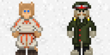
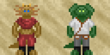


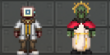

| Mars |
| Sol System |
 |
| Sector: Jewel Worlds |
| Capital: Unified Kunlun (Provisional) |
| Species: Human |
| Common Languages: Sol Common (Official), Freespeak |
| Demonyms: Martian |
| Part of: Sol Alliance |
Mars is the fourth planet from Sol, and one of humanity's earliest colonies. Often called “The Red Planet,” it has a surface area the size of Earth's entire landmass. It once had a stable population of several billion people, which was reduced drastically after the man-made disaster known as "Violet Dawn".
Despite its proximity to Earth, during the early years of interstellar colonization Mars was only home to small scientific expeditions and outposts that eked out a meagre existence until the 2200s, when terraforming technology was finally able to slowly reintroduce water and atmosphere to the planet. Currently the atmosphere is breathable but incredibly thin, which makes strenuous efforts outside the arcologies very dangerous. Many regions also suffer from airborne phoron contamination, adding further danger to already hazardous activities outside arcologies.
Until recently an Alliance fleet remained in orbit of Mars at all times, ensuring that the planet remains disarmed and free of armed disputes. Following the so-called “Violet Dawn” explosion in 2462, Mars now finds itself worse-off than ever before; in the wake of an ecological catastrophe and plagued by unrest and violence.
| Contents |
|---|
History
Early Colonization (2100s - 2190s)
The windy desolation of Mars was far from the ideal colonization opportunity for humanity's first steps into the Spur. Still, with poor conditions on Earth, a societal fervor for exploration and discovery, and its simple proximity, humanity found the appetite for small-scale colonization efforts throughout the 2100s. These efforts would go on to discover immense mineral and fuel reserves beneath the surface of the dusty red marble, sparking further interest and investment in the planet. With the forming of the Sol Alliance in the mid 2100s and the cultural zeitgeist and optimism beginning to reach a crescendo, by 2200 the will to undertake a large-scale terraforming project had reached critical mass and the ever-optimistic Department of Colonization began its attempts to make a "red Gaia.”
Despite these lofty ambitions, Mars did not have the unified populace and shared goals of other colonization efforts; the majority of Martian settlers were either private interests or pre-Alliance national extraction efforts with minimal long-term support originally intended. These colonies, focused primarily on self-sufficiency and Martian resources, were unable to provide the infrastructure, and will, necessary for the Department of Colonization to truly fulfill its goals. Further stymieing the Department was the continual redirection of effort, personnel, and funding towards more promising candidates further away from the Jewel Worlds.
Thus, Mars was mostly left to fend for itself by the nascent Alliance, and its earliest settlers became used to taking care of themselves.
It was not, however, all bleak for Mars. The terraforming efforts showed some promise and its proximity and wealth of resources continued to attract attention; as time passed and the planet became more hospitable, more and more industrialization began occurring on the planet. Power plants, large factory complexes, and gargantuan strip mining facilities were constructed around the earliest colonization sites. As the population grew and the planet needed more workers for its industry, the planet's famous arcologies were built on top of and around the original pioneering outposts. Bright and shining new construction surrounded old, red-caked industrial living facilities with immense support beams tunneling through the ruddy soil to support their new bulk. Despite the lack of care or resources the Alliance as a whole had invested in Mars, the far-away officials of the Department of Colonization expected a booming industrial center in the Jewel Worlds.
History of Terraforming (2190s - 2260)
The terraforming process started during the late part of the 22nd century, with massive terraformers designed to turn Mars’ natural minerals into gasses and legions of civilian workers put into action. The theory behind Martian terraforming was to create an artificial global warming process to rapidly create a usable atmosphere; the method was incredibly slow, expensive, and prone to major errors. Controversial for both its cost and dangers, the terraforming project of Mars is still considered a partial success. It effectively raised Mars' near zero pressure to tolerable levels, and the vast amounts of polarized iron dust - now flowing around the planet's lower orbit - created an electromagnetic shield that protected the Martian populace from harmful radiation until the Violet Dawn catastrophe and even the parts of Mars where the air was thinnest were easily navigable in just thick clothes and face protection.
The Martian World War (2278 - 2284)
Despite lingering and prolific anti-Solarian sentiment among much of the population, Mars' position in the core of the jewel worlds and its dependence on the Solarian Navy - as well as its fractious populace - meant that it was not prepared to openly rebel against the central Alliance government during the Interstellar War. However, anti-Solarian factions in the southern hemisphere known as the Red Coalition began rallying popular and political support based on many, “injustices and wrongs committed by the government against Mars." Long rumored to be backed by the All-Xanu Republic under a top-secret directive known as "Opération Rouge," the Red Coalition seceded from the Sol Alliance in early 2279 and launched a coordinated, surprise attack on the rest of Mars.
The loyalist arcologies - aligning themselves as the Blue Coalition after the Alliance flag and in opposition to the Red Martians - were caught unprepared with the government support they would have relied on occupied fighting to retake the Frontier. The meager forces available to the Blue Coalition other than their own impromptu militias were the 37th Infantry Division (later to become the 37th Martian Mechanized) and the Navy's 228th Garrison Flotilla, mostly consisting of armed civilian ships and ancient vessels. The Red Coalition took this opportunity to seize many lightly defended Alliance outposts early on in the uprising, including several missile platforms equipped with nuclear warheads as Blue forces were forced to dig into the lowlands, turning the former dusty flatlands around their arcologies into bloody killing fields – staining the red fields with Martian blood.
Bogged down by the Blues' resistance, particularly on the Western Front in the arcologies of Babylon and Karla, and unable to break through defensive lines around Crest Olympia, the Reds began to lose ground as regular Solarian Army reinforcements arrived from the broader Alliance, and Solarian Navy vessels began striking their supply lines. In the face of growing losses the leadership of the Red Coalition took desperate measures and chose to use their nuclear arsenal. In 2284, Red command launched a nuclear missile at a nearby Blue arcology of New Dresden in an attempt to turn the tide of the war, destroying it completely, opening the Pandora's Box of nuclear warfare.
The nuclear obliteration of New Dresden caused a fracturing in the Red Coalition, with many arcologies surrendering to the Alliance at the seeming betrayal of Red ideals by their leadership. The rebellion once so close to conquering Mars fractured irreversibly and capitulated within months, and the Treaty of Olympus was signed on 5th of April, 2284, featuring unconditional surrender of remaining Red Coalition states. The Alliance, negotiating on behalf of the loyalist Blue Coalition, used the treaty to place harsh restrictions on the entirety of southern Mars. Any formerly rebellious arcologies were expressly prohibited from maintaining an armed force beyond a light civilian police department, and large, unfruitful crackdowns against separatist sentiment were carried out by the Blues and the Alliance. With the leaders of the Red Coalition executed for treason, the Martian World War had finally come to an end.
The Catastrophe of 2298
The 2298 disaster involved the abrupt failure of Mars' terraforming infrastructure late in the year. Human error caused a widespread meltdown across the sole network responsible for all the terraforming equipment, with the equipment in the southern half of the planet acting in wildly unpredictable ways. The atmosphere was flooded with carbon dioxide that painfully smothered those out in the open unprotected and caused intense, damaging storms that persisted for years after the initial error was rectified. The disaster caused an immense amount of death, suffering, and loss with estimations of the full terraforming process being set back by several decades.
The Martian Terraforming Authority based in Crest Olympia, a blue arcology, launched an investigation and set the blame solely on technicians based in Red Gaia for not properly catching the error after it was made. With the arrest of the Red Gaia technicians and no single originator for the error found, rioting spread throughout the southern Red arcologies and was so vicious that the Solarian Army instituted a crackdown, killing many and injuring many more.
The Violet Dawn Explosion (2462)
On the seventh of November, 2462, an unprecedented disaster came to Mars in the form of the Violet Dawn explosion. Initially an attempt by the Alliance to produce synthetic phoron, the Violet Dawn would be the single most damaging catastrophe for an already beleaguered Mars. Despite minor progress in the field of synthetic phoron, the unfamiliarity of the staff with the material and the cutting-edge research being done resulted in a catastrophic breach of containment as self-replicating phoron, poisonous and flammable, entered the atmosphere and ignited on contact with oxygen. The self-perpetuating firestorms ravaged the planet and resulted in total destruction of the southern hemisphere of Mars, with more fortunate areas merely having toxic phoron particulate contaminate the soil and water. While the official death toll of the disaster is still unclear - and may never be clear - what can be certain is that Violet Dawn was not only the single most devastating loss of life to Mars, but was also among the greatest disasters to occur to the Alliance as a whole. Arcologies and government alike collapsed in the wake of the purple blaze.
Despite dying prior to the disaster, Prime Minister Michael Frost had issued comprehensive orders regarding the Violet Dawn project, and many Navy officers remained loyal to his cause. His orders were that, in the event of a disaster of that scale, Navy ships should not attempt to lend any aid; the predominantly Lunan command structure was often all too happy to oblige. Only a few Navy mavericks were willing to brave the inferno to save their fellow citizens, with many Martians - Red or otherwise - owing their lives to the bravery of the Navy captains. Some officers even ordered their ships into the most contaminated parts of the planet, but while a few were successful in their attempt to rescue their fellow Solarians, many more died as their engines choked and died in the exotic atmosphere.
Despite these few heroes, however, the majority of the Navy ships in Martian orbit were content to let the south of the planet choke and burn in a purple haze, and what remains of the Martian people has not forgotten this betrayal. While the Dawn broke the back of Mars, the people and culture carry on as they attempt to put what remains back together.
After the disaster, Frost's staff ordered those who had defied the late Prime Minister's orders quietly imprisoned and stripped of rank. While many of these individuals would later regain their position after the Frost government had been purged, many more became disillusioned with the Alliance and fled elsewhere.
The Solarian Reunification Campaign (2462 - present)
At the start of May 2464, Solarian forces under the command of Governor-General Tereza Varzieva launched an effort to, “stabilize the planet and restore order to regions outside of the Violet Dawn hazard zone”, thus effectively bringing Mars back under Solarian control. The offensive against the various warring remaining factions -criminal gangs, supply raiders, secessionist forces, scavenger bands, and various other bandit groups - had great success and the sections of Mars outside of the government’s control mostly surrendered or were seized by force within two months, with major Solarian Army operations concluding at the end of June. Arcologies within the Moderate Hazard Zone still face extremely difficult circumstances ranging from environmental hazards, supply shortages, starvation, unrest, and violence. Mars after its violet sunrise struggles onwards, and has adapted to the challenge: scavengers pick over the remains of destroyed arcologies and towns, rural dwellers and daredevils scrape phoron from the ground and the air, then sell what they find to Hephaestus or other corporations. What arcologies remain attempt to press onwards, now with Einstein Engines-produced filtration systems sucking phoron from the air around them.
Environment

One of the first worlds colonized by humanity, Mars’ terraforming was never successfully completed due to budget shortages, internal conflict such as the Martian World War, and simple neglect by the Alliance’s government. It is a dry, desert-like world with a thin but breathable atmosphere known for its temperature variations; with Martian days being cool and Martian nights being lethally cold, limiting the ability of Martians to travel outdoors without appropriate protective equipment, or a vehicle. Mars is known for the Martian dichotomy: the northern hemisphere is mostly dominated by flat, rolling plains while the southern is home to the Martian highlands. Winds — increased dramatically by terraforming efforts — whip down from these highlands into the northern plains, kicking up great dust storms that can persist for days at a time. More recently these winds have brought a new danger: aerial phoron contamination from areas touched by the 2462 Violet Dawn catastrophe.
The surface of Mars is covered in iron-containing dirt, which its winds blow across the northern planes and its highlands. The iron also makes outdoor agriculture infeasible, with metal in the soil often killing any plants long before they grow, and dust contaminating many open water sources. Yet this iron-infused dust is also a source of wealth for many Martians, who harvest the iron using aerial “nets” or sift it out of the surface-level soil. Underground, particularly in the southern hemisphere, rich mines exist for harvesting minerals from the Martian ground, though many have shuttered since Violet Dawn. However, with some having been cut off from broader Mars since the disaster, rumors have begun to circulate that the miners continue to live underground, and now slowly funnel further and further north, seeking to save themselves by their own hands. Some more outlandish theories claim the abandoned miners have formed a parallel society underground, and now plot their revenge against the mostly untouched north.
Mars has two moons: Deimos and Phobos. Both have long served as Solarian Navy outposts with only token civilian populations — mostly the relatives, family, or dependents of military personnel — on them. Known officially as the Martian Orbital Surveillance and Detection Command, or MARORBCOM, most personnel are non-Martians drawn from elsewhere in the Alliance, with specialists from Eris and Dysnomia managing much of the information systems. These facilities were major processing points for refugees from Violet Dawn, and many Martians now living abroad remember passing through their sterile, military hallways under the gazes of non-Martians as they left their planet behind forever.
Life on Mars

Since the events of the Martian World War, the population of Mars has been sharply divided between the BLUES – Martians aligned with Sol – and REDS – supporters of Martian separatism. There is a significant amount of “bad blood” between these two groups, to the extent that – prior to 2462 – the planet could roughly be divided at its hemisphere into a Blue half in the north, in the planet’s plains and lowlands, and a Red half in the south, in its more rugged highlands, mountains, and valleys. The Violet Dawn catastrophe shattered this division, and sent millions of southerners fleeing into the north for protection, or to escape their planet entirely, placing immense strain upon the northern Martian settlements. Nowhere is this problem more apparent than in Mars’ arcologies.
Ancient structures built during the original colonization of Mars in the late 2100s and early 2200s, with construction of this style of settlement mostly stopping after the Interstellar War, arcologies are self-contained pyramid-like structures designed to be economically self-sufficient cities. Intended to be “cities of the future” when they were built, arcologies were designed to provide all of the needs a resident could have without leaving their walls, and to endure the harsh environment of Mars. They often have a large underground section and a smaller aboveground area, leading to the local nickname of “iceberg cities” from northern Martians. More insultingly known as “rat warrens” by non-Martians, these structure-cities can be difficult for any non-native resident to navigate due to modifications over the centuries ranging from the creation of new pathways to the abandonment of entire areas due to damage and neglect. Generally the upper reaches of the arcology – where the sun can reach the outside on clear days and filter down into the upper levels – are nicer than the bottom levels, where the air may be only partially filtered and scavengers try their luck in abandoned zones. Some of these lower levels have been crushed by the weight of the arcology above them, with the huge support beams that keep arcologies secure against marsquakes only built to ensure the upper and middle levels remain intact.
Blue Arcologies
Blue arcologies are the older and generally better-equipped of the structures, with the northern Martian lowlands having been colonized first. While loyal to the Alliance, even after Violet Dawn, these arcologies have been strained by the post-2462 refugee crisis and the decrease in environmental conditions due to trace phoron in the Martian atmosphere — a condition being addressed by Einstein Engines-run redevelopment projects, but not yet fully addressed. Martians from Blue arcologies are more loyal to the Alliance than their planet, and form the basis of both the planetary government and the Martian units of the Solarian Armed Forces. All elected Martian governors have been from Blue arcologies. Generally, the Blues in these arcologies look down on their Red counterparts. Many have never forgiven the Reds for rising in revolt in the Martian World War, viewing the event as having ruined Mars’ future. Blues blame the Reds for other disasters as well, with it being a common belief in their arcologies that Reds caused both the terraforming disaster and Violet Dawn — after all, both incidents started in the southern hemisphere. It should not come as a surprise the north’s Arcology Police Departments (APDs) are known for their use of force violations against refugees, though these are rarely investigated by the arcology or Martian government – for without the APDs, who would keep the Reds from them?
Most Blue arcologies have long since abandoned their underground levels, instead being wealthy and prosperous enough to justify expanding aboveground. While seen as a sign of progress at the time, these areas have become home to many refugees and otherwise deprived communities since 2462. In these areas the residents of these areas live with limited social services and poor security conditions, with arcology police forces and their supporting mercenary companies — often from the Eridanian Golden Fist — more concerned about keeping them away from the good part of the community than helping them. The residents, many of whom having nowhere else to go, are forced into a desperate cycle of exploring these underground areas and staking out salvage claims that are sometimes fought over with guns, knives, or fists. What salvage is not used by the community is often sold to the upper arcology’s factories at a fraction of what it is worth. Some upper-arcology factories have sponsored successful undergrounder salvage teams, viewing them as an affordable — and disposable — method of securing materials.
Copperheads
Bandits and an urban blight to many Blues, and violent desperados to many, the Copperheads are those Martians poor, unfortunate, or daring enough to live in the underground, abandoned levels of blue arcologies. Their name, originally a derogatory term attached to them by Blue Martians, comes from their habit of salvaging (or stealing) and reselling copper found throughout the lower levels. They also salvage abandoned tools, equipment, and anything that looks slightly valuable. These goods – tools, equipment, and raw metals – can then be resold to upper-arcology factories for a premium, though many times at far less than they would be worth at market value. To be more efficient, and offer themselves mutual protection, they typically form themselves into small groups of one to two dozen and stake out a claim in the underground – one they’ll defend with blood: theirs, or the intruder’s. Many Copperheads live a violent, often short, life where a man’s claim is only as secure as his gun arm’s shooting and fights over claims are not uncommon, with the upper-arcology police departments willing to look the other way if the violence stays far below them – out of sight, and out of mind. Some particularly bold – or foolish – Copperhead desperados have chosen to make stands against arcology police departments, or to attack and attempt to loot the middle and upper areas of an arcology. These excursions are rare, and have universally ended in failure – and often in bloody gunfights between authorities and the Copperheads.
Red Arcologies
Red arcologies are newer and were often built near mineral deposits in the Martian highlands, and tend to be laid out more horizontally than vertically, with only their anti-marsquake supports extending far underground. Poor conditions inside these arcologies, and a lack of government support, are said to have formed the Petri dish of Martian nationalism. The lack of outside support for these arcologies led to them having a more pronounced culture of independence and communalism, with neighbors in a zone intended to look out for one another and only call upon the arcology government if needed.
While this culture of independence doubtlessly has saved many Red Martians from death — particularly during the effective collapse of government in the southern hemisphere during 2462-63 — it has condemned many to it as well. A spat that would have been a stay in the arcology’s government district dentist center in the north becomes mob justice and extrajudicial killing in the south, and revenge killings for criminal acts are not uncommon. Feuds between Red Martian families can last for generations, with sons avenging wronged grandfathers by killing their fellow grandchildren. This culture has carried over into the refugee era, with Red Martian scavenger teams warring over competing claims and past wrongs and slights — from either before or after Violet Dawn. Blues often quip the reason Red Martians are red is because of their bloody feuds.
Rural Martians
Scattered throughout both hemispheres, rural communities on Mars form a significant minority of the population – a bit under half – generally do not align with either Blues or with the Reds, though they align culturally with Red Martians. They are a proud, fiercely independent people who take pride in their own communities regardless of how poor they may be, and often do not trust the central government of the Alliance. Most rural communities were built around prospects: significant mineral deposits, either in the soil or underground, which they mine resources from for as long as they last. Once the prospect runs dry the community often disappears soon after, as there are few opportunities left in them. Now abandoned, many of these communities have found a second life as scavengers pick over their remains for anything usable after Violet Dawn.
Some communities persist despite their mines closing, and these are often settlements located in exceptionally windy areas that now serve roaming iron harvesters who “scoop” iron from the dusty Martian air. These settlements can be quite small, with only a few dozen or a few hundred residents, but their populations can swell into the thousands when iron harvesters arrive. With southerly winds blowing phoron into the northern hemisphere, many of these communities have seen the largest disaster in Martian history turn into a boom for them with the arrival of corporate facilities and permanent phoron-harvesting sails. Few have realized the implication of most corporate buildings having extensive filtration systems and mostly synthetic employees while they often walk outside with only a respirator.
Economy
Prior to Violet Dawn much of Mars was an industrial, rather than service, economy; based around the mining, refining, and production of materials and finished goods. Hydroponics and service sectors were a small part of the overall economic landscape, and mostly concentrated in the northern hemisphere. Trade and orbital industries were present, but less developed than in other areas of the Sol System such as Callisto and Titan. Traditional agriculture was almost nonexistent, with a harsh environment and toxic soils making growing crops nearly impossible for typical farmers.
Rural Martian, rather than agriculture, made their fortunes from either mining – most commonly in the northern highlands – or iron farming: a process in which specialized machines known as sails are used to pull iron out of the red dust which often blows across the northern plains or down from the southern mountains. This is a dirty, often boring process which gives the sail operator a steady, though often slow, flow of iron dust in the off season, and an abundance of iron during the windier times of the year. To maximize profit many sail operators are semi-nomadic, traveling with the winds and living transitory lives along a route of communities they spend only a few months in at a time. The mining and iron farming industries still exist but have mostly been supplanted by a new, and far more hazardous, one: phoron panning and salvaging.
Phoron panning is a process similar to iron farming: a sail operator deploys their device, and gathers up phoron particulate from the air, and often travels along a seasonal route. This phoron is often low-grade – worthless for use in an engine – but can be refined either by hand – a dangerous and inefficient process, owing to the poisonous and highly explosive nature of phoron – or by a device known as a phoronic centrifuge which is able to refine the phoron by removing trace elements of other substances, significantly reducing its mass but burning off the “slag” acquired by the sail. These centrifuges are expensive, complicated devices which can only reasonably be operated by large corporations such as Hephaestus Industries and Colettish Phoronics (also known as PhoroCol) – with both corporations taking a significant cut of the sail operator’s potential income. However, the profits to be made from harvesting phoron from the wind – “purple gold” to sail operators – far outweigh what can be made from iron farming. A good month’s phoron haul for a sail operator can give them as much money as they’d make in a year of iron farming, which has led to a sail-operating crazy, and some prominent operators having to hire mercenaries to keep their operations secure from competitors – some have even gone to Medinian phoron hunters for guards, viewing the veterans of the phoron sands as more than a match for any rival sail operator. Phoron panning is most common in the yellow zone, where the environment is suitable for phoron-tainted winds but not uninhabitable, though some view the environment as slowly killing them, and is a major reason for the continued existence of many yellow zone communities. No phoron panning, no community, and no hope.
Phoron salvage is a far more dangerous – and potentially far more lucrative – field. Rather than working in the yellow zone to gather phoron from the air, salvagers venture into the orange – and sometimes the red and black – zones, seeking to scavenge phoron from deposits now present on the ground, or valuable materials from abandoned arcologies. A salvage run can last for multiple days, or weeks if it chooses to go to the exclusion zone, and the profit is as high as the risk: the Violet Dawn-spawned phoron, while it is often of a lower grade than natural phoron, is still purple gold, and there are many eager buyers. However, it is an extremely risky business: phoron is explosive in the best circumstances – let alone when it is exposed to the elements – and highly toxic, with many salvagers leaving the red and black zones ill, dying, or with permanent health conditions. Many simply never return, claimed by the hazards present in the area: the more hazardous zones of Mars are wracked by everything from firestorms to phoron-based sandstorms to industrial machinery and military equipment left exposed to the elements and unmaintained for years on end. Despite the risk inherent, corporations on Mars have made a significant effort to promote phoron salvagers as heroic, masculine figures in the best traditions of the Red Martian and rural communities they are often drawn from, braving immense danger to provide for their communities and families, and always triumphing. They do not show examples of phoron salvage gone wrong: twisted bodies burned beyond recognition, men and women coughing up blood from phoron-contaminated lungs, and unlucky salvagers crushed underneath collapsed arcologies. Only the good side is shown, to better encourage the desperate and daring to throw themselves into the fire.
The spectre hanging over both industries is phoron poisoning, or more formally phoronic pneumoconiosis. It is a newly-observed condition on Mars suspected to be caused by aerial phoron contamination. While it can be avoided with personal protective equipment (PPE) many salvagers and panners, let alone broader rural Martians, lack even the most basic PPE. It is a rapidly-progressing disease caused by the inhalation of phoron particles, and these particles adhering to the victim’s lung lining. Initial symptoms involve coughing, shortness of breath, and chest tightness. Some sufferers will have productive coughs that cause them to spit out pinkish-purple mucus, which is often accompanied by a horrific burning sensation as the phoron particles work their way up the individual’s esophagus and throat. Further exposure to phoron worsens the condition as the particulate builds up, and eventually begins to burn through the lining of the lung; causing the sufferer to cough up, or sneeze out, blood as their lungs start to fail. Unlucky victims of phoron poisoning may also vomit blood due to damage to their esophagus. Death will follow after this point without treatment, which typically involves extensive internal augmentation – something unaffordable for many salvagers. Phoron poisoning can become a chronic condition if treated but not entirely cured: while a long-term sufferer can live with productive coughs of phoronic mucus and breathing issues, though victims of the condition are estimated to lose anywhere from 12 to 20 years of their lifespan. Tragically, seeing Martians spit out purple globules of spit is not an uncommon sight in many rural towns and among scavenger groups.
Particularly unlucky salvagers may inhale or otherwise absorb enough self-replicating phoron that it begins to crystalize in their lungs, slowly coating the interior before expanding into the esophagus, throat, and bloodstream. This condition, known informally as “purple touch” among scavengers, is a far worse version of phoronic pneumoconiosis and is not a chronic condition: it is always fatal unless treated, generally through the excision of contaminated organs and their replacement with bionic or prosthetic counterparts. After a certain point the condition is guaranteed to be fatal, as too much of the body will have been infected and the sufferer’s organs will begin to shut down, starting with the kidneys and liver. Vomiting purple-tinted blood is not an uncommon symptom of these victims, and they are often ostracized from their communities due to the widespread – and correct – belief the phoron they expunge can infect nearby humans. Some, knowing they are infected, take their own lives or walk away from their groups before they can harm others.
Planetary Governance
Now under an emergency military government, the Martian government was long regarded as one of the weaker planetary governments in the Sol System due to the north-south Blue/Red dichotomy and problems with the planet’s infrastructure dating back to the days of the terraforming disaster. The Martian government bent, buckled, and broke across much of the planet during the immediate aftermath of the Violet Dawn catastrophe in November 2462, though it remained cohesive in the north thanks to the timely intervention of the Solarian Armed Forces and a rallying of Blue arcologies in the face of adversity. Despite this rallying, much of the planet remains outside of the government’s control: the hand of the Alliance only extends into the yellow zones, and not beyond it. Any arcology past the “Orange Line” near the planetary equator has been written off by the Alliance of Sovereign Solarian Nations’ Provisional Government of Mars (ASSN-PGM) and it is unlikely any civilian authority will move to expand this zone of control.
The ASSN-PMG is the current ruling body of Mars: a military led-transitional authority under the command of Governor-General Tereza Varzieva, a Silversunner, which rules from Unified Kunlun, it launched an offensive in 2464 that moved the government’s control from a scattered ring of arcologies around the northern ice cap – the heart of Blue Mars – to the Orange Line, successfully re-integrating all remaining Blue arcologies and some Red arcologies, such as Red Gaia, through the use of lightning-fast mechanized offensives supported by Solarian Navy gunfire and extensive humanitarian relief efforts. Despite this success, and the end of the broader civil war in 2465, the provisional government has not called for civilian elections due to the ongoing crisis. Underneath the Governor-General is a civilian authority made up of arcology leaders and the staff of the former Governor, Blue Martian Burt Dwyer, who was killed during the Violet Dawn incident. These bureaucrats are Blue Martians and have been accused of bias against Red Martians, with whom the Blues retain an antagonistic relationship.
Major Arcologies
Crest Olympia is the former capital of Mars, and remains the red planet’s largest settlement. Built in the shadow of Olympus Mons, it is a center of Martian governance, culture, and a stronghold of Martian Blues. Prior to Violet Dawn it was one of the hotspots for Martian tourism, with Solarians from across the Alliance traveling to it to visit Olympus Mons, and much of the arcology’s top levels are designed to allow a view of one of the largest mountains in the known Spur. It remains the wealthiest arcology on Mars and has, since 2462, become a hotspot for salvagers, with many runs into the contaminated zone – particularly the destroyed and lost arcologies of the orange zone – starting and ending outside its arcology. The Crest Olympia Arcology Police Department (COAPD) is considered one of the higher-quality ones on the planet, with its officers trained by the Callistean Metropolitan Police Department and possessing a unique team known as the Lower Arcology Response Unit (LARU) for hazardous police work in the lower, now abandoned and neglected, sections of the arcology. A Department of Justice audit found few issues in it, though a pattern of surveillance against Red Martians is present. Its mayor is William “Willie” Bierce, a former Sol First Party senator for the planet who was elected in 2463 on a pro-Einstein Engines platform, which has led to the megacorporation developing more reclamation infrastructure here than anywhere else. Bierce is a professional, shrewd man and noted polyglot, reportedly able to speak every human language in the Spur at some level. He will likely be the next governor, whenever Mars returns to normal rule.
Chicago is the industrial heart of Blue Mars, having been one of the most productive cities prior to Violet Dawn and remaining one post-disaster. One of the few major arcologies built near a water source, the Chicago arcology derives much of its power from a dam that filters water flowing towards the nearby arcology of Draka, with an artificial lake having grown near it that the arcology uses as a waste dumping area. Most trans-stellar corporations, such as Hephaestus Industries and PhoroCol, have their headquarters in Chicago, and it hosts the Martian Stock Exchange in its upper levels. It has a smaller refugee population than other Blue arcologies due to its northern position and the brutality the Chicago Arcology Police Department (CAPD) is known to use when handling Reds, with Chicago having many residents descended from the survivors of New Dresden – an arcology nuked by the Reds during the Martian World War. The CAPD, and its Ringspire mercenaries, are known to launch “Snake Hunts” into the underground levels where they round up Copperheads and refugees alike. The Department of Justice found multiple civil rights violations in the CAPD and has threatened to federalize it, but has found itself opposed by Mayor Richard “R.G.” Gowan – an industrial magnate and longtime opponent of Red Mars. R.G. is a fighter and an advocate for the common Blue Martian who has a sour relationship with Hephaestus Industries. He spent much of 2466 promoting Le Hanh Trang in Chicago, and is a card-carrying member of the Solarian Socialist Unity Party.
Red Gaia is one of the few northern Red arcologies, having been founded and settled by Reds after a significant iron deposit was discovered in the mid-22nd century. It was devastated in the Martian World War and much of the upper arcology remains partially abandoned, with most of its citizens living in the middle or lower levels. Prior to Violet Dawn most Red Gaians worked in heavy industry or mining jobs, and the arcology’s residents are known for their rough, independent, and can-do nature. It is said a Red Gaian is one of the few Martians who will fight anyone over slandering his arcology, and that more guns and knives are pulled in anger here than anywhere else in the Spur. Red Gaia was hit badly by the Violet Dawn catastrophe, throwing open its doors to refugees to spite the Blue arcologies near it, and nearly collapsed under the weight of its engorged population, with the Red Gaia Common Police Force (RGCPF) unable to keep pace. A brief period of independence from Sol between Violet Dawn and May 2463 was ended by the Solarian Army, which only withdrew in 2466 and remains responsible for humanitarian aid deliveries to the arcology. The current mayor is Amos Gideon, a prospector-cum-politician who presents himself as larger than life and is seen by many as the “face” of Red Mars. Gideon is never seen without his distinctive hats or his brown suit, and has made a habit of throwing his hat into the audience at rallies.
Maragar is the largest still-populated arcology south of the yellow hazard line, and is a center for scavenging raids further into the more hazardous zones. Traditionally, it was viewed as the dividing line between Blue (northern) and Red (southern) Mars due to its position on the edge of the plains-highlands divide. Post-Violet Dawn it retains much of Red culture – the independence, feuds, and distrust of the central government – but has taken on an anarchistic, survival-of-the-fittest mindset: many original residents have fled, and scavenger bands have established bases of operation within their former homes in the meantime. Maragar’s central position has led to it becoming a kind of neutral ground for scavengers, and the ruling Maragar Purpletongues scavenger group – the most powerful gang – enforces an uneasy truce by banning the drawing of weapons in anger. Feuds that do arise, however, are often settled outside of its walls: either by gun, or by blade. The Purpletongues are the largest known scavenger group and can be easily identified by their purple scarfs – sometimes worn around their hats, but most often worn around their necks – and the long coats they wear to both keep out the cold and keep aerial phoron off their skin. Their leader, Tacky Jack Rawlins, is the de facto “mayor” of the arcology. Quick to anger and known for dressing in nearly exclusively purple clothing, Rawlins is reportedly a Solarian Army deserter who has killed thirty men in honor duels, and defeated a dozen attempts to usurp control of the Purpletongues using his fists, guns, and knives.